

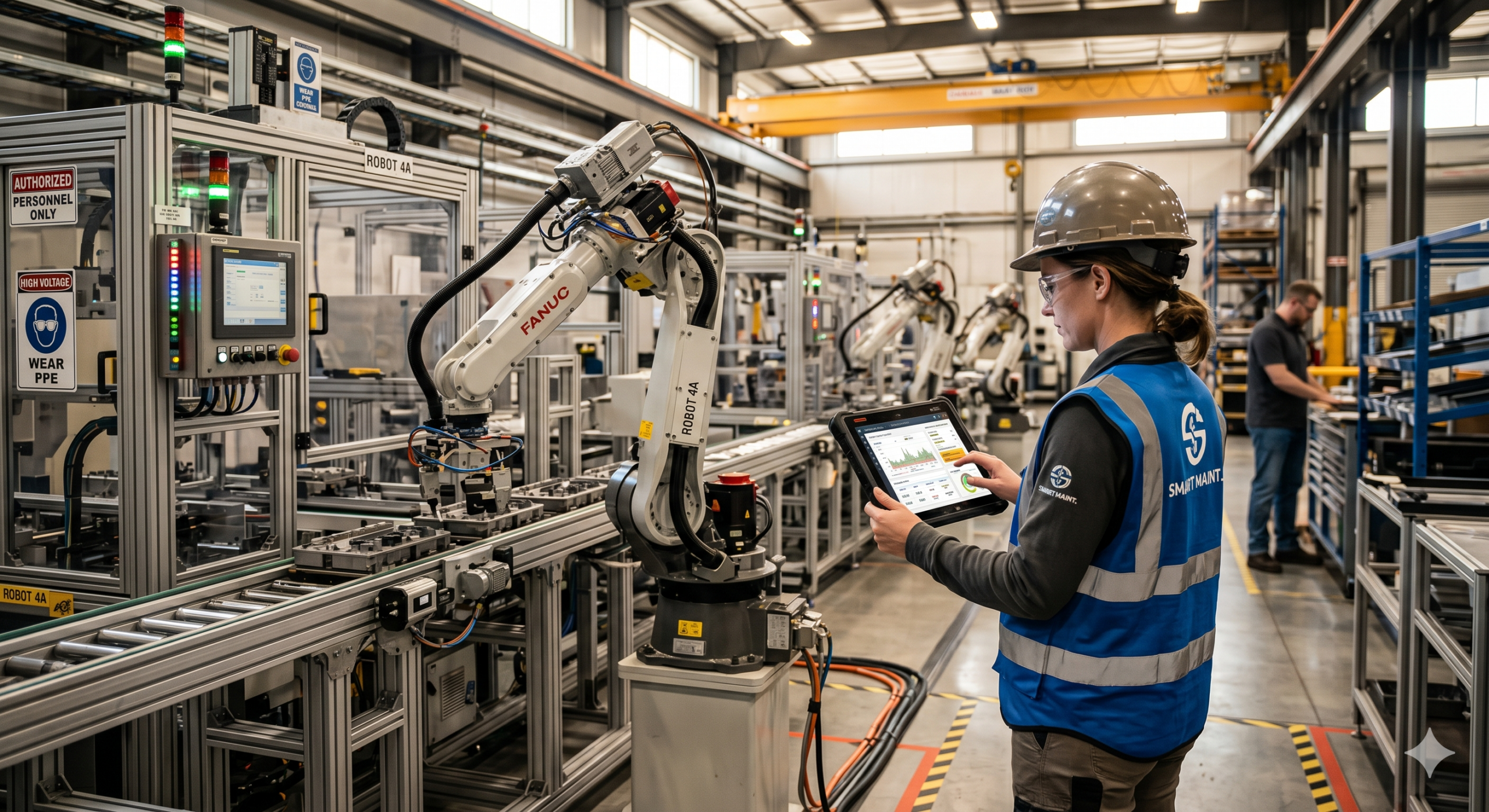
Predictive maintenance manufacturing is transforming how modern factories operate by shifting from reactive repairs to data-driven prevention. For a deeper breakdown of strategies and real-world applications, refer to this Predictive Maintenance Manufacturing Guide. Instead of relying on fixed schedules or waiting for equipment to fail, manufacturers now use real-time data, sensors, and advanced analytics to anticipate issues before they occur. As a result, operations become more efficient, downtime is reduced, and maintenance costs are optimized. In addition, this approach supports smarter decision-making across production systems. This guide explains how predictive strategies work, why they matter, and how to implement them successfully in 2026.
What Is Predictive Maintenance Manufacturing?
Predictive maintenance manufacturing is a strategy that uses real-time monitoring, machine learning, and condition-based analysis to forecast equipment failures. Unlike preventive maintenance, which follows a fixed schedule, this approach relies on actual machine performance data. In other words, maintenance is performed only when necessary. Therefore, organizations can avoid unnecessary servicing while still preventing unexpected breakdowns.
Key Characteristics
- Data-driven decision-making
- Continuous equipment monitoring
- Early fault detection
- Optimized maintenance timing
Ultimately, the goal is to maximize uptime while minimizing operational costs.
Why Predictive Maintenance Manufacturing Matters
In modern manufacturing environments, downtime is both costly and disruptive. For this reason, predictive maintenance manufacturing plays a crucial role in improving operational performance.
First, it reduces unplanned downtime by identifying issues early.
Second, it lowers maintenance costs by eliminating unnecessary work.
Additionally, it extends equipment lifespan by preventing severe damage.
Moreover, it enhances workplace safety by detecting risks in advance.
Ultimately, it improves efficiency across the entire production line.
How Predictive Maintenance Works
This maintenance approach combines multiple technologies to monitor and analyze equipment performance.
First, sensors collect real-time data such as temperature, vibration, and pressure.
Next, this data is transmitted through connected systems to centralized platforms.
Then, analytics and machine learning models evaluate patterns and detect anomalies.
As a result, potential failures are identified before they happen.
Finally, maintenance teams take action based on these insights.
Key Technologies Behind Predictive Maintenance
Modern manufacturing relies on several advanced technologies to support predictive maintenance manufacturing. For example, IoT sensors enable continuous monitoring of machine performance. In addition, artificial intelligence processes large datasets to detect patterns. Furthermore, cloud platforms provide scalable storage and analytics capabilities. Meanwhile, digital twins simulate equipment behavior for deeper insights. Together, these tools create a highly efficient maintenance ecosystem.
Core Technologies Include:
- Internet of Things (IoT)
- Artificial Intelligence (AI)
- Cloud Computing
- Digital Twins
- Edge Computing
Predictive vs Preventive Maintenance
Understanding the difference between maintenance strategies is essential. While both aim to reduce failures, they differ in execution.
| Feature | Predictive Maintenance | Preventive Maintenance |
|---|---|---|
| Approach | Data-driven | Time-based |
| Trigger | Equipment condition | Fixed schedule |
| Efficiency | High | Moderate |
| Cost | Higher initial investment | Lower upfront cost |
| Downtime | Minimal | Reduced but possible |
Therefore, predictive maintenance manufacturing offers greater precision and long-term value.
Applications in Manufacturing
This approach is widely used across industries. For instance, automotive manufacturers monitor robotic systems to avoid assembly line disruptions. Similarly, food and beverage companies use it to maintain hygiene standards. In addition, electronics manufacturers rely on condition monitoring to protect sensitive equipment. Meanwhile, heavy industries use it to prevent large-scale machinery failures.
Key Metrics for Success
To measure effectiveness, organizations track several performance indicators. For example, Mean Time Between Failures (MTBF) measures reliability, while Mean Time to Repair (MTTR) tracks repair efficiency. Additionally, Overall Equipment Effectiveness (OEE) evaluates overall productivity. By analyzing these metrics, companies can continuously improve their maintenance strategies.
Steps to Implement Predictive Maintenance Manufacturing
Implementing predictive maintenance manufacturing requires a structured approach.
To begin with, identify critical assets that impact production.
After that, install sensors to capture real-time performance data.
Next, select a platform such as a CMMS or cloud-based system.
Then, build analytical models using historical and live data.
In addition, train maintenance teams to interpret insights.
Finally, refine the system based on ongoing performance data.
Best Practices for Predictive Maintenance Manufacturing
To maximize results, organizations should follow proven best practices.
First, start with a pilot program before scaling.
Second, ensure high-quality data for accurate predictions.
Moreover, integrate maintenance systems with existing operations.
At the same time, focus on measurable ROI.
Most importantly, combine predictive and preventive strategies for optimal performance.
Challenges in Implementation
Despite its advantages, this approach comes with challenges. For example, initial setup costs can be high. In addition, handling large datasets requires technical expertise. Furthermore, many organizations face a skills gap in analytics and digital tools. Meanwhile, integrating older systems with modern platforms can be complex. However, these challenges can be managed with proper planning and training.
Future Trends in Predictive Maintenance Manufacturing
Predictive maintenance manufacturing continues to evolve rapidly. Looking ahead, AI-driven automation will enable systems to make maintenance decisions independently. In addition, real-time dashboards will provide instant insights. Furthermore, digital twins will become more advanced, allowing accurate simulations. At the same time, edge computing will improve response speed. As a result, maintenance processes will become more efficient and scalable.
Role in Industry 4.0
Predictive maintenance manufacturing is a key component of Industry 4.0. Because it enables real-time monitoring and automation, it supports the development of smart factories. In addition, it enhances connectivity between machines and systems. Therefore, it improves productivity and operational efficiency. Ultimately, it creates a more intelligent and responsive manufacturing environment.
Conclusion
Predictive maintenance manufacturing is revolutionizing how organizations manage equipment and operations. By leveraging data, AI, and connected technologies, manufacturers can anticipate failures and prevent costly downtime. As a result, they achieve higher efficiency, improved safety, and lower costs. Looking ahead, this approach will become essential as digital transformation accelerates. Therefore, companies that adopt predictive maintenance manufacturing today will gain a strong competitive advantage in the future.