

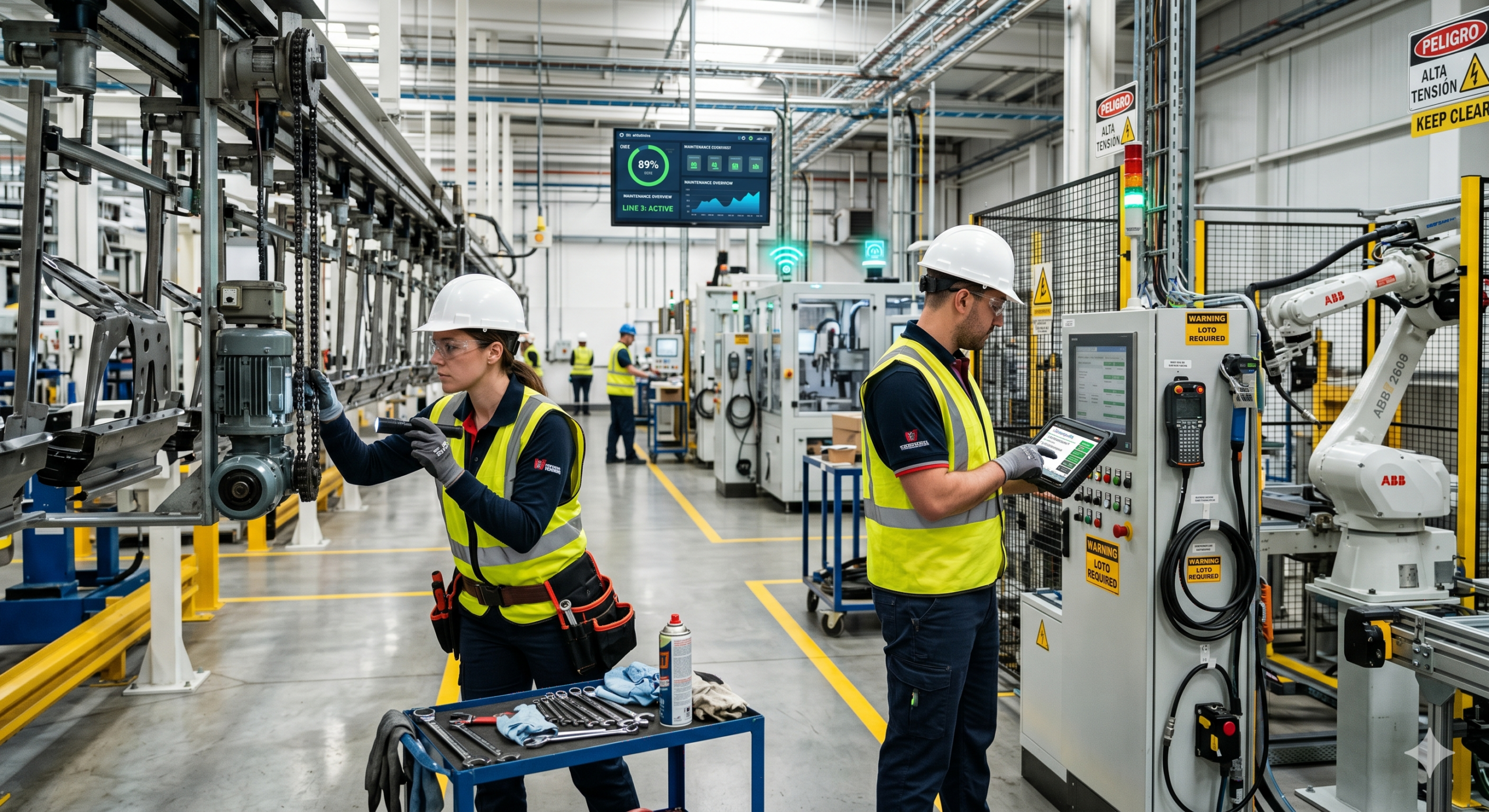
Factory maintenance best practices are essential for keeping production lines reliable, safe, and cost-efficient. For a broader overview of maintenance strategies and operational impact, refer to this Industrial Maintenance Guide. In modern manufacturing, maintenance is no longer a reactive task handled only after equipment fails. Instead, it is a strategic, data-driven function that supports uptime, quality, and long-term asset performance. As a result, organizations that follow proven maintenance practices gain a clear competitive advantage. This guide explains the most effective factory maintenance best practices for 2026 and how to implement them successfully.
What Are Factory Maintenance Best Practices?
Factory maintenance best practices refer to standardized methods and strategies used to maintain equipment, systems, and infrastructure in optimal condition. These practices combine preventive, predictive, and corrective approaches to ensure consistent performance.
In other words, they provide a structured framework for managing maintenance activities efficiently. Therefore, companies can reduce downtime, improve safety, and extend equipment lifespan.
Why Factory Maintenance Best Practices Matter
In today’s competitive manufacturing environment, equipment failure can lead to significant losses. For this reason, factory maintenance best practices play a critical role in operational success.
Key Benefits
First, they reduce unplanned downtime by identifying issues early.
Second, they improve equipment reliability and performance.
Additionally, they enhance workplace safety by preventing hazards.
Moreover, they lower maintenance costs through optimized processes.
Ultimately, they increase overall productivity and efficiency.
Core Principles of Effective Factory Maintenance
To implement factory maintenance best practices successfully, organizations must follow key principles.
1. Proactive Maintenance Approach
Reactive maintenance is costly and inefficient. Instead, companies should focus on proactive strategies such as preventive and predictive maintenance.
2. Data-Driven Decision Making
Maintenance decisions should be based on data rather than assumptions. For example, real-time monitoring and analytics provide actionable insights.
3. Standardization of Processes
Standard operating procedures (SOPs) ensure consistency across maintenance activities. As a result, teams can work more efficiently.
4. Continuous Improvement
Maintenance processes should be regularly reviewed and improved. Therefore, organizations can adapt to changing conditions.
Key Factory Maintenance Best Practices
Implementing the right practices can significantly improve maintenance performance.
1. Implement Preventive Maintenance Programs
Preventive maintenance involves scheduled inspections and servicing. For instance, routine lubrication and cleaning prevent wear and tear.
As a result, equipment remains in optimal condition and failures are minimized.
2. Adopt Predictive Maintenance Technologies
Predictive maintenance uses sensors and analytics to forecast failures. In addition, it allows maintenance teams to act before breakdowns occur.
3. Use a CMMS System
A Computerized Maintenance Management System (CMMS) centralizes maintenance operations. For example, it tracks work orders, schedules tasks, and stores asset data.
4. Maintain Accurate Asset Records
Detailed asset records are essential for effective maintenance. Therefore, organizations should document maintenance history, specifications, and performance data.
5. Optimize Spare Parts Inventory
Poor inventory management can delay repairs. Instead, companies should maintain critical spare parts and use automated tracking systems.
6. Train Maintenance Teams
Skilled technicians are essential for successful maintenance. At the same time, ongoing training ensures teams stay updated with new technologies.
7. Prioritize Safety
Safety must be integrated into every maintenance activity. For example, use proper lockout/tagout procedures and personal protective equipment (PPE).
8. Align Maintenance with Production
Maintenance should be coordinated with production schedules. As a result, disruptions are minimized and efficiency improves.
9. Conduct Regular Inspections
Routine inspections help identify issues early. In addition, they ensure compliance with safety standards.
10. Monitor Key Performance Indicators (KPIs)
Tracking metrics is essential for continuous improvement. For instance, organizations should monitor:
- Mean Time Between Failures (MTBF)
- Mean Time to Repair (MTTR)
- Overall Equipment Effectiveness (OEE)
Role of Technology in Factory Maintenance
Technology is transforming factory maintenance best practices. In fact, digital tools are now essential for modern operations.
1. Internet of Things (IoT)
IoT sensors collect real-time data from equipment. As a result, organizations gain better visibility into performance.
2. Artificial Intelligence (AI)
AI analyzes data to predict failures and optimize maintenance schedules. Therefore, maintenance becomes more efficient.
3. Cloud-Based Platforms
Cloud systems enable centralized data storage and access. In addition, they support scalability.
4. Mobile Maintenance Solutions
Technicians can access data and update tasks using mobile devices. This improves communication and productivity.
5. Digital Twins
Digital twins simulate equipment behavior. As a result, organizations can test scenarios and improve decision-making.
Common Challenges in Factory Maintenance
Even with best practices, organizations face challenges.
1. Aging Equipment
Older machines are more prone to failure. However, regular maintenance and upgrades can extend their lifespan.
2. Skills Gap
There is a shortage of skilled maintenance professionals. Therefore, training and development programs are essential.
3. Data Silos
Disconnected systems reduce efficiency. Instead, integrated platforms should be used.
4. Budget Constraints
Maintenance is often seen as a cost center. However, demonstrating ROI can justify investment.
5. Resistance to Change
Adopting new technologies can be challenging. Nevertheless, proper training and communication can ease the transition.
Factory Maintenance Best Practices for Industry 4.0
Industry 4.0 is reshaping maintenance strategies. Because systems are interconnected, maintenance becomes more dynamic and responsive.
Key Features
- Real-time monitoring
- Automated maintenance scheduling
- Data-driven insights
- Increased automation
As a result, factories become smarter and more efficient.
Steps to Implement Factory Maintenance Best Practices
Implementing factory maintenance best practices requires a structured approach.
To begin with, assess current maintenance processes and identify gaps.
Next, define clear goals such as reducing downtime or improving efficiency.
Then, invest in the right tools and technologies.
In addition, train maintenance teams and establish standardized procedures.
Finally, continuously monitor performance and refine strategies.
Future Trends in Factory Maintenance
Factory maintenance is evolving rapidly. Looking ahead, several trends will shape the future.
Key Trends for 2026
- AI-driven autonomous maintenance
- Increased use of predictive analytics
- Integration with smart factory systems
- Real-time performance monitoring
- Greater focus on sustainability
Therefore, organizations must stay updated to remain competitive.
Conclusion
Factory maintenance best practices are essential for ensuring reliable, efficient, and safe operations. By implementing proactive strategies, leveraging technology, and focusing on continuous improvement, organizations can significantly enhance performance. As a result, they reduce downtime, lower costs, and extend equipment lifespan. Looking ahead, adopting modern maintenance practices will be critical for success in Industry 4.0. Therefore, companies that prioritize maintenance today will build stronger, more resilient operations for the future.