

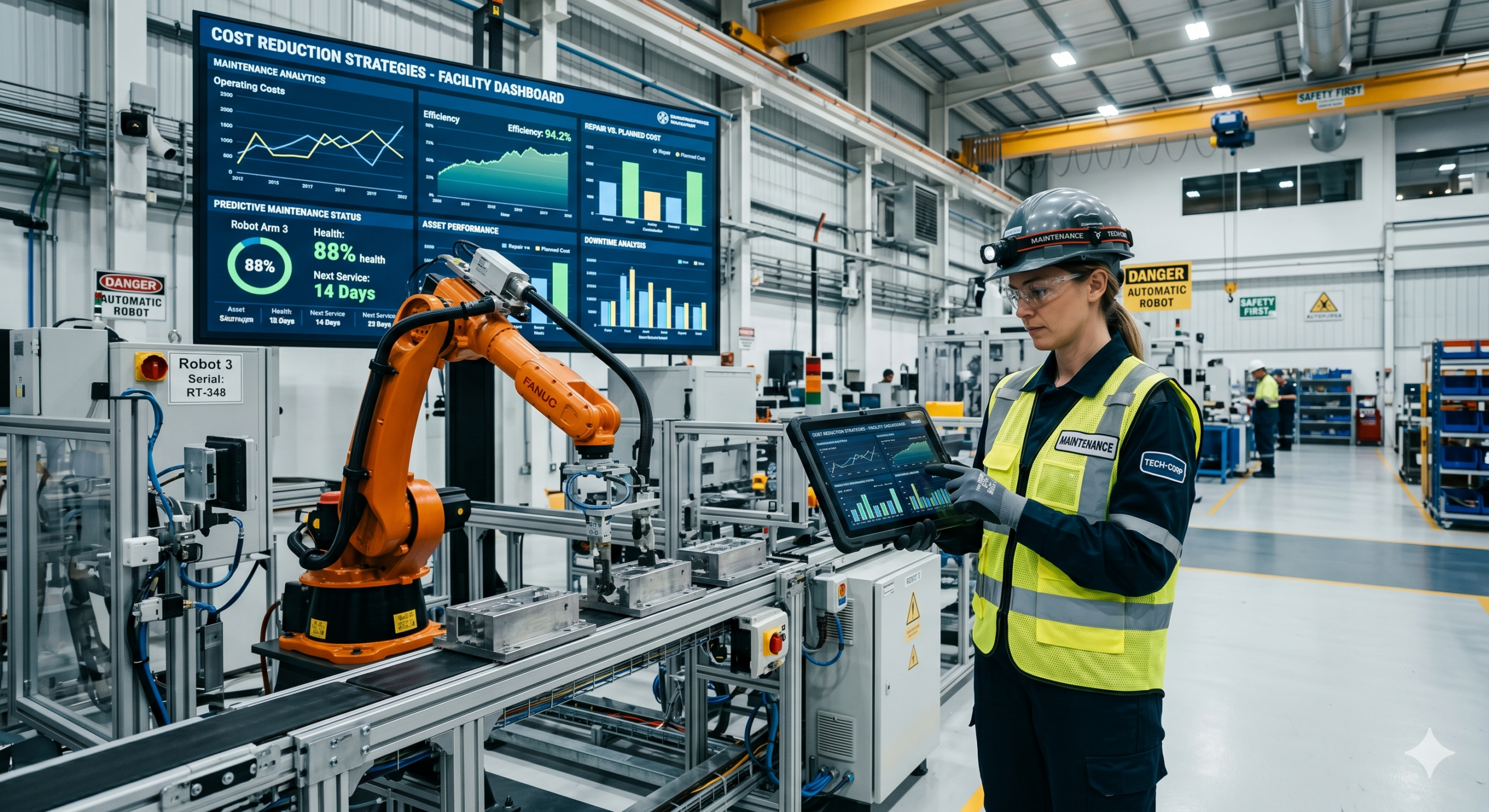
Maintenance cost reduction strategies are essential for organizations that want to improve profitability without sacrificing reliability. For a deeper breakdown of practical methods and tools, refer to this Reduce Maintenance Costs Guide. In modern operations, maintenance is no longer just a support function. Instead, it is a strategic driver of efficiency, uptime, and long-term asset performance. As a result, companies that implement the right cost reduction strategies can significantly lower expenses while improving operational outcomes. This guide explains the most effective maintenance cost reduction strategies for 2026 and how to apply them in real-world environments.
What Are Maintenance Cost Reduction Strategies?
Maintenance cost reduction strategies are structured approaches designed to minimize maintenance expenses while maintaining or improving equipment performance. These strategies focus on optimizing processes, leveraging technology, and improving resource utilization.
In other words, the goal is not simply to cut costs, but to reduce waste and increase efficiency. Therefore, organizations can achieve sustainable cost savings without compromising reliability.
Why Maintenance Cost Reduction Strategies Matter
In industries such as manufacturing, energy, and logistics, maintenance costs can represent a significant portion of operating expenses. For this reason, maintenance cost reduction strategies are critical for long-term success.
Key Benefits
First, they reduce unnecessary maintenance activities.
Second, they improve asset reliability and lifespan.
Additionally, they enhance operational efficiency.
Moreover, they minimize downtime and production losses.
Ultimately, they increase overall profitability.
Key Maintenance Cost Reduction Strategies
Implementing the right strategies can dramatically lower maintenance costs. Below are the most effective approaches used by modern organizations.
1. Shift from Reactive to Proactive Maintenance
Reactive maintenance is expensive because it involves emergency repairs and downtime. Instead, organizations should adopt preventive and predictive maintenance.
- Preventive maintenance reduces failures through scheduled tasks
- Predictive maintenance uses data to anticipate issues
As a result, companies can avoid costly breakdowns and extend equipment life.
2. Implement Predictive Maintenance Technologies
Predictive maintenance is one of the most powerful maintenance cost reduction strategies. By using IoT sensors, AI, and analytics, organizations can monitor equipment in real time.
Therefore, maintenance is performed only when necessary, reducing both labor and material costs.
3. Optimize Maintenance Scheduling
Poor scheduling leads to inefficiencies and increased costs. Instead, organizations should create optimized schedules based on:
- Equipment criticality
- Usage patterns
- Historical data
In addition, digital tools can automate scheduling, improving accuracy.
4. Use a CMMS System
A Computerized Maintenance Management System (CMMS) helps streamline maintenance operations. For example, it enables:
- Work order management
- Asset tracking
- Inventory control
As a result, organizations can reduce administrative overhead and improve efficiency.
5. Improve Spare Parts Management
Inventory mismanagement often leads to unnecessary costs. For instance, excess inventory ties up capital, while shortages cause delays.
Therefore, organizations should:
- Maintain optimal stock levels
- Use automated inventory systems
- Track usage trends
6. Standardize Maintenance Processes
Standardization reduces variability and improves efficiency. In addition, it ensures that maintenance tasks are performed correctly every time.
As a result, organizations can reduce errors and avoid costly rework.
7. Train and Upskill Maintenance Teams
Skilled technicians perform tasks more efficiently and accurately. At the same time, training reduces the likelihood of errors.
Therefore, investing in workforce development is a key cost reduction strategy.
8. Focus on Energy Efficiency
Energy consumption is a major cost factor. However, well-maintained equipment operates more efficiently.
For example, properly lubricated machines consume less energy.
As a result, energy costs are reduced.
9. Perform Root Cause Analysis (RCA)
Fixing symptoms instead of causes leads to recurring issues. Instead, organizations should perform root cause analysis.
Therefore, they can eliminate the source of problems and reduce long-term costs.
10. Leverage Data and Analytics
Data is essential for optimizing maintenance strategies. By analyzing performance data, organizations can identify inefficiencies and opportunities for improvement.
As a result, decision-making becomes more precise and cost-effective.
Role of Technology in Maintenance Cost Reduction
Technology plays a critical role in reducing maintenance costs. In fact, digital transformation is a key enabler of modern strategies.
1. Internet of Things (IoT)
IoT sensors provide real-time data on equipment performance.
As a result, organizations can detect issues early.
2. Artificial Intelligence (AI)
AI analyzes data to predict failures and optimize maintenance schedules.
Therefore, maintenance becomes more efficient.
3. Cloud Computing
Cloud platforms enable centralized data storage and access.
In addition, they support scalability and collaboration.
4. Mobile Maintenance Solutions
Technicians can access information and update tasks in real time.
This improves productivity and communication.
5. Digital Twins
Digital twins simulate equipment behavior and predict outcomes.
As a result, organizations can make better decisions.
Common Challenges in Cost Reduction
While maintenance cost reduction strategies offer many benefits, organizations may face challenges.
1. High Initial Investment
Implementing new technologies requires upfront costs.
However, the long-term savings often outweigh the investment.
2. Resistance to Change
Employees may resist new processes or tools.
Nevertheless, proper training can address this issue.
3. Data Management Complexity
Managing large datasets can be challenging.
Therefore, organizations should invest in integrated systems.
4. Skills Gap
Advanced technologies require specialized skills.
As a result, training programs are essential.
Best Practices for Sustainable Cost Reduction
To achieve lasting results, organizations should follow best practices.
1. Set Clear Goals
Define measurable objectives such as reducing downtime or maintenance costs.
2. Monitor Key Performance Indicators (KPIs)
Track metrics such as:
- Maintenance cost per asset
- MTBF (Mean Time Between Failures)
- MTTR (Mean Time to Repair)
3. Continuously Improve Processes
Regularly review and refine maintenance strategies.
As a result, performance improves over time.
4. Integrate Maintenance with Operations
Maintenance should align with production goals.
Therefore, collaboration is essential.
5. Use a Hybrid Maintenance Approach
Combine preventive and predictive maintenance for optimal results.
Maintenance Cost Reduction in Industry 4.0
Industry 4.0 is transforming maintenance practices. Because systems are interconnected, organizations can use real-time data to optimize operations.
Key Advantages
- Improved visibility
- Faster decision-making
- Automated processes
- Reduced downtime
Ultimately, this leads to significant cost savings.
Future Trends in Maintenance Cost Reduction Strategies
Maintenance strategies continue to evolve. Looking ahead, several trends will shape the future.
Key Trends for 2026
- AI-driven maintenance optimization
- Increased use of predictive analytics
- Integration with smart factory systems
- Real-time performance monitoring
- Focus on sustainability
Therefore, organizations must stay ahead of these trends.
Conclusion
Maintenance cost reduction strategies are essential for improving efficiency, reliability, and profitability. By implementing proactive maintenance, leveraging technology, and optimizing processes, organizations can significantly reduce costs. As a result, they achieve better performance and long-term success. Looking ahead, adopting modern strategies will be critical for staying competitive in 2026 and beyond.