
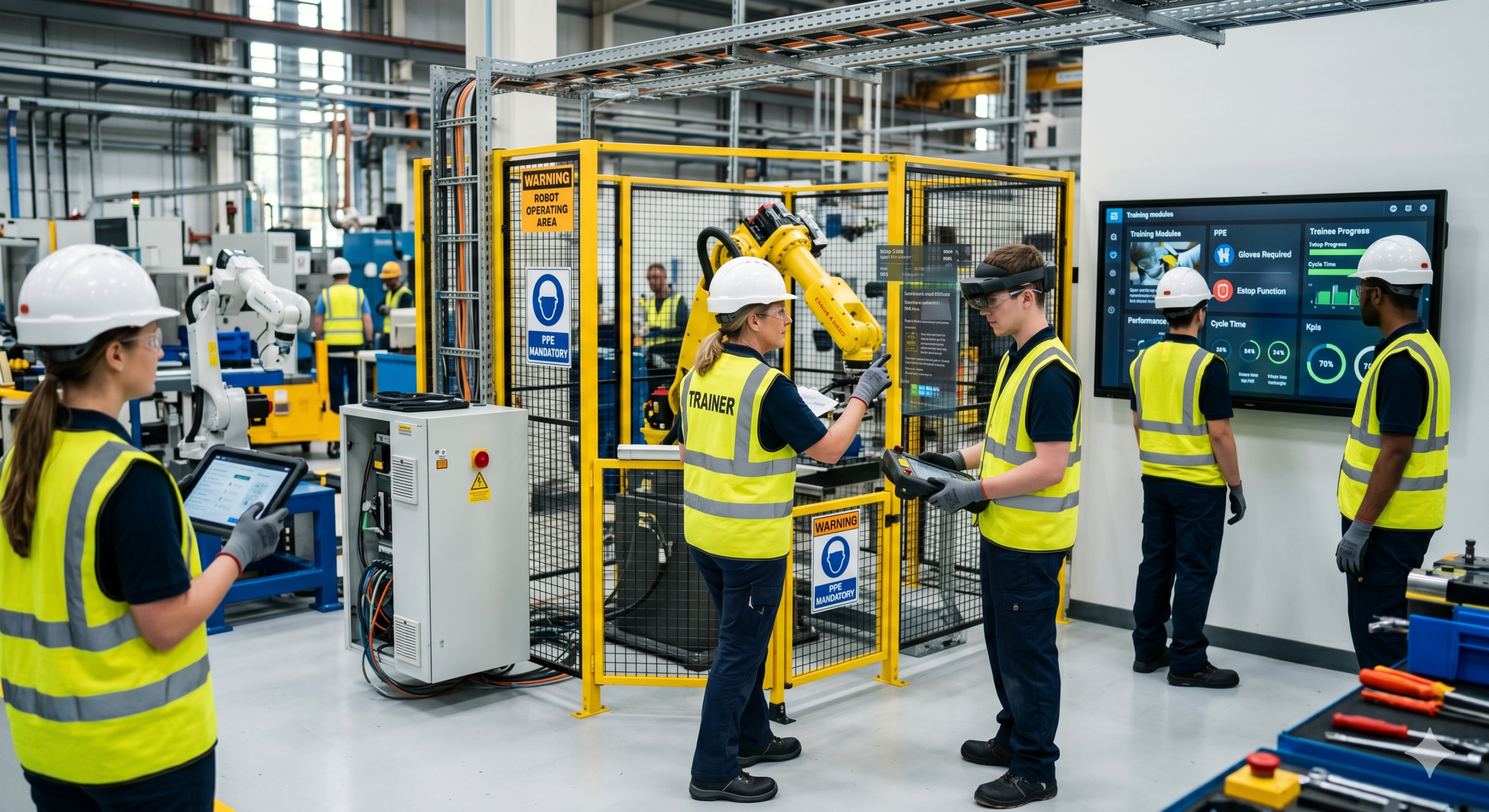
Manufacturing training programs are essential for building a skilled, safe, and future-ready workforce. For a broader perspective on skills development and industry training frameworks, explore this Manufacturing Training & Workforce Development resource. Therefore, organizations must invest in structured training programs that keep employees up to date. As a result, companies improve productivity, reduce errors, and maintain high-quality standards. This guide explains how manufacturing training programs work, why they matter, and how to implement them effectively in 2026.
What Are Manufacturing Training Programs?
Manufacturing training programs are structured learning initiatives designed to develop the skills, knowledge, and competencies of employees working in industrial environments. These programs cover technical skills, safety procedures, and operational best practices.
In other words, they ensure that employees can perform their roles efficiently and safely. Therefore, organizations can maintain consistent production and reduce operational risks.
Key Components
- Technical skills training
- Safety and compliance education
- Equipment operation training
- Process optimization techniques
- Soft skills development
Why Manufacturing Training Programs Matter
In today’s competitive environment, skilled workers are critical to success. For this reason, manufacturing training programs play a key role in operational performance.
Key Benefits
First, they improve employee productivity by enhancing skills.
Second, they reduce workplace accidents through proper safety training.
Additionally, they improve product quality by minimizing errors.
Moreover, they increase employee retention and job satisfaction.
Ultimately, they help organizations stay competitive.
Types of Manufacturing Training Programs
Different training approaches address different needs. However, most manufacturing training programs fall into the following categories.
1. On-the-Job Training (OJT)
Employees learn while performing their tasks under supervision.
For example, new operators may learn how to use machinery directly on the production floor.
As a result, training becomes practical and immediately applicable.
2. Classroom Training
This traditional method involves structured lessons delivered by instructors.
In addition, it is useful for theoretical concepts and compliance training.
3. E-Learning and Online Training
Digital platforms allow employees to learn at their own pace.
Therefore, training becomes more flexible and scalable.
4. Simulation-Based Training
Simulations replicate real-world scenarios.
For instance, virtual reality (VR) can train workers on complex machinery without risk.
5. Cross-Training Programs
Employees are trained to perform multiple roles.
As a result, organizations gain flexibility and resilience.
Key Skills Covered in Manufacturing Training Programs
Effective programs focus on both technical and non-technical skills.
Technical Skills
- Machine operation and maintenance
- Quality control procedures
- Automation and robotics
- Data analysis and monitoring
Safety Skills
- Hazard identification
- Emergency response procedures
- Use of personal protective equipment (PPE)
- Lockout/Tagout procedures
Soft Skills
- Communication
- Problem-solving
- Team collaboration
- Time management
How to Design Effective Manufacturing Training Programs
Creating successful manufacturing training programs requires a structured approach.
Step 1: Assess Training Needs
To begin with, identify skill gaps and training requirements.
For example, evaluate employee performance and operational challenges.
Step 2: Define Learning Objectives
Clearly define what employees should achieve after training.
Therefore, training remains focused and measurable.
Step 3: Choose Training Methods
Select appropriate methods such as OJT, e-learning, or simulations.
In addition, consider workforce needs and resources.
Step 4: Develop Training Content
Create clear, engaging, and relevant materials.
As a result, employees can easily understand and apply knowledge.
Step 5: Implement Training Programs
Deliver training through structured sessions.
At the same time, ensure proper supervision and support.
Step 6: Evaluate and Improve
Measure training effectiveness using performance metrics.
Therefore, programs can be continuously improved.
Role of Technology in Manufacturing Training Programs
Technology is transforming how training is delivered. In fact, digital tools are now essential for modern training programs.
1. Learning Management Systems (LMS)
LMS platforms manage and track training activities.
For example, they provide access to courses and monitor progress.
2. Virtual Reality (VR) and Augmented Reality (AR)
VR and AR create immersive training experiences.
As a result, employees can practice skills in a safe environment.
3. Mobile Learning
Employees can access training materials on mobile devices.
This improves flexibility and accessibility.
4. AI-Powered Training
AI personalizes learning experiences based on individual needs.
Therefore, training becomes more effective.
5. Digital Twins
Digital twins simulate real equipment for training purposes.
As a result, employees gain hands-on experience without risks.
Best Practices for Manufacturing Training Programs
To achieve the best results, organizations should follow proven practices.
1. Align Training with Business Goals
Training should support organizational objectives.
Therefore, it delivers measurable value.
2. Use Blended Learning Approaches
Combine classroom, online, and practical training.
As a result, learning becomes more effective.
3. Focus on Continuous Learning
Training should not be a one-time event.
Instead, it should be ongoing and adaptive.
4. Engage Employees
Interactive training methods improve participation.
For example, simulations and hands-on activities increase engagement.
5. Measure Training Effectiveness
Track metrics such as performance improvements and error reduction.
Therefore, organizations can evaluate ROI.
6. Encourage Knowledge Sharing
Experienced employees can mentor others.
As a result, knowledge is transferred effectively.
Common Challenges in Manufacturing Training
Despite its benefits, training programs can face challenges.
1. Skills Gap
Many organizations struggle to find skilled workers.
Therefore, training becomes essential.
2. Limited Resources
Training requires time and investment.
However, long-term benefits outweigh costs.
3. Resistance to Change
Employees may resist new training methods.
Nevertheless, proper communication can help.
4. Keeping Up with Technology
Rapid technological changes require continuous updates.
As a result, training programs must evolve.
Manufacturing Training Programs in Industry 4.0
Industry 4.0 is reshaping workforce requirements. Because factories are becoming smarter, employees need advanced skills.
Key Trends
- Increased use of automation and robotics
- Data-driven decision-making
- Integration of AI and IoT
- Digital skill development
As a result, training programs must focus on both technical and digital competencies.
Future Trends in Manufacturing Training Programs
Manufacturing training programs will continue to evolve. Looking ahead, several trends will shape the future.
Key Trends for 2026
- AI-driven personalized learning
- Increased use of VR and AR
- Cloud-based training platforms
- Microlearning modules
- Focus on sustainability training
Therefore, organizations must adapt to these trends.
Conclusion
Manufacturing training programs are essential for building a skilled, safe, and efficient workforce. By implementing structured and technology-driven training, organizations can improve productivity, reduce errors, and enhance safety. As a result, they gain a competitive advantage in modern manufacturing. Looking ahead, investing in training will be critical for success in 2026 and beyond.