

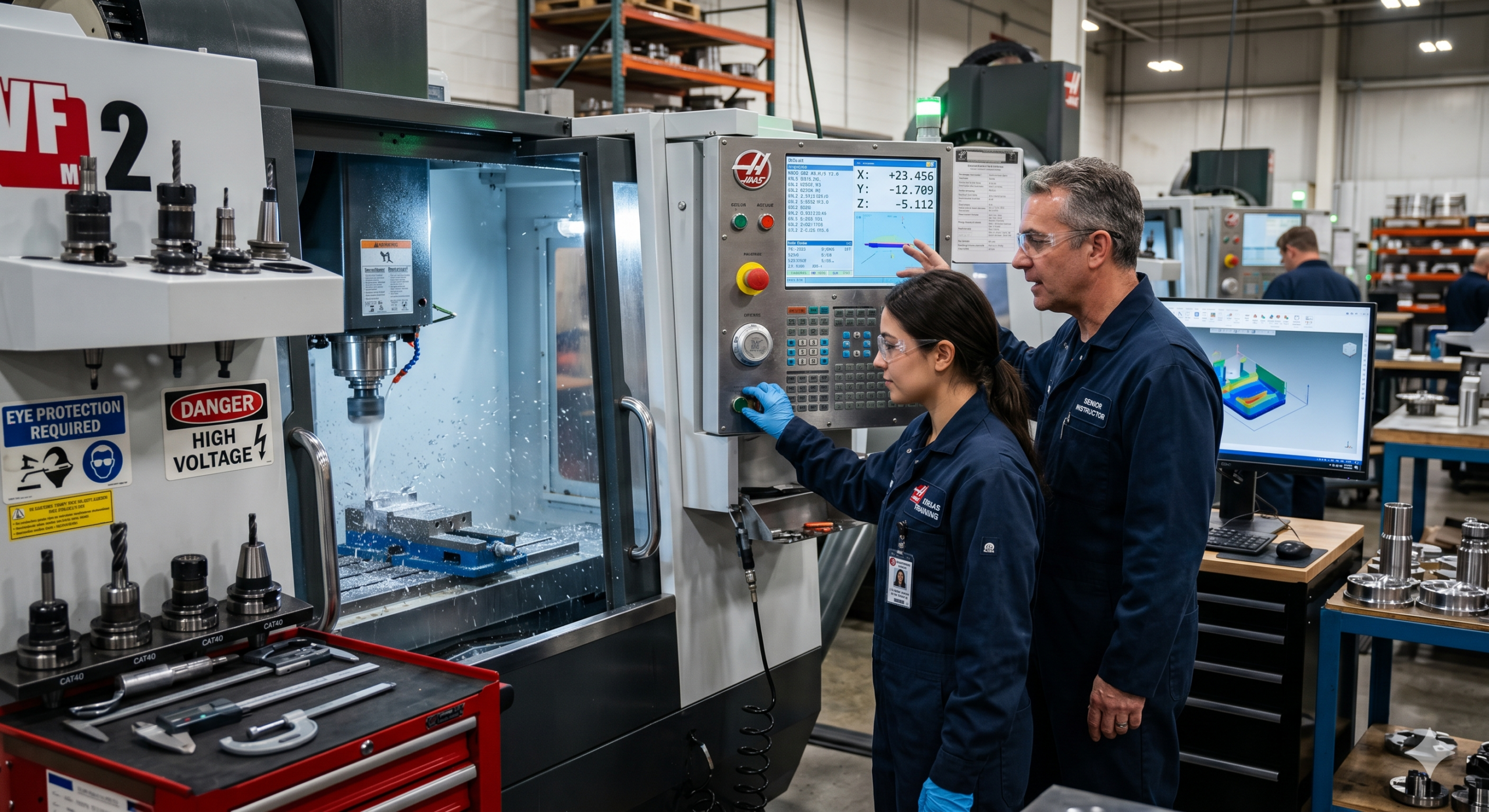
A CNC operator training guide is essential for developing skilled professionals in modern manufacturing. For a broader understanding of CNC roles, career paths, and industry expectations, refer to this CNC Machining & Career Guide. In modern manufacturing, CNC technology drives precision, automation, and productivity. Therefore, organizations must invest in structured training programs to ensure operators understand both the technical and operational aspects of CNC systems. As a result, companies improve product quality, reduce errors, and increase efficiency. This CNC operator training guide explains everything you need to know to train operators effectively in 2026.
What Is a CNC Operator Training Guide?
A CNC operator training guide is a structured framework that outlines how to train individuals to operate CNC machines. It includes technical knowledge, safety procedures, programming basics, and hands-on experience.
In other words, it provides a step-by-step roadmap for developing competent CNC operators. Therefore, organizations can ensure consistency, safety, and performance across production environments.
Why a CNC Operator Training Guide Matters
CNC machines are highly precise but complex. For this reason, proper training is critical.
Key Benefits
First, it improves machining accuracy and product quality.
Second, it reduces machine errors and material waste.
Additionally, it enhances workplace safety by preventing accidents.
Moreover, it increases operator confidence and efficiency.
Ultimately, it supports overall production performance.
Core Skills Covered in a CNC Operator Training Guide
A comprehensive CNC operator training guide must include both technical and practical skills.
1. Machine Operation Skills
Operators must understand how to:
- Start and stop CNC machines
- Load and secure materials
- Select tools and offsets
- Monitor machine performance
As a result, they can operate machines safely and efficiently.
2. CNC Programming Basics
Although operators may not always program machines, they must understand:
- G-code and M-code fundamentals
- Program structure
- Tool paths and coordinates
Therefore, they can identify and troubleshoot issues.
3. Blueprint Reading
Operators must interpret technical drawings accurately.
For example, they need to understand dimensions, tolerances, and symbols.
4. Quality Control
Operators must inspect finished parts to ensure they meet specifications.
In addition, they should use measurement tools such as calipers and micrometers.
5. Safety Procedures
Safety is a critical component of any CNC operator training guide.
For instance, operators must follow:
- Lockout/Tagout procedures
- PPE requirements
- Emergency protocols
Types of CNC Operator Training Methods
Different training methods can be used to develop CNC operators effectively.
1. On-the-Job Training (OJT)
Operators learn directly on machines under supervision.
As a result, they gain practical experience quickly.
2. Classroom Training
This method focuses on theory, including programming and machine concepts.
In addition, it provides a strong knowledge foundation.
3. Simulation-Based Training
Simulators allow operators to practice without risk.
For example, virtual CNC machines can replicate real operations.
4. E-Learning and Online Courses
Digital platforms provide flexible learning options.
Therefore, operators can learn at their own pace.
5. Apprenticeship Programs
Structured programs combine classroom learning and hands-on experience.
As a result, operators develop comprehensive skills.
Step-by-Step CNC Operator Training Guide
A structured approach ensures effective training.
Step 1: Assess Skill Levels
To begin with, evaluate the current skill level of trainees.
For example, determine whether they are beginners or experienced workers.
Step 2: Introduce CNC Fundamentals
Teach the basics of CNC machines, including components and functions.
Therefore, trainees build a strong foundation.
Step 3: Provide Safety Training
Safety should be introduced early.
As a result, trainees understand risks and prevention methods.
Step 4: Teach Programming Basics
Introduce G-code and program structure.
In addition, provide simple examples for practice.
Step 5: Hands-On Machine Training
Allow trainees to operate machines under supervision.
Therefore, they gain practical experience.
Step 6: Conduct Performance Evaluation
Assess trainee performance through tests and practical tasks.
As a result, organizations can ensure competency.
Step 7: Continuous Learning
Training should not stop after initial onboarding.
Instead, provide ongoing learning opportunities.
Role of Technology in CNC Operator Training
Technology plays a major role in modern CNC operator training.
1. CNC Simulation Software
Simulators allow operators to practice programming and machining.
As a result, they reduce errors and improve confidence.
2. Virtual Reality (VR)
VR provides immersive training experiences.
For example, operators can interact with virtual machines.
3. Learning Management Systems (LMS)
LMS platforms manage training content and track progress.
Therefore, organizations can monitor performance.
4. Digital Twins
Digital twins simulate real machines for advanced training.
As a result, operators gain realistic experience without risk.
5. Mobile Learning
Operators can access training materials on mobile devices.
This improves flexibility and accessibility.
Best Practices for CNC Operator Training Guide
To ensure success, organizations should follow proven practices.
1. Standardize Training Programs
Use consistent training materials and procedures.
As a result, quality and performance improve.
2. Focus on Hands-On Learning
Practical experience is essential for skill development.
Therefore, prioritize machine-based training.
3. Use Blended Learning
Combine classroom, online, and practical training.
In addition, this approach improves retention.
4. Emphasize Safety
Safety training should be continuous.
Therefore, reinforce safety practices regularly.
5. Provide Feedback and Coaching
Regular feedback helps trainees improve.
As a result, performance increases over time.
6. Track Training Metrics
Measure progress using KPIs such as:
- Training completion rates
- Error reduction
- Productivity improvement
Common Challenges in CNC Operator Training
Organizations may face challenges when implementing training programs.
1. Skills Gap
Finding skilled CNC operators can be difficult.
Therefore, training becomes essential.
2. High Training Costs
Training requires investment.
However, the long-term benefits outweigh the costs.
3. Rapid Technological Changes
CNC technology evolves quickly.
As a result, training programs must be updated regularly.
4. Limited Training Resources
Some organizations lack training tools or instructors.
Nevertheless, digital solutions can help.
CNC Operator Training Guide in Industry 4.0
Industry 4.0 is transforming CNC operations. Because machines are becoming more connected, operators need advanced skills.
Key Trends
- Integration of IoT in CNC machines
- Use of AI for process optimization
- Real-time data monitoring
- Automation and robotics
As a result, CNC operator training must include digital competencies.
Future Trends in CNC Operator Training Guide
CNC training continues to evolve. Looking ahead, several trends will shape the future.
Key Trends for 2026
- AI-driven personalized training
- Increased use of VR and AR
- Cloud-based learning platforms
- Microlearning modules
- Focus on advanced automation skills
Therefore, organizations must adapt to these changes.
Conclusion
A CNC operator training guide is essential for developing skilled, safe, and efficient operators. By implementing structured training programs and leveraging modern technologies, organizations can improve performance and reduce errors. As a result, they achieve higher productivity and better product quality. Looking ahead, investing in CNC operator training will be critical for success in 2026 and beyond.