

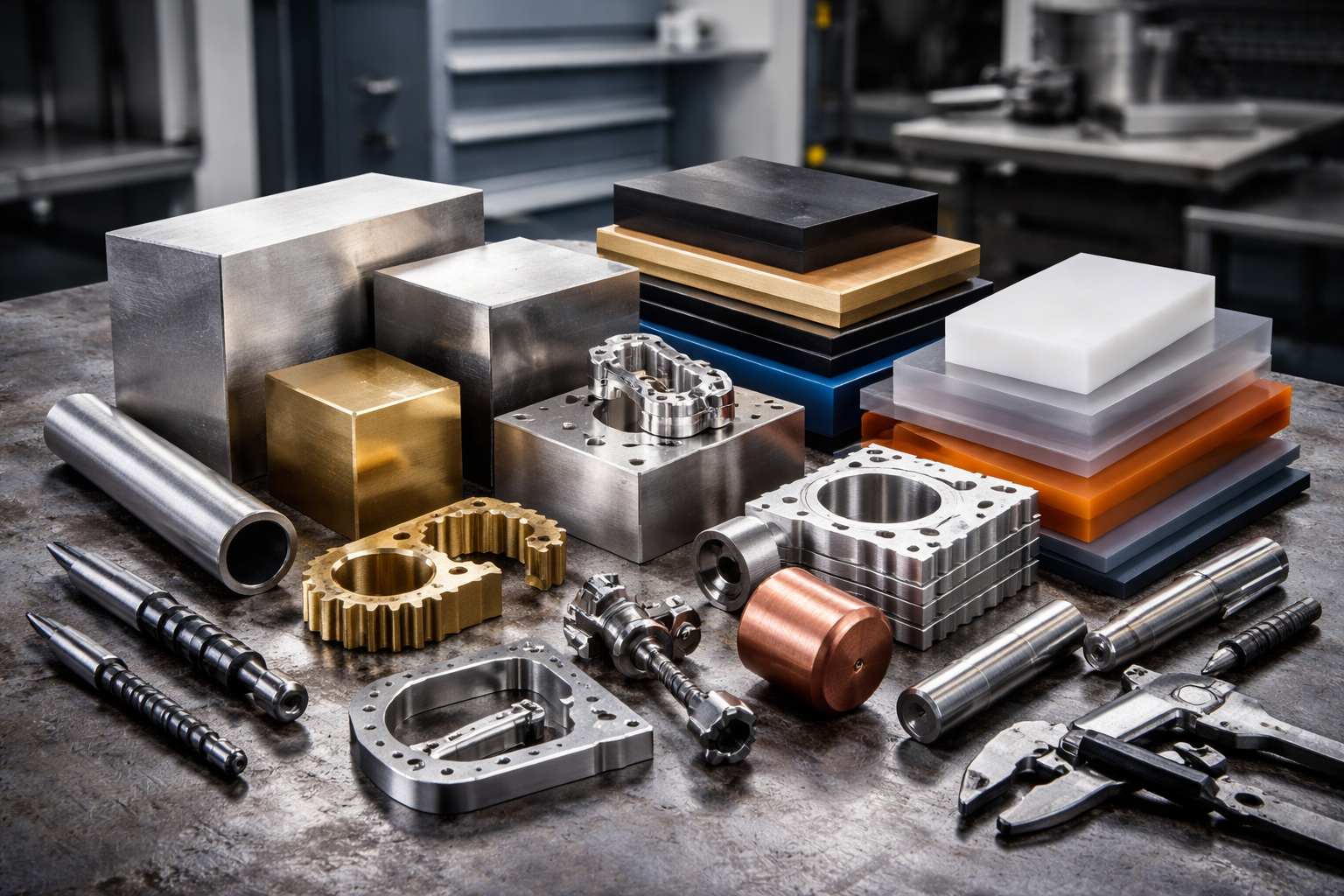
Choosing the right CNC machining materials is essential for achieving optimal performance, durability, and cost-efficiency in manufacturing. The material used in any CNC project directly affects strength, weight, machinability, and final product quality.
From lightweight metals to advanced polymers, modern machining supports a wide range of material options. This guide will help you understand the different categories, properties, and best practices for selecting the right material for your application.
What Are CNC Machining Materials?
CNC machining materials refer to the raw stock used in subtractive manufacturing, where material is removed to create precise components.
These materials must meet key requirements such as:
- Mechanical strength
- Heat and corrosion resistance
- Machinability
- Cost efficiency
Selecting the right option ensures both performance and production efficiency.
Common Metals Used in CNC Machining
Metals are widely used due to their strength and versatility.
Aluminum
Aluminum is one of the most commonly used materials in machining.
Key advantages:
- Lightweight and strong
- Excellent machinability
- Corrosion resistant
Typical uses:
- Aerospace components
- Automotive parts
- Electronics housings
Stainless Steel
Stainless steel is ideal for applications requiring strength and durability.
Key advantages:
- High strength
- Excellent corrosion resistance
- Long-lasting performance
Typical uses:
- Medical tools
- Industrial equipment
- Food-grade components
Titanium
Titanium offers exceptional performance in demanding environments.
Key advantages:
- High strength-to-weight ratio
- Heat and corrosion resistant
Typical uses:
- Aerospace parts
- Medical implants
- High-performance systems
Brass
Brass is preferred for precision components.
Key advantages:
- Easy to machine
- Good conductivity
- Corrosion resistant
Typical uses:
- Fittings and connectors
- Electrical components
Popular Plastics for CNC Machining
Plastics are ideal for lightweight and cost-effective applications.
ABS
Benefits:
- Impact resistant
- Affordable
- Easy to machine
Applications:
- Prototypes
- Consumer products
Nylon
Benefits:
- High wear resistance
- Low friction
- Strong and durable
Applications:
- Gears
- Bearings
Polycarbonate
Benefits:
- High impact strength
- Transparent
- Heat resistant
Applications:
- Safety equipment
- Electronic housings
PEEK
Benefits:
- High temperature resistance
- Chemical resistance
- Excellent durability
Applications:
- Medical devices
- Aerospace components
Composite Materials in CNC Machining
Composites combine materials to improve performance.
Carbon Fiber
- Extremely lightweight
- High strength and stiffness
- Used in aerospace and automotive
Fiberglass
- Lightweight and durable
- Corrosion resistant
- Used in marine and industrial applications
Key Factors When Selecting Materials
Choosing the right material depends on performance requirements, and this material selection guide explains how factors like strength, cost, and machinability influence the decision.
Mechanical Properties
Strength, hardness, and flexibility must match the application.
Machinability
Some materials are easier to machine than others.
- Aluminum: easy to machine
- Titanium: more challenging
Thermal Resistance
High-temperature applications require specialized materials like PEEK or titanium.
Corrosion Resistance
Materials like stainless steel and certain plastics perform well in harsh environments.
Cost Considerations
Material choice directly affects production costs and scalability.
Applications Across Industries
Different industries rely on specific material properties.
Aerospace
Lightweight and strong materials like aluminum and titanium
Medical
Biocompatible materials such as stainless steel and advanced polymers
Automotive
Durable metals and plastics for performance and efficiency
Electronics
Lightweight materials for housings and precision components
Benefits of Choosing the Right Material
Selecting appropriate materials provides several advantages:
- Improved product performance
- Increased durability
- Better manufacturability
- Reduced production costs
- Enhanced surface finish
Challenges in Material Selection
Working with different materials can present challenges:
- Hard metals increase tool wear
- Plastics may deform under heat
- Composites can be difficult to machine
Careful planning and tooling help overcome these issues.
Future Trends in Machining Materials
Advancements in materials are shaping the future of manufacturing:
- High-performance polymers
- Advanced composites
- Sustainable and recyclable materials
- Hybrid material solutions
These innovations are expanding machining capabilities and efficiency.
Conclusion
Understanding CNC machining materials is key to producing high-quality and cost-effective components. The right material choice ensures durability, precision, and efficiency across various applications.
By evaluating mechanical properties, machinability, and environmental factors, manufacturers can select the most suitable material for any project.