
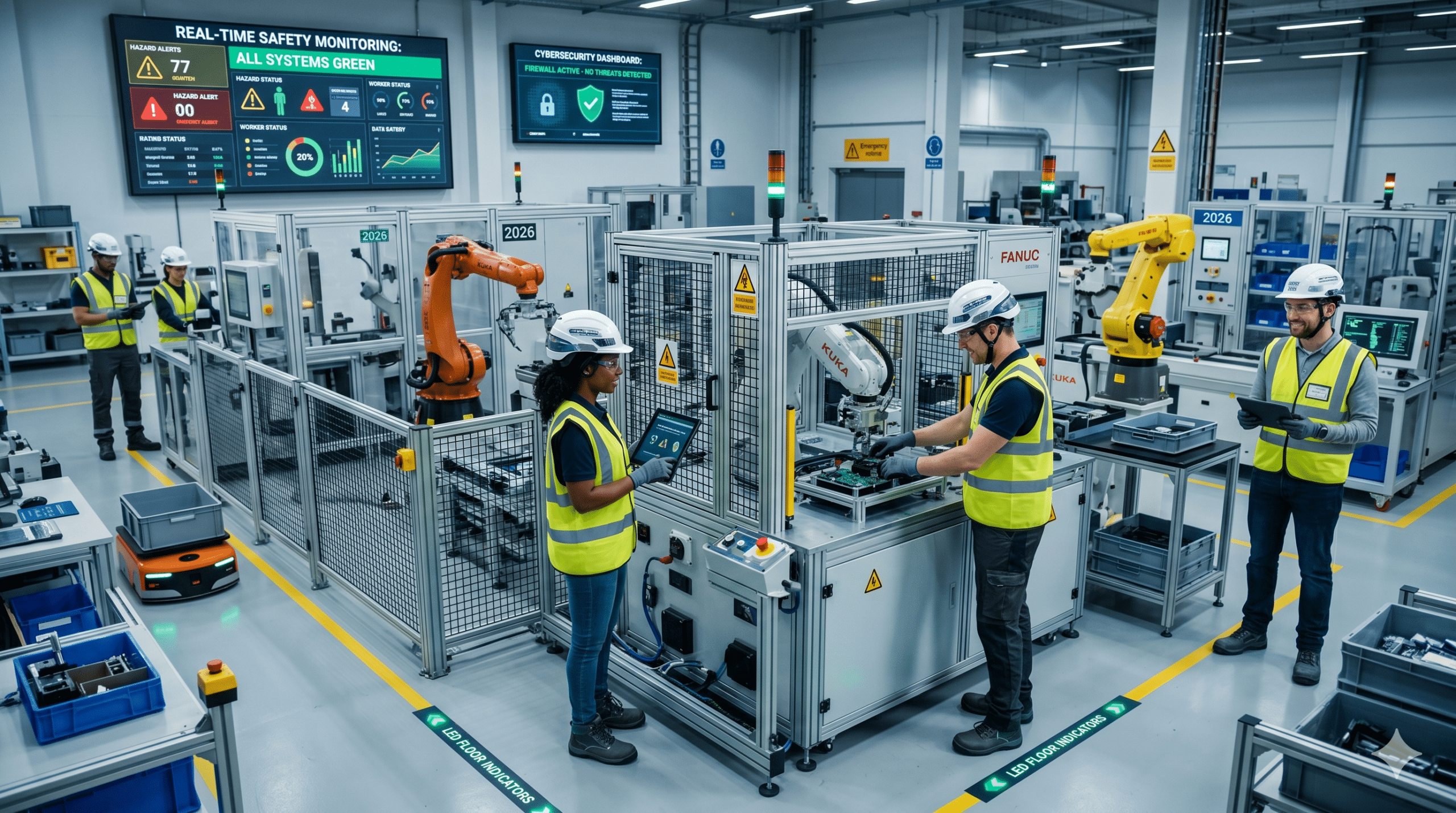
Manufacturing environments are becoming more advanced, automated, and data-driven than ever before. Smart factories now rely on robotics, artificial intelligence, connected machinery, and digital production systems to improve efficiency and productivity. However, as manufacturing technology evolves, workplace risks also become more complex. This is why manufacturing safety standards remain one of the most critical foundations of modern industrial operations.
In 2026, manufacturers are prioritizing workplace safety not only to meet regulatory compliance requirements but also to protect employees, reduce downtime, improve operational performance, and strengthen long-term business sustainability. Companies that implement strong safety programs experience fewer accidents, lower operational costs, higher employee morale, and improved production reliability.
Modern manufacturing safety is no longer limited to basic protective equipment and warning signs. Today’s industrial safety strategies combine digital monitoring systems, predictive analytics, automation safeguards, real-time reporting, and workforce training to create safer and more intelligent production environments.
This article explores how manufacturing safety standards are shaping the future of industrial operations and why they are essential for smart factory success.
Why Manufacturing Safety Standards Matter More Than Ever
Manufacturing facilities contain many potential hazards, including heavy machinery, automated equipment, electrical systems, hazardous materials, high temperatures, and repetitive physical tasks. Without proper safeguards, these risks can lead to serious injuries, equipment damage, and costly operational disruptions.
Strong manufacturing safety standards help organizations establish consistent procedures that reduce workplace risks and improve employee protection. Safety standards create a structured framework that guides how workers interact with machinery, handle materials, respond to emergencies, and maintain compliance with industry regulations. Many industrial leaders are now adopting modern workplace strategies highlighted in Manufacturing Safety in 2026: 10 Practices to Prioritize to improve operational safety and reduce accident risks.
Modern manufacturers rely on safety standards to:
- Reduce workplace accidents
- Improve employee wellbeing
- Prevent equipment failures
- Maintain regulatory compliance
- Protect operational continuity
- Reduce liability risks
- Improve workforce confidence
- Strengthen company reputation
Safety is no longer viewed as a separate department responsibility. It is now integrated into every aspect of manufacturing operations.
The Evolution of Manufacturing Safety in Smart Factories
Traditional factory safety focused mainly on physical hazards such as machine guarding and protective equipment. Today’s smart factories require a much broader approach because digital technologies and connected systems introduce new operational risks.
Modern manufacturing safety standards now address:
- Robotics safety
- Automation system protection
- Industrial cybersecurity
- AI-assisted monitoring
- Ergonomic workplace design
- Predictive maintenance
- Digital compliance tracking
- Real-time hazard detection
Manufacturers are increasingly using technology to improve workplace safety and reduce human error.
Advanced industrial safety systems now include:
- Wearable safety devices
- Smart sensors
- AI-powered risk detection
- Computer vision monitoring
- Automated emergency shutdown systems
- Digital safety dashboards
- Cloud-based reporting platforms
Technology-driven safety management allows companies to identify risks before accidents occur.
Workplace Hazard Identification in Manufacturing
One of the most important components of effective safety management is identifying workplace hazards before they lead to incidents.
Manufacturing hazards generally fall into several categories.
Physical Hazards
Physical risks include:
- Moving machinery
- Falling objects
- Slippery floors
- Excessive noise
- Extreme temperatures
- Vibration exposure
These hazards can cause serious injuries without proper controls.
Chemical Hazards
Manufacturing operations often involve chemicals, solvents, gases, and industrial cleaning agents that require careful handling.
Safety procedures must address:
- Proper storage
- Ventilation systems
- Spill response
- Protective equipment
- Hazard labeling
Ergonomic Hazards
Repetitive movements and poor workstation design can lead to musculoskeletal injuries over time.
Modern manufacturers now prioritize ergonomic improvements such as:
- Adjustable workstations
- Automated lifting systems
- Anti-fatigue flooring
- Motion-reduction equipment
Electrical Hazards
High-voltage systems and electrical equipment create serious risks within industrial facilities.
Electrical safety standards typically include:
- Lockout and tagout procedures
- Equipment inspections
- Arc flash protection
- Electrical maintenance protocols
Proactive hazard identification helps manufacturers create safer work environments and reduce accident rates.
OSHA and Global Manufacturing Safety Compliance
Many manufacturers follow national and international safety regulations to ensure compliance and operational accountability.
In the United States, the Occupational Safety and Health Administration establishes workplace safety requirements for industrial facilities. OSHA regulations cover topics such as:
- Machine guarding
- Respiratory protection
- Hazard communication
- Emergency action plans
- Electrical safety
- Fall protection
- Personal protective equipment
International manufacturers may also follow global standards such as:
- ISO 45001 occupational health and safety management
- ANSI industrial safety standards
- IEC electrical safety standards
- NFPA fire protection guidelines
Maintaining compliance with manufacturing safety standards helps companies avoid penalties, improve operational consistency, and strengthen employee trust.
The Role of Employee Training in Manufacturing Safety
Even the most advanced safety systems cannot fully protect workers without proper training. Employee education remains one of the most important elements of industrial safety management.
Manufacturing safety training typically includes:
- Equipment operation procedures
- Emergency response drills
- Hazard recognition
- Lockout and tagout training
- Chemical handling
- Fire safety procedures
- Personal protective equipment usage
Continuous learning is especially important in modern factories where technologies evolve rapidly.
Many organizations now use digital training systems that include:
- Interactive learning modules
- Virtual reality simulations
- Mobile safety applications
- AI-powered learning platforms
- Real-time performance tracking
Technology-enhanced learning improves engagement and helps workers retain critical safety information.
How Automation Is Improving Manufacturing Safety
Automation is transforming industrial safety by reducing direct human exposure to dangerous tasks.
Collaborative robots and automated systems now perform:
- Heavy lifting
- Hazardous material handling
- High-temperature operations
- Repetitive assembly tasks
- Precision cutting and welding
These technologies reduce physical strain and minimize accident risks.
Modern manufacturing safety standards also require safeguards around automated systems to ensure workers can safely interact with robotics and intelligent machinery.
Automation safety measures often include:
- Motion sensors
- Emergency stop systems
- Safety light curtains
- Access control barriers
- AI-powered monitoring systems
Human-machine collaboration requires both operational efficiency and strong protective protocols.
Cybersecurity and Digital Safety in Manufacturing
As manufacturing systems become more connected, cybersecurity has become a major component of industrial safety.
Smart factories rely on:
- IoT-connected machinery
- Cloud-based production systems
- Digital monitoring platforms
- Automated production networks
Cyberattacks targeting operational technology can disrupt production, damage equipment, and create serious safety hazards.
Modern safety programs now include cybersecurity measures such as:
- Network segmentation
- Access control management
- Multi-factor authentication
- Software patching
- Threat monitoring systems
- Employee cybersecurity awareness training
Digital protection is now essential for maintaining safe and stable manufacturing operations.
Personal Protective Equipment in Modern Manufacturing
Personal protective equipment, commonly known as PPE, remains a core element of workplace safety.
Depending on the manufacturing environment, PPE may include:
- Safety helmets
- Protective gloves
- Safety glasses
- Respirators
- Hearing protection
- Steel-toe footwear
- Flame-resistant clothing
Modern PPE technologies are becoming more advanced and comfortable for workers.
Smart PPE solutions now include:
- Connected helmets with communication systems
- Wearable fatigue monitoring devices
- Smart safety glasses
- Real-time environmental sensors
These innovations improve both protection and operational awareness.
The Importance of Safety Culture in Manufacturing
Safety programs are most effective when companies create a strong workplace safety culture.
A positive safety culture encourages employees to:
- Report hazards immediately
- Follow operational procedures
- Participate in training programs
- Communicate safety concerns
- Support continuous improvement
Leadership plays a major role in shaping workplace behavior.
Organizations with strong manufacturing safety standards often prioritize:
- Transparent communication
- Employee involvement
- Safety recognition programs
- Consistent policy enforcement
- Ongoing education
When employees feel responsible for workplace safety, accident rates typically decline.
Common Challenges Manufacturers Face With Safety Compliance
Although safety standards provide significant benefits, manufacturers often face challenges when implementing comprehensive safety programs.
Rapid Technology Changes
Smart factory systems evolve quickly, requiring continuous updates to safety procedures and employee training.
Workforce Skill Gaps
Employees may need additional technical training to safely operate advanced machinery and automation systems.
Operational Pressure
Production demands sometimes create pressure to prioritize speed over safety.
Complex Regulatory Requirements
Manufacturers operating globally must comply with multiple safety regulations and industry standards.
Equipment Maintenance Issues
Poorly maintained machinery increases operational risks and accident potential.
Manufacturers that address these challenges proactively create stronger and safer industrial environments.
Best Practices for Improving Manufacturing Safety Standards
Manufacturers seeking to strengthen workplace safety should focus on continuous improvement and proactive risk management.
Conduct Regular Safety Audits
Routine inspections help identify hazards before incidents occur.
Invest in Workforce Training
Continuous education ensures employees understand current safety procedures and technologies.
Use Predictive Maintenance Systems
AI-powered maintenance tools reduce equipment failures and improve operational reliability.
Encourage Employee Reporting
Workers should feel comfortable reporting safety concerns without fear of retaliation.
Modernize Safety Technology
Smart sensors, automation safeguards, and digital reporting systems improve workplace protection.
Review Emergency Procedures Frequently
Emergency plans should remain updated and aligned with operational changes.
Consistent improvement strengthens both safety performance and operational efficiency.
The Future of Manufacturing Safety Standards
The future of industrial safety will become increasingly data-driven and technology-enabled.
Emerging trends include:
- AI-powered hazard prediction
- Autonomous safety inspections
- Real-time wearable analytics
- Computer vision safety monitoring
- Predictive risk modeling
- Digital twin safety simulations
- Robotics-assisted emergency response
As manufacturing operations become more intelligent, safety systems will become more proactive rather than reactive.
The factories of the future will rely on continuous monitoring, automation, and advanced analytics to create safer industrial workplaces.
Conclusion
Modern manufacturing safety standards are essential for protecting employees, supporting operational efficiency, and ensuring long-term industrial success. In today’s smart factory environments, workplace safety goes far beyond traditional compliance requirements.
Manufacturers now combine automation, AI, digital monitoring, predictive analytics, and workforce training to create safer and more resilient production facilities. Organizations that prioritize workplace safety experience stronger productivity, lower operational risks, and improved employee confidence.
The future of manufacturing depends not only on advanced technology but also on creating work environments where employees can operate safely and efficiently. Companies that invest in stronger safety standards today are building smarter, safer, and more sustainable factories for tomorrow.