
Industrial workplaces are changing rapidly as organizations adopt automation, artificial intelligence, robotics, connected machinery, and advanced digital systems. Although these technologies improve productivity and operational efficiency, they also introduce new workplace risks that businesses must manage carefully. Because of this transformation, accident prevention strategies have become essential for maintaining safe, productive, and compliant industrial environments.
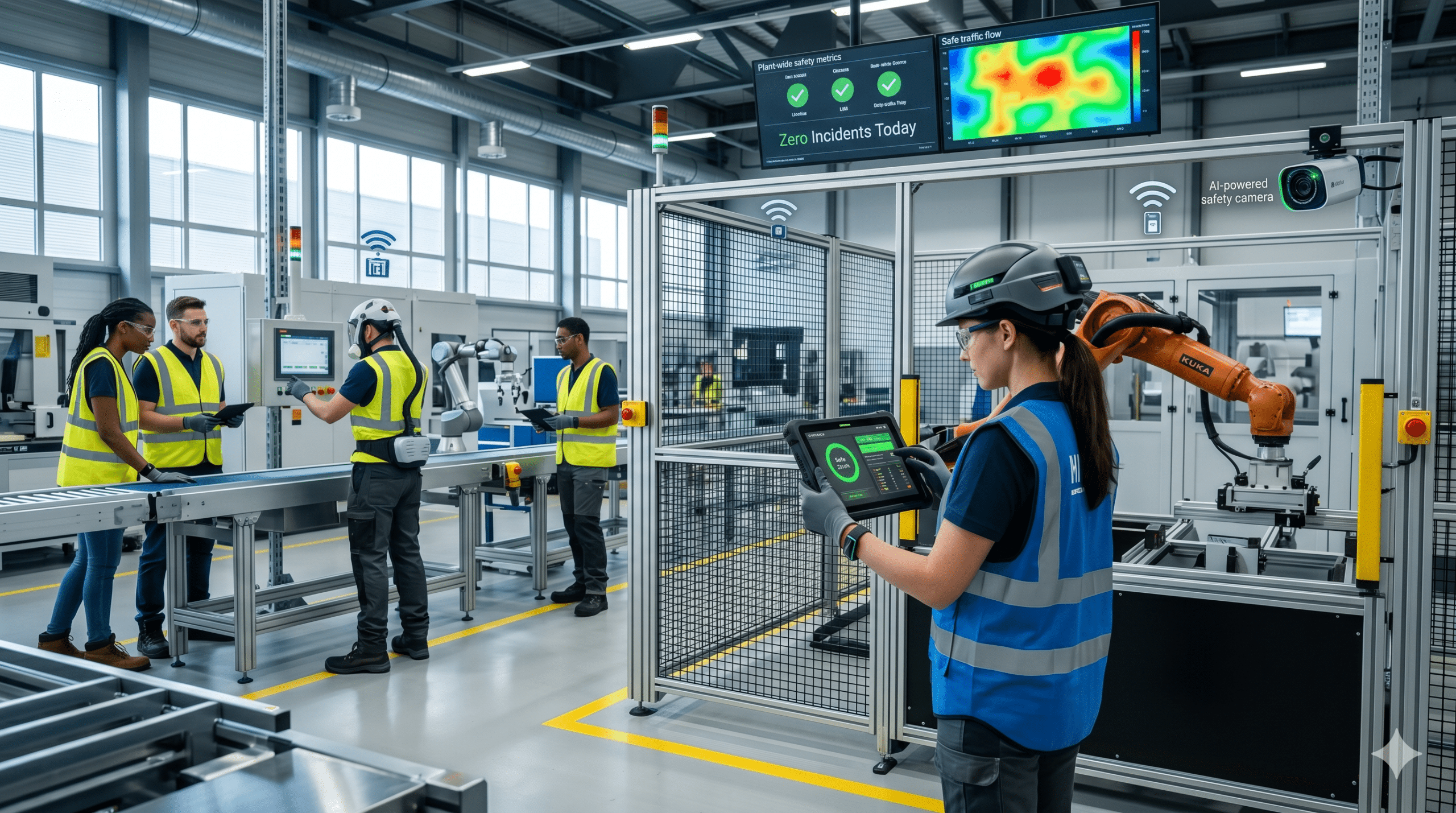
In 2026, workplace safety goes far beyond traditional warning signs and manual inspections. Instead, modern organizations now use AI-powered monitoring systems, predictive analytics, connected safety sensors, wearable technology, and smart automation safeguards to reduce risks before incidents occur. As a result, businesses can improve operational stability while protecting employees from workplace hazards.
At the same time, companies understand that workplace accidents can lead to severe injuries, operational downtime, equipment damage, compliance violations, and financial losses. Therefore, organizations that invest in proactive accident prevention often experience stronger workforce confidence, improved productivity, lower insurance costs, and better long-term operational performance.
This article explores how modern accident prevention strategies are transforming industrial workplaces and why proactive safety management is becoming critical for future-ready operations.
Why Accident Prevention Strategies Matter More Than Ever
Every industrial environment contains potential hazards that can affect employee safety and operational reliability. For example, risks may involve heavy machinery, robotics systems, electrical equipment, hazardous materials, repetitive tasks, or human error.
Without proper prevention measures, workplace accidents can cause:
- Employee injuries
- Production downtime
- Equipment failures
- Regulatory penalties
- Increased insurance costs
- Legal liability
- Workforce disruptions
- Operational inefficiencies
Strong accident prevention strategies help organizations identify risks early and reduce hazards before incidents occur. Consequently, companies that prioritize safety often experience stronger productivity, improved employee morale, and lower operational risks.
For instance, smart manufacturing facilities that use predictive safety systems frequently reduce workplace incidents and improve equipment reliability. Likewise, highly automated industries require stronger prevention measures because employees increasingly work alongside robotics and intelligent machinery.
The Evolution of Workplace Safety in 2026
Traditional workplace safety programs focused mainly on reactive approaches such as incident reporting and compliance inspections. However, modern industrial operations now require more advanced and proactive safety systems.
Today’s accident prevention strategies commonly include:
- AI-powered hazard monitoring
- Predictive maintenance systems
- Connected safety sensors
- Computer vision analytics
- Wearable safety technology
- Real-time compliance tracking
- Robotics safety controls
- Cloud-based reporting platforms
Unlike traditional inspection methods, connected safety technologies monitor workplace conditions continuously in real time. As a result, organizations can identify risks much faster and respond before accidents escalate.
For example, modern safety systems can detect:
- Unsafe temperatures
- Gas leaks
- Machine abnormalities
- Worker fatigue
- Restricted area access
- Unsafe equipment usage
Because of these capabilities, organizations gain greater operational visibility while improving workplace protection.
Common Workplace Hazards in Industrial Environments
Understanding operational risks is one of the most important parts of effective accident prevention.
Mechanical Hazards
Mechanical hazards are common in manufacturing and industrial facilities.
Examples include:
- Moving machinery
- Conveyor systems
- Rotating equipment
- Press machines
- Sharp cutting tools
- Pinch points
Without proper safeguards, mechanical systems can cause serious injuries and equipment damage. Therefore, organizations must implement machine guarding systems and regular safety inspections.
Electrical Hazards
Industrial workplaces rely heavily on electrical systems and automated equipment.
Electrical risks may involve:
- Electrical shock
- Arc flash incidents
- Exposed wiring
- Power surges
- Equipment malfunctions
To reduce these risks, companies often implement:
- Lockout and tagout procedures
- Grounding systems
- Arc flash protection
- Electrical maintenance programs
- Emergency shutdown controls
In addition, employee training helps workers understand proper electrical safety procedures and operational responsibilities.
Chemical Hazards
Many industrial operations involve chemicals, solvents, gases, and hazardous cleaning agents.
Chemical hazards can lead to:
- Respiratory irritation
- Skin burns
- Toxic exposure
- Fire risks
Consequently, organizations must provide proper ventilation systems, hazard labeling, PPE, and employee safety training.
Ergonomic Hazards
Repetitive movements and physically demanding work can lead to long-term injuries.
Modern ergonomic prevention strategies often include:
- Adjustable workstations
- Robotics-assisted lifting
- Anti-fatigue flooring
- Wearable posture monitoring systems
As a result, organizations can reduce musculoskeletal injuries while improving employee comfort and productivity.
How AI Is Improving Accident Prevention Strategies
Artificial intelligence is transforming workplace safety management across industrial sectors.
Modern AI-powered systems help organizations:
- Predict equipment failures
- Detect unsafe behavior
- Monitor operational trends
- Analyze workplace risks
- Improve emergency response times
Additionally, computer vision systems can continuously monitor workplace activities and identify:
- Missing PPE
- Unsafe worker positioning
- Unauthorized access
- Unsafe machine operation
- Spill hazards
Because AI systems analyze operational data in real time, businesses can respond to hazards before incidents occur.
Over time, AI platforms also improve accuracy by learning from workplace patterns and historical safety data.
Smart Sensors and IoT Safety Systems
The Industrial Internet of Things plays a major role in modern accident prevention.
Connected safety devices allow organizations to monitor environmental conditions, equipment performance, and worker activity continuously.
Common IoT safety applications include:
- Temperature monitoring
- Gas leak detection
- Equipment vibration analysis
- Motion detection systems
- Proximity warning alerts
- Emergency response monitoring
For example, predictive maintenance sensors can identify worn machine components before failures occur. Consequently, organizations can schedule maintenance proactively and reduce operational downtime.
Connected technologies also improve workplace visibility and strengthen emergency response capabilities.
Employee Training and Safety Awareness
Technology alone cannot eliminate workplace accidents. Most importantly, employees must understand workplace hazards and follow established safety procedures consistently.
Organizations with strong accident prevention strategies provide training on:
- Hazard recognition
- Emergency response procedures
- Equipment operation
- PPE compliance
- Lockout and tagout procedures
- Fire safety protocols
- Ergonomic safety awareness
Modern safety education now includes:
- Virtual reality simulations
- AI-powered coaching tools
- Mobile learning applications
- Interactive digital manuals
- Real-time performance analytics
As a result, employees retain safety knowledge more effectively and adapt more quickly to evolving workplace technologies.
Furthermore, continuous education helps strengthen workforce engagement and safety awareness.
Personal Protective Equipment and Accident Prevention
Personal protective equipment remains a critical part of workplace safety management.
Depending on operational risks, PPE may include:
- Safety helmets
- Hearing protection
- Safety glasses
- Protective gloves
- Respirators
- Steel-toe footwear
- Reflective clothing
Meanwhile, advanced PPE technologies now include wearable monitoring systems and connected safety sensors.
Because of these innovations, organizations can improve worker visibility, monitor fatigue levels, and strengthen emergency communication.
Robotics and Automated Safety Systems
Automation is changing how employees interact with industrial equipment.
Workers now operate near:
- Robotic arms
- Automated conveyor systems
- Autonomous vehicles
- Smart warehouse systems
- CNC machinery
Although automation reduces some physical labor risks, it also introduces new operational challenges.
Modern accident prevention strategies now include:
- Robotics safety barriers
- Motion detection systems
- Emergency stop controls
- AI-powered machine monitoring
- Restricted access zones
- Automated shutdown systems
Therefore, organizations must combine automation technology with strong workplace safety protocols.
Cybersecurity and Workplace Safety
As industrial systems become more connected, cybersecurity is increasingly linked to operational safety.
Connected technologies now control:
- Manufacturing equipment
- Robotics operations
- Smart conveyor systems
- HVAC systems
- Access control platforms
At the same time, cyberattacks targeting operational technology can create serious safety risks and production disruptions.
Modern accident prevention strategies now include cybersecurity protections such as:
- Multi-factor authentication
- Secure network segmentation
- Threat monitoring systems
- Access management controls
- Encrypted industrial communications
In addition, cybersecurity awareness training helps employees understand digital risks within connected workplaces.
Building a Strong Workplace Safety Culture
Technology and compliance alone cannot guarantee workplace safety. Instead, organizations must create a culture where employees actively participate in hazard prevention.
A strong safety culture encourages workers to:
- Report hazards immediately
- Follow procedures consistently
- Participate in safety programs
- Support continuous improvement
- Communicate operational concerns
Leadership also plays a major role in shaping workplace behavior.
Successful organizations often prioritize:
- Transparent communication
- Routine safety audits
- Employee involvement
- Consistent policy enforcement
- Continuous learning opportunities
As a result, organizations improve workforce morale while reducing operational risks and workplace incidents.
Common Challenges in Accident Prevention
Although modern safety technologies provide significant benefits, many businesses still face implementation challenges.
Rapid Technology Changes
Industrial systems evolve quickly, requiring continuous updates to safety procedures and employee training.
Workforce Skill Gaps
Employees may need additional technical knowledge to operate advanced systems safely.
Operational Pressure
Production demands sometimes create pressure to prioritize speed over safety compliance.
Equipment Maintenance Issues
Poorly maintained equipment significantly increases operational hazards and failure risks.
Integration Costs
Advanced safety systems may require substantial investments in technology and infrastructure.
However, organizations that address these challenges proactively often create safer and more stable work environments.
Best Practices for Improving Accident Prevention Strategies
Organizations seeking stronger safety performance should focus on continuous improvement and proactive risk management. Many industrial businesses also follow recommendations outlined in 10 Workplace Injury Prevention Strategies to strengthen workplace safety programs, reduce operational hazards, and improve employee protection.
Conduct Routine Safety Audits
Regular inspections help identify hazards before incidents occur.
Invest in Smart Safety Technology
Connected monitoring systems improve workplace visibility and hazard detection.
Strengthen Employee Training
Continuous education improves safety awareness and compliance performance.
Encourage Employee Reporting
Workers should feel comfortable reporting hazards without fear of retaliation.
Use Predictive Maintenance Systems
Predictive analytics help reduce equipment failures and operational downtime.
Review Emergency Procedures Regularly
Emergency response plans should evolve alongside changing workplace conditions and technologies.
Ultimately, continuous improvement helps organizations strengthen workplace safety and long-term operational reliability.
The Future of Accident Prevention Strategies
The future of workplace safety will become increasingly intelligent, automated, and data-driven.
Emerging innovations include:
- AI-driven hazard prediction
- Autonomous safety inspections
- Real-time wearable analytics
- Computer vision monitoring
- Digital twin safety simulations
- Robotics-assisted emergency response
- Predictive behavioral analysis
In the coming years, organizations will rely heavily on automated systems that identify hazards instantly and respond before incidents occur.
Because of these advancements, businesses will gain greater operational visibility while creating safer and more resilient workplaces.
Conclusion
Modern accident prevention strategies are essential for protecting employees, improving operational performance, and supporting long-term business success. As industrial workplaces become more automated and connected, organizations must adopt smarter and more proactive approaches to workplace safety.
Today’s companies combine AI-powered monitoring systems, predictive maintenance platforms, connected sensors, automation safeguards, cybersecurity protections, workforce training, and advanced PPE technologies to reduce operational risks and improve workplace protection. As a result, organizations that prioritize accident prevention often experience stronger productivity, lower accident rates, improved workforce confidence, and greater operational resilience.
Ultimately, the future of workplace safety depends on creating environments where employees and advanced technologies can operate together safely and efficiently. Therefore, businesses that invest in modern accident prevention strategies today are building smarter, safer, and more sustainable industrial operations for the future.