

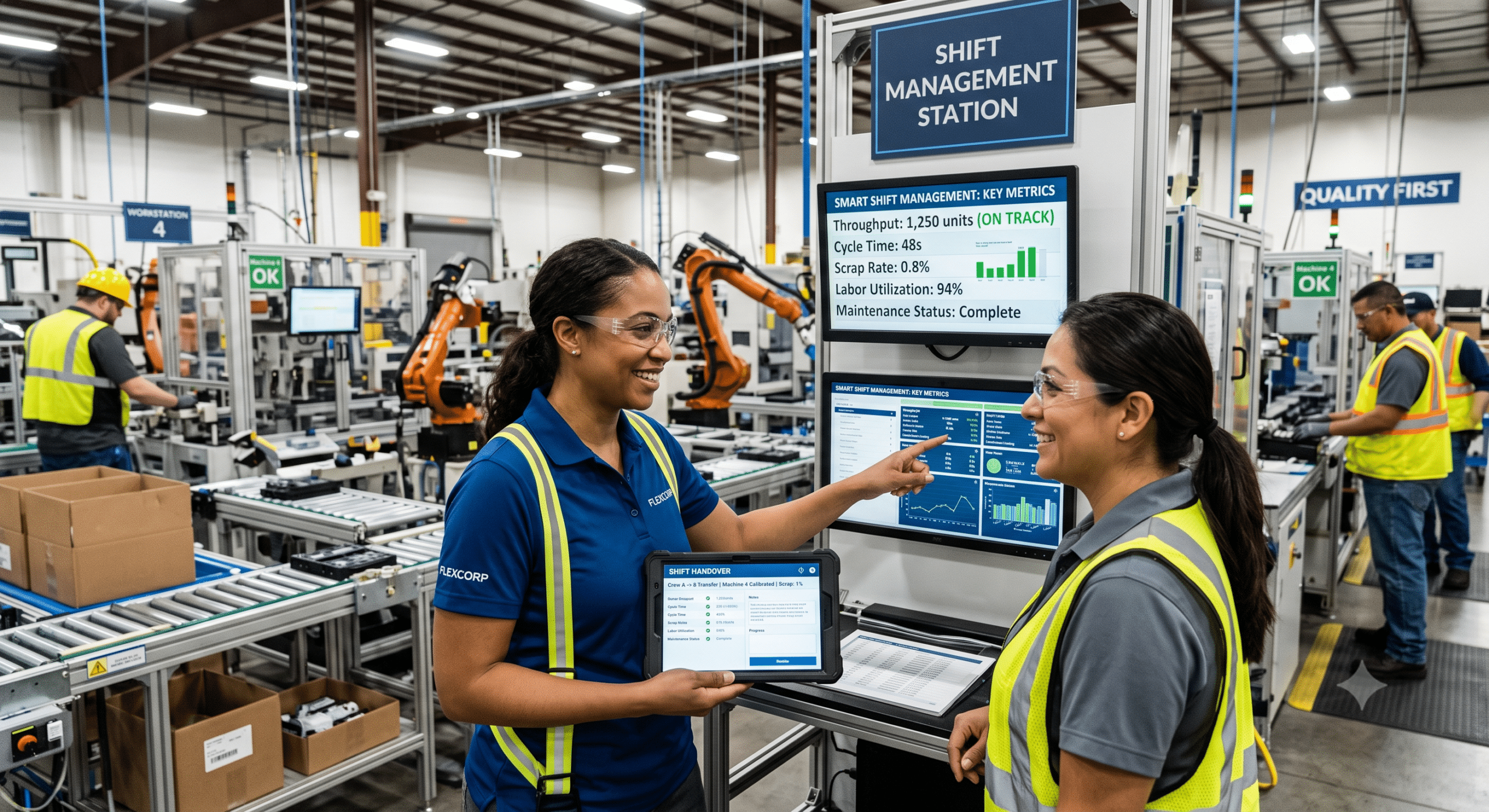
Every morning on the plant floor, a critical handoff takes place that requires the right shift management best practices to succeed. One crew finishes a long shift and steps away. At the exact same time, a new crew steps in to take over. For anyone managing a manufacturing workforce, this handoff is a make-or-break moment. It either goes perfectly smoothly, or it completely derails the day’s momentum.
When floor coordination fails, the problems show up immediately. Production slows down. Machines sit completely idle during the shift change. Workers waste time trying to figure out where the last crew left off. Worst of all, scrap piles up because important machine notes got lost in the shuffle.
Hitting your daily production goals isn’t just a mechanical challenge. It is a human puzzle. To get the most out of your plant, stop looking at shift management as a scheduling chore. Instead, treat it as your best tool for team success. Applying strategic shift management best practices turns scheduling into a competitive advantage.
1. Stop the Handover Communication Gap with Simple Digital Notes
The minutes spent passing information between crews are the most chaotic moments of the day. When a factory relies on quick chats, important details get missed. The new crew misses out on machine quirks, raw material changes, and worn tools.
To keep production moving fast, factories need simple digital handoff checklists. The incoming team needs to know exactly what happened over the last shift. They must get these details before they ever press start.
Digital checklists ensure every important detail gets shared accurately. This keeps the new shift from spending their first hour guessing, keeping the assembly line running without a hitch. Utilizing digital tools during handoffs is one of the most effective shift management best practices you can adopt.
2. Match the Right Skills to Every Single Shift Crew
Many managers schedule their team based only on headcount, rather than what workers actually know how to do. Having twenty people on the line does not help if nobody knows how to fix a broken robotic cell.
When a shift lacks a good mix of experienced workers, the line grinds to a halt during a machine glitch. At the same time, material waste goes up because the remaining team cannot fine-tune the equipment.
+----------------+-------------------+--------------------+-------------------+
| Shift Crew     | Level 3 Operators | Certified Techs    | Cross-Trained Float|
+----------------+-------------------+--------------------+-------------------+
| Crew A (Day)   |        4          |         2          |         3         |
| Crew B (Night) |        4          |         2          |         2         |
+----------------+-------------------+--------------------+-------------------+
To keep everything running smoothly, use a simple skills chart when building schedules. Make sure experienced techs and newer apprentices are spread out evenly across all shifts. Aligning the right skills to the right schedule highlights how modern shift management best practices keep production speeds steady all day and all night.
3. Teach Workers Multiple Roles to Protect Against Sudden Absences
Nothing ruins the steady flow of a fast line quicker than a sick call at a critical workstation. If only one person knows how to run a specific laser cutter, their absence stops everything downstream.
Cross-training must be a core focus for workforce leaders to keep output high. Building a flexible team lets you handle sudden staffing shortages easily. Operators should be able to hop between a few different jobs.
[Cross-Training Matrix: Operator A -> Cells 1 & 2 | Operator B -> Cells 2 & 3]
When someone calls out, a cross-trained coworker steps right into the gap. This quick adjustment keeps the line moving on time and prevents delays. It also ensures that product quality stays high through the end of the day.
4. Track Tiny Micro-Stops Instantly to Fix Problems Fast
The biggest drain on a factory’s output is rarely a massive, two-hour mechanical breakdown. Instead, it is the constant buildup of tiny, five-second stops. These include a stuck sensor, a twisted label, or a quick guide rail adjustment.
Operators rarely write down these small pauses in manual logs. This leaves managers completely blind to the real reason why production lags. Over a long shift, these unrecorded delays quietly steal thousands of finished units.
Simple digital tracking tools at every workstation let managers see these tiny delays instantly. Live data helps floor supervisors fix recurring small issues before they grow into major delays.
5. Put Quality Checks Directly into Daily Shift Routines
Waiting until the end of a shift to inspect products is a costly mistake. Discovering a machine calibration issue late means hours of hard work end up straight in the trash bin.
To cut down on wasted materials, build quality checks right into the natural workflow. Operators should use digital systems that prompt them to check specific settings at set times. This must happen before they can keep running the line.
If a sensor drifts outside the safe zone, the system flags it immediately. The operator can then adjust it right away. Catching these small changes early ensures the team keeps making good parts, saving the company money.
6. Prevent Worker Fatigue with Smarter, Healthier Schedules
Human energy levels have a massive, direct impact on how much a plant can produce. When work schedules are poorly designed, human errors naturally skyrocket. This is especially true when crews work too many night shifts in a row.
[Fatigue Curve vs. Scrap Rate: Quality Errors Rise Exponentially Past Hour 10]
Tiredness slows down reaction times and makes production drag. It causes costly mistakes that ruin perfectly good raw materials. Modern industrial leaders incorporate ergonomic shift management best practices to protect their teams. Switching to forward-rotating schedules keeps your production quality high by giving teams plenty of time to rest.
When your team is well-rested, they pay attention to the details. They stay focused from start to finish. This clear focus leads directly to fewer mistakes, consistent machine speeds, and a much safer workplace.
7. Use Fast Team Huddles to Solve Floor Issues in Minutes
When a technical issue pops up, slow communication directly affects your total production time. Letting a problem sit unresolved for hours wastes valuable time. It also creates a massive bottleneck for the rest of the plant.
Quick, structured team huddles ensure that floor issues are passed up and fixed fast. Frontline workers meet briefly at the start of the shift to point out hurdles. Supervisors then share those notes with maintenance teams right away.
This tight loop stops minor issues from turning into massive delays. Giving your floor workers a direct way to solve problems keeps production moving fast. It helps your team hit its daily targets consistently.
8. Time Your Machine Maintenance with Planned Production Breaks
Running your machines hard without routine maintenance is a bad strategy. It always leads to major breakdowns. However, stopping a fast-moving line out of nowhere ruins your workflow and hurts daily output.
The smartest move is to plan routine maintenance during scheduled machine stops. These include product changeovers or shift handoffs. This strategy keeps your most valuable equipment running as much as possible.
Coordinating maintenance tasks with planned pauses lets technicians service machinery without interrupting active jobs. This smart planning keeps machines running reliably at top speeds while keeping unexpected downtime to a minimum.
5 Main Numbers to Track for Team Success
| Metric | What It Focuses On | How the Workforce Drives It |
| Throughput | Parts made per active hour | Fast, clear shift changes |
| Cycle Time | Time to make one part | Clear, simple work steps |
| Scrap Rate | Percentage of wasted material | Quick fixes when machines drift |
| Labor Utilization | Putting skills in the right place | Smart cross-training maps |
| Response Time | Time to fix a stopped line | Fast team communication |
9. Improve Your New Hire Training to Cut Down on Costly Mistakes
A massive portion of factory scrap can be traced back to new hires. This happens when new employees are rushed onto the floor without enough training. Product quality always drops when an untrained worker runs a complex machine.
Workforce development managers must see new hire training as a shield. It protects the factory’s quality standards. A successful training program should combine simple classroom lessons with hands-on, supervised practice on the floor.
Giving new team members time to master standard steps pays off in the long run. Well-trained new hires step onto the floor with confidence. They run their machines correctly and keep scrap rates low from day one.
10. Share Live Digital Dashboards so the Whole Team Can See Progress
When operators are left in the dark about performance, they see jobs as just a checklist. They fail to see their contribution to a bigger goal. This lack of connection often leads to flat performance and missed goals.
Putting clear, easy-to-read digital dashboards right at the workstations changes everything. A crew can see their live throughput, cycle times, and scrap rates. They know exactly how they are doing against daily goals.
This clear visibility naturally builds healthy competition between different shifts. It also gives teams the data they need to improve their own workflows. When a team sees waste numbers go up, they can fix the issue immediately. Building transparency through data is a cornerstone of operational excellence and effective shift management best practices.
Frequently Asked Questions
What is the best way to cut down on shift change delays?
Ditching paper logs for digital checklists is the fastest way to improve shift changes. This ensures the new crew gets all the machine details they need instantly, letting them keep production moving.
How does teaching workers multiple roles help cut down on scrap?
Cross-training ensures that a skilled teammate can step in when a worker is out sick. This keeps production quality steady and prevents the expensive errors that happen when untrained staff fill the gap.
Why are tiny machine pauses worse than big breakdowns?
Big breakdowns get fixed immediately because everyone notices them, but tiny micro-stops are brief and often go untracked. Because they happen constantly, these small pauses quietly steal hours of valuable production time.
Does the way we schedule shifts really affect product quality?
Yes. When schedules cause severe worker exhaustion, human mistakes naturally skyrocket. A smart schedule that gives workers plenty of rest keeps your team sharp and focused, which leads to fewer quality mistakes.
How do live digital dashboards help increase factory output?
Dashboards give your team instant feedback on how much they are producing. This live data helps operators spot delays early and make quick changes, keeping production steady so you hit goals on time.
Further Reading and References
-
For deeper insights into reducing operational waste and optimizing factory floor efficiency, explore the data-driven strategies detailed in the MaintainX Learning Center.
-
To learn more about modern approaches to building and retaining a highly skilled industrial team, review the comprehensive guide on L2L Workforce Development.
-
For advanced methods on managing complex schedules for large manufacturing operations, see the enterprise scheduling principles outlined by Zellis Manufacturing Insights.