

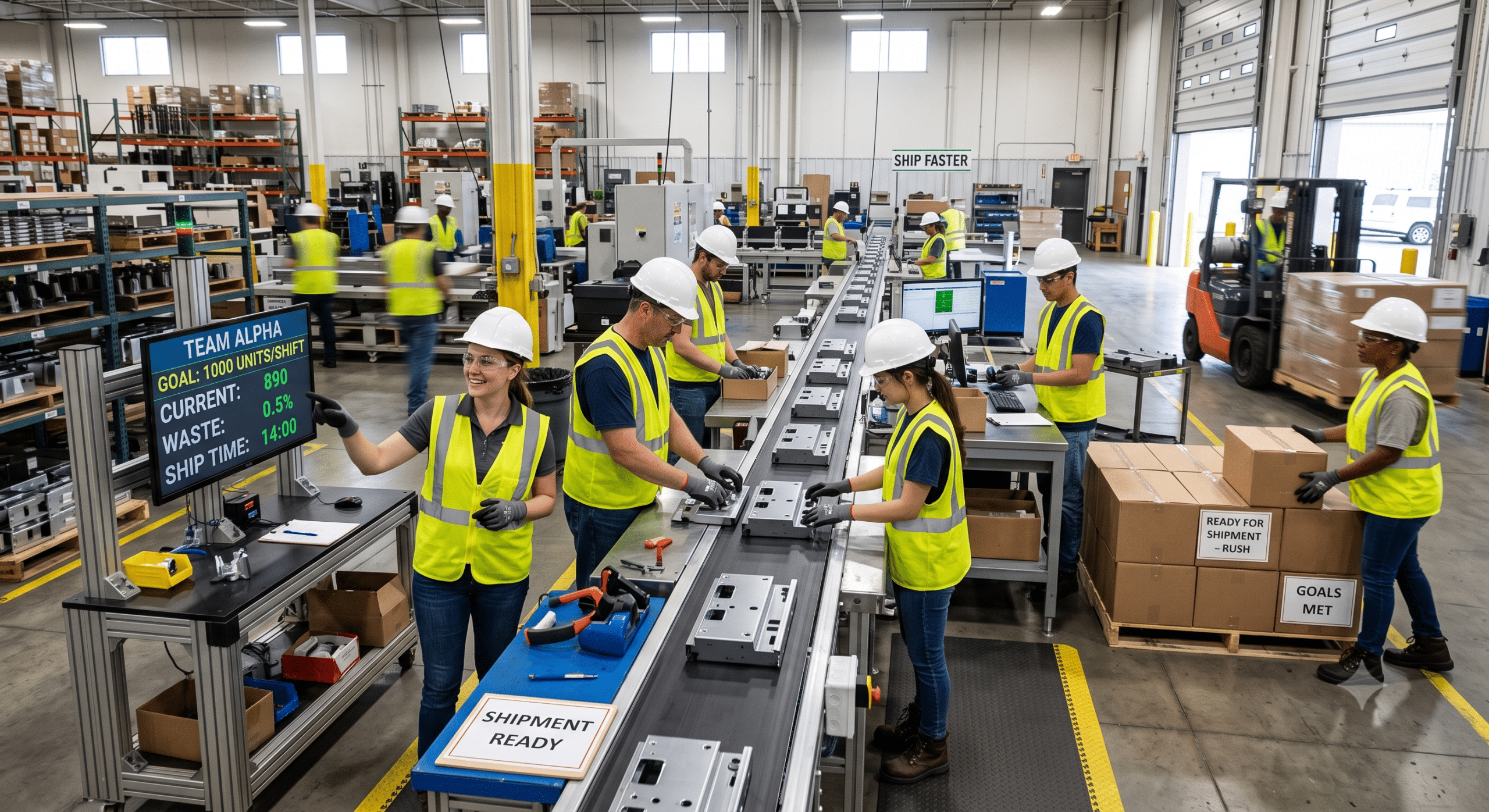
Let’s be honest about the factory floor. You can buy the most expensive, high-tech machines in the world. However, if the people running them are checked out, your numbers will suffer immediately. Driving deep employee engagement in manufacturing is the real secret to turning your frontline workforce into your biggest competitive advantage, keeping machines running, and hitting your daily numbers.
For a long time, the old playbook relied on a flawed assumption. Managers thought fixing a slow production line meant buying more automation. They assumed breathing down workers’ necks with a stopwatch would solve structural issues. But that old-school approach misses the mark completely.
The real secret to hitting your numbers isn’t hidden in a machine manual. Instead, it lives in the hands of your frontline team.
When workers show up just to punch the clock, everything slows down immediately. Machine setups take twice as long. Small equipment hiccups turn into major, costly breakdowns. Worst of all, good raw materials end up in the trash because no one caught a simple mistake.
Maximizing your output requires a shift in how you treat your floor team. Stop looking at workers as just hands to push buttons. Start treating them as the process experts they truly are. When you make this shift, your entire operation changes for the better.
1. The Real Connection Between Happy Workers and Better Numbers
To fix a broken system, you must look closely at three big numbers. These metrics are throughput, cycle time, and scrap rate. They make or break a factory. They are also direct reflections of how your team feels about their daily jobs. Driving employee engagement in manufacturing directly impacts these core calculations.
-
Throughput (How much you make): This is your total volume of good products. When morale is low, machines sit idle. Shift handoffs take too long, and people drag their feet during product changeovers. Highly motivated teams take pride in keeping things moving. They keep your machines running smoothly and your total output high.
-
Cycle Time (How fast you make it): This is the time required to turn raw materials into a finished box on the shipping dock. Slow cycle times usually aren’t caused by slow machines. Instead, human hesitation, searching for tools, or waiting around for instructions creates these delays. A focused worker knows their station inside and out. They move fluidly and keep the product flowing without unnecessary delays.
-
Scrap Rate (How much you throw away): This is the amount of material that ends up in the trash because of defects. Old-school plants wait until the end of the line to inspect products. This means they regularly throw away whole batches of bad parts. In contrast, operators watch the process in real time when you cultivate true employee engagement in manufacturing. They catch mistakes immediately and stop waste before it costs you a fortune.
2. Making Shift Changes Smooth and Fast
The thirty minutes between shifts is usually a total mess. In many plants, the outgoing crew just drops their tools and walks out. This leaves the incoming crew completely in the dark.
The new team must spend the first hour of their shift guessing. They try to figure out which machines are acting up. They waste time locating materials and fixing problems they didn’t create.
You can fix this by turning shift changes into a quick, organized huddle. When your operators care about their work, they don’t just disappear. They talk to the next person taking over their station.
During these huddles, they share real updates. Outgoing staff members discuss how the tools are wearing down. They note what the raw materials look like today. They also flag any weird noises the machine is making.
This simple conversation keeps production moving without a single hiccup. Instead of spending an hour playing catch-up, the new shift hits the ground running. Developing a strong culture of employee engagement in manufacturing keeps your cycle times low and prevents silly mistakes during handoffs.
3. Letting Operators Fix the Small Stuff
Waiting for maintenance to fix every tiny issue is a massive waste of time. In a lot of traditional factories, operators aren’t allowed to touch anything mechanical.
So, when a simple sensor gets dirty, the whole line stops. A minor plastic jam causes total gridlock. The operator sits on a stool and waits for a maintenance technician to walk across the plant. This turns a two-minute fix into a forty-five-minute delay.
A better way is to train your operators to handle basic maintenance on their own. These workers spend eight hours a day with the same machine. They know exactly how it sounds, smells, and shakes. They can tell when something is slightly off long before a computer sensor triggers an alarm.
Give your team the skills and permission to clean, lubricate, and troubleshoot their own stations. When you do, your downtime plummets. Your specialized maintenance techs can stop running around fixing tiny jams. They can focus on big, preventative projects that keep the whole plant running smoothly over the long haul.
4. Listening to the People Who Do the Hard Work
The people in charge of quality control usually sit in clean, quiet offices. They work far away from the actual noise of the factory floor. They write rules based on spreadsheets, but they don’t see day-to-day realities.
Operators often see a quality issue coming hours before a bad part reaches the inspection room. But if the company culture rewards staying quiet, they won’t say a single word.
If you want to drop your scrap rate, make it incredibly easy for your floor workers to speak up. When you prioritize employee engagement in manufacturing, management values these critical floor opinions. Operators become your best line of defense. They won’t hesitate to pause a line if they notice the material looks wrong or a tool is scratching a part.
This open communication lets your engineers and managers fix problems early. You avoid producing hundreds of defective products. Your frontline team stops being passive bystanders and starts acting like quality inspectors, saving you a massive amount of money.
5. Letting Workers Help Write the Rules
Every factory has Standard Operating Procedures. However, most of them were written by an engineer who has never run the machine for a full shift.
When rules are handed down from above without input from the floor, they fail. They are usually awkward, frustrating, or physically exhausting to follow. As a result, workers secretly create their own shortcuts, introducing dangerous mistakes into the process.
The best way to get consistent results is to let your operators help write the work instructions. Your team members do these physical tasks thousands of times a week. Because of this, they know the absolute best way to arrange the tools. They know how to lift heavy parts safely and sequence the steps to avoid getting tired.
When the team helps build the process, they actually follow it. This eliminates the random human errors that cause cycle times to spike. It also makes training new hires much easier because the instructions use plain, practical language.
6. Showing the Score in Real Time
Imagine playing a football game where no one keeps track of the score until the game ends. It sounds ridiculous, but that is exactly how a lot of manufacturing teams work. Operators go through their entire day without knowing if they are winning or losing. They naturally slow down and just watch the clock.
To get your team fired up, you need to show them the score in real time. Install simple, easy-to-read electronic screens at each station. Use these screens to display hourly production goals, the actual number of parts made, and the scrap count.
When teams can see their progress, their behavior shifts. They don’t wait for a manager to tell them they are falling behind. If they see their numbers dipping into the red, they talk to each other and make adjustments immediately. Sustaining clear performance visibility reinforces active employee engagement in manufacturing by keeping everyone accountable.
7. Cross-Training Your Team So Everyone Can Pivot
Depending on just one person to run a critical machine is a huge operational risk. If that specific worker gets sick, your entire plant grinds to a halt. If they go on vacation or quit, lines stall. The remaining team members struggle to keep up, cycle times get thrown off, and the scrap rate jumps because untrained people are trying to fill the gaps.
You can protect your plant by building a simple cross-training system. Take the time to map out who knows how to do each task. Intentionally rotate your workers through different stations throughout the month. This keeps the work interesting for your team and prevents mind-numbing boredom.
From a purely logical standpoint, a cross-trained team is incredibly flexible. If an unexpected bottleneck pops up in the middle of a shift, a supervisor can react quickly. They can move a couple of qualified workers over to help clear the jam. This keeps the work moving smoothly and keeps your production schedules on track.
8. Finding Out Why Mistakes Happen Instead of Blaming People
When something goes wrong, lazy managers look for someone to yell at. They write the worker up and tell everyone to “be more careful.” But yelling doesn’t fix a broken process. The exact same mistake will just keep happening over and over again on different shifts, dragging down your numbers and wasting your raw materials.
High-performing plants don’t play the blame game. Instead, when a quality issue pops up, they bring the operators and the mechanics together right at the machine. They work as a unit to figure out the actual root cause of the problem. They use simple troubleshooting methods, like asking “Why?” five times until they find the true origin of the failure.
By digging past the surface, you find out the truth. The mistake wasn’t caused by a careless worker. Instead, it was caused by a loose bracket, a bad batch of glue, or a confusing instruction manual. Nurturing open problem-solving rather than fear is essential for long-term employee engagement in manufacturing.
9. Creating a Workspace People Actually Want to Show Up To
The old stereotype of a factory is a dark, dirty, dangerous place. If your plant fits that description, you are going to lose your best people to other jobs. High employee turnover ruins your productivity. It forces you to constantly spend time training rookies who make mistakes and slow down the line.
Modern workforce development is all about making the factory floor a clean, bright, and comfortable place to work. This means investing in proper lighting and comfortable flooring that reduces back pain. It also means using modern digital tools instead of messy clipboard paperwork that gets lost or grease-stained.
When your team sees that you care about their physical environment, their mood improves instantly. People stay focused, make fewer mistakes, and take better care of the equipment. Plus, keeping your experienced workers around saves you an immense amount of time and money.
10. Celebrating Good Ideas and Wins
If your workers feel like disposable parts of a giant machine, they will do the bare minimum required to keep from getting fired. They won’t care about hitting targets. They certainly won’t tell you if they see a way to save money or work faster.
To break this cycle, you must connect their daily grind to the bigger picture. Take the time to share company news with the floor team. Show them how the parts they make help real customers. Let them know when the company wins a big new contract because of their hard work.
You should also reward people who come up with smart ideas. If an operator figures out a way to rearrange their workstation to save ten seconds per part, celebrate that win publicly. When your team sees that innovation is noticed, everyone starts looking for creative ways to boost production. Boosting this level of pride is the fastest way to solidify employee engagement in manufacturing.
11. Training Supervisors to Be Coaches, Not Bosses
The biggest factor in whether a worker cares about their job is their direct supervisor. The old-school way of managing was all about barking orders, intimidation, and watching people like a hawk. While screaming at people might get them to work faster for an hour, it destroys morale, causes people to quit, and leads to hidden quality mistakes.
Modern manufacturing requires supervisors who act more like sports coaches than drill sergeants. A good supervisor spends their day out on the floor with the team. They ask what roadblocks they can remove, make sure people have the right tools, and listen to concerns.
When supervisors treat people with respect, they create a safe environment. Operators stop hiding mistakes out of fear and begin reporting anomalies proactively. This open communication allows you to fix small mechanical issues before they turn into major breakdowns, keeping your output high. Ultimately, leadership behavior dictates the success of your employee engagement in manufacturing strategies.
High-Performance Manufacturing FAQ
How does improving employee engagement in manufacturing actually reduce material waste?
When workers care about their jobs, they pay closer attention to detail. Instead of ignoring a machine that is running slightly off-balance, an engaged operator will notice the issue and fix it right away. This quick action keeps the machine from churning out hundreds of defective parts that have to be thrown in the scrap bin.
Can we really speed up production without buying new, expensive automated machinery?
Yes, absolutely. Most delays aren’t caused by slow machines. Instead, they are caused by human confusion, messy workspaces, and slow shift changes. By involving your workers in organizing their stations and streamlining their daily routines, you can cut out hours of wasted time. This speeds up production without spending a dime on new equipment.
What is the easiest way to start cross-training without making workers angry?
Explain that cross-training makes the job less boring. At the same time, workers experience less physical strain because they are no longer repeating the exact same movement throughout the day. In addition, learning multiple stations increases their value to the organization and expands their career opportunities. To encourage participation, tie mastery of new stations to clear pay raises so employees can see a direct reward for developing new skills.
References for Further Reading
-
QAD Redzone Manufacturing Performance Blog: A highly authoritative industry guide breaking down practical floor strategies to increase frontline voice, appreciation, and real-time efficiency on the shop floor. QAD Redzone (High Authority Industrial Platform)
-
Shoplogix Connected Manufacturing Insights: Deep functional breakdowns regarding how to link real-time smart factory data with baseline shop floor culture to eliminate line downtime. Shoplogix (High Authority Operations Blog)
-
The Manufacturing Institute Center for Manufacturing Research: Quantifiable financial and organizational studies tracking the structural retention, safety, and productivity impacts of modern floor cultures. The Manufacturing Institute (National Industry Standard Authority)
-
Gallup Workplace Research: Decades of data proving how high employee engagement levels lead to better quality work, fewer safety accidents, and higher company profitability. Gallup Workplace (Global Research Authority)