

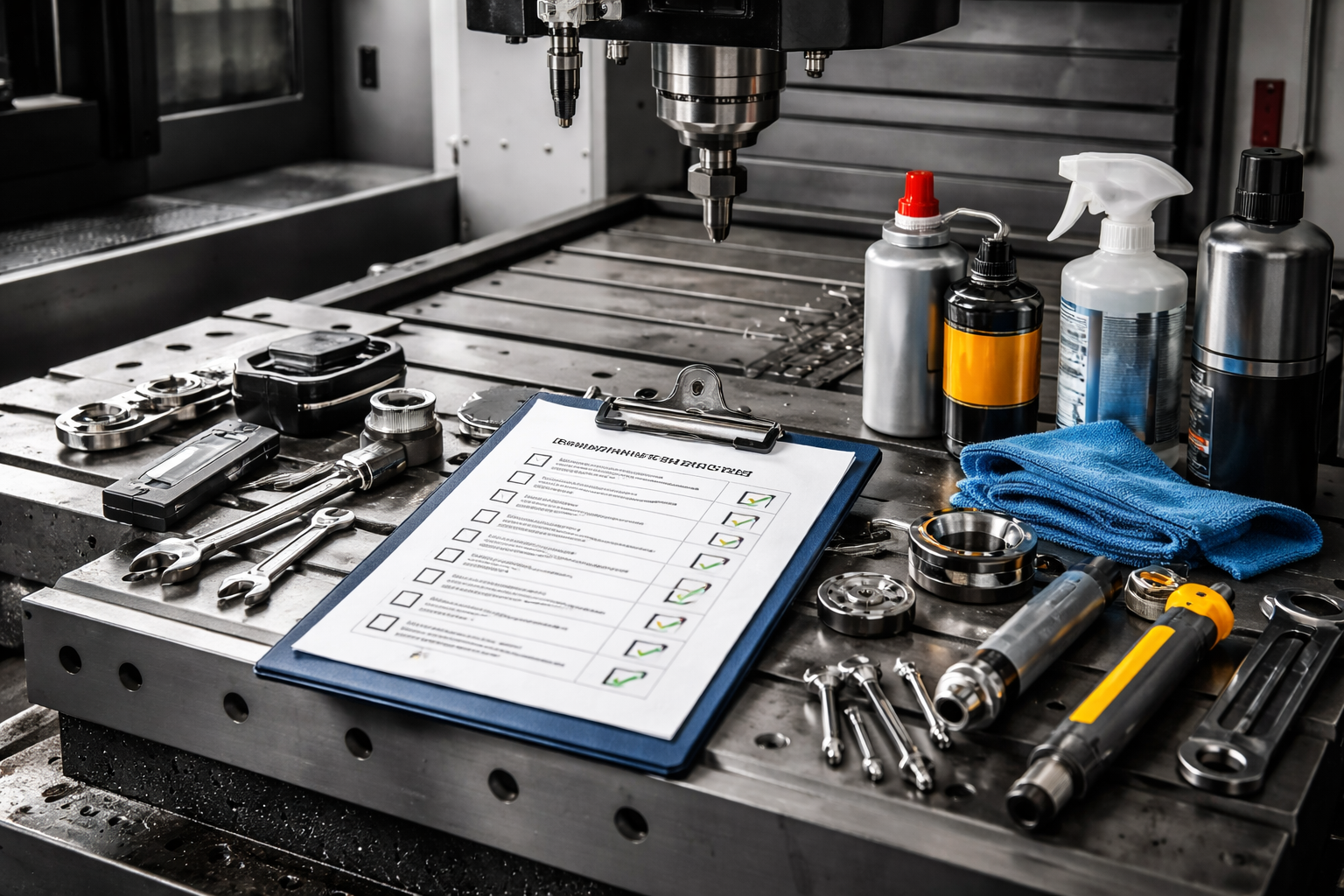
A reliable CNC machine maintenance checklist is essential for keeping equipment running efficiently, reducing downtime, and extending machine life. CNC machines operate with high precision, and even minor issues—like tool wear or poor lubrication—can lead to costly errors or production delays.
In this guide, you’ll learn how to maintain CNC machines using a structured checklist, including daily, weekly, monthly, and preventive maintenance tasks. Whether you manage a workshop or operate machines yourself, this article will help you improve performance and avoid unexpected breakdowns.
What Is a CNC Machine Maintenance Checklist?
A structured maintenance checklist guide helps ensure machines operate efficiently by standardizing inspection and servicing tasks. A CNC machine maintenance checklist is a systematic list of inspection and servicing tasks designed to ensure machines operate at peak performance. It helps operators and technicians track routine maintenance activities and identify issues before they become serious problems.
Using a checklist ensures:
- Consistent machine performance
- Reduced downtime
- Improved accuracy and precision
- Longer equipment lifespan
Why CNC Machine Maintenance Is Important
Regular maintenance is critical for both productivity and cost control.
Improves Machine Accuracy
Well-maintained machines produce parts with consistent precision and tight tolerances.
Reduces Downtime
Preventive maintenance minimizes unexpected breakdowns and production delays.
Extends Equipment Life
Routine servicing reduces wear and tear on critical components.
Enhances Safety
Properly maintained machines reduce the risk of accidents and operational hazards.
Daily CNC Machine Maintenance Checklist
Daily checks are essential to ensure smooth operation and prevent immediate issues.
🔧 Machine Inspection
- Check for unusual noises or vibrations
- Inspect for visible damage or loose components
🛢️ Lubrication Check
- Ensure lubrication systems are functioning properly
- Verify oil levels are within recommended range
🧹 Clean Machine Surfaces
- Remove chips, dust, and debris
- Clean worktable and tool holders
🔍 Tool Inspection
- Check cutting tools for wear or damage
- Replace worn or broken tools
⚙️ Coolant System Check
- Verify coolant levels
- Ensure proper flow and concentration
Weekly CNC Machine Maintenance Checklist
Weekly maintenance focuses on deeper inspection and minor adjustments.
🧼 Thorough Cleaning
- Clean chip conveyors and coolant tanks
- Remove buildup in hard-to-reach areas
🔩 Check Fasteners
- Inspect bolts and screws for tightness
- Secure any loose components
🔌 Electrical Inspection
- Check cables and connections
- Look for signs of wear or overheating
🛠️ Axis Movement Check
- Test smooth movement along X, Y, and Z axes
- Listen for irregular motion
Monthly CNC Machine Maintenance Checklist
Monthly tasks ensure long-term performance and system reliability.
🛢️ Lubrication System Maintenance
- Replace or refill lubricants
- Inspect lubrication lines for blockages
🔧 Spindle Inspection
- Check spindle alignment and performance
- Listen for unusual sounds
🧪 Coolant Quality Check
- Test coolant concentration
- Replace if contaminated
📏 Calibration Check
- Verify machine accuracy using test parts or measurement tools
Preventive Maintenance Best Practices
Preventive maintenance goes beyond routine checks to avoid major failures.
Schedule Regular Maintenance
Create a maintenance schedule based on machine usage and manufacturer recommendations.
Keep Maintenance Logs
Track all inspections, repairs, and replacements to identify patterns and recurring issues.
Train Operators
Ensure operators understand proper machine usage and basic maintenance tasks.
Use Quality Tools and Parts
High-quality components reduce wear and improve performance.
Key Components to Monitor
Understanding critical machine parts helps prioritize maintenance.
Spindle
Responsible for tool rotation—requires regular inspection and lubrication.
Ball Screws
Ensure smooth axis movement—must be clean and properly lubricated.
Guideways
Maintain alignment and stability—require frequent cleaning.
Tool Holders
Affect machining accuracy—should be inspected for wear.
Coolant System
Prevents overheating—must be clean and properly maintained.
Common CNC Machine Maintenance Issues
Even with regular maintenance, problems can occur.
Tool Wear
Leads to poor surface finish and reduced accuracy.
Overheating
Caused by poor lubrication or coolant failure.
Misalignment
Results in dimensional inaccuracies.
Electrical Failures
Can disrupt machine operation and cause downtime.
Early detection helps prevent major damage.
CNC Machine Maintenance Tips for Efficiency
Follow Manufacturer Guidelines
Always adhere to recommended maintenance procedures.
Avoid Overloading Machines
Excessive loads increase wear and reduce lifespan.
Maintain a Clean Environment
Dust and debris can affect machine performance.
Monitor Machine Performance
Track changes in accuracy, noise, or speed.
Benefits of a CNC Machine Maintenance Checklist
Using a structured checklist offers multiple advantages:
- Increased machine reliability
- Improved production efficiency
- Reduced repair costs
- Enhanced product quality
- Longer equipment lifespan
Future Trends in CNC Maintenance
Technology is transforming machine maintenance practices.
Predictive Maintenance
Uses sensors and data analytics to predict failures before they occur.
IoT Integration
Connected machines provide real-time performance data.
Automation
Automated systems handle routine maintenance tasks.
AI Diagnostics
Artificial intelligence helps identify and troubleshoot issues quickly.
Conclusion
A well-structured CNC machine maintenance checklist is essential for ensuring consistent performance, reducing downtime, and extending equipment life. By following daily, weekly, and monthly maintenance routines, manufacturers can maintain precision and avoid costly disruptions.
Implementing preventive maintenance strategies and leveraging modern technologies further enhances efficiency and reliability.