
Right now, American factories face a critical roadblock known as the manufacturing skills gap. Put simply, production machinery is getting much more advanced, but finding workers who actually know how to run them has become incredibly difficult. For a long time, factory bosses looked at hiring in a simple way: if you needed to make more products, you just added more headcounts to the assembly lines. But that legacy strategy does not work anymore. When managers fail to address this technical divide immediately, the ongoing manufacturing skills gap directly threatens daily output, causes missed shipping deadlines, and hurts operational stability.
According to top industry experts, millions of good factory jobs might go unfilled over the next few years simply because applicants lack the right training. When your shop floor lacks enough trained workers, you see the problems immediately in your daily numbers. Production slows down because machines sit empty or run too slow. Jobs take longer because new workers do not know how to set up equipment quickly. Worst of all, scrap rates go up. Untrained workers make small mistakes that ruin raw materials and create defective parts.
If you manage a team or handle workforce training, you cannot treat training like a boring human resources requirement. It is actually your best tool to fix slow production lines. It helps you overcome the manufacturing skills gap quickly. To close the training divide, you must get out of the classroom and focus on the shop floor. You need to design your training around three main goals. These goals are getting more products out the door, making jobs take less time, and stopping expensive waste.
1. Move the Training Out of the Classroom and Onto the Floor
The old way of training new hires is broken. Most factories put new workers in a quiet break room for a week. They read heavy paper manuals and watch old safety videos. Then, they throw them onto a fast-moving production line and expect them to remember everything. This approach fails because reading about a machine is completely different from running it. New hires take weeks to get up to speed. This lag slows down production and leads to costly mistakes early on.
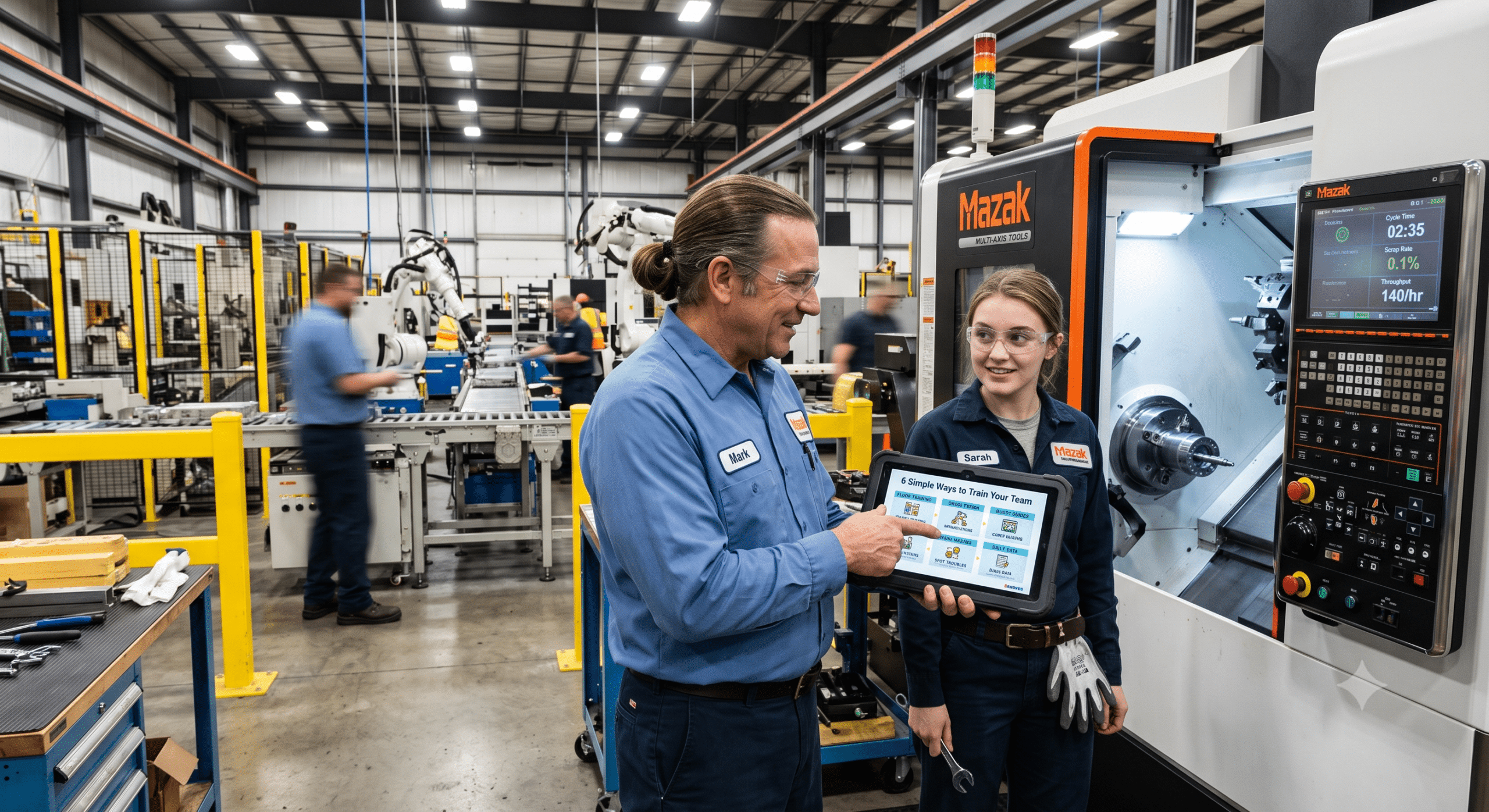
Instead of separating school from work, the best factories put learning tools directly at the workstation. This means using simple digital screens, short video clips, and clear pictures. Workers can look at these visual tools while they work. By breaking tough instructions down into tiny steps, operators get help the exact second they need it. This hands-on approach directly counters the negative effects of the manufacturing skills gap by accelerating real-world competency.
For example, do not force someone to memorize a confusing fifty-step process to change out a machine. Instead, place a digital tablet right next to the equipment. The screen guides them through every single lever and dial turn.
When people learn while actually doing the job, they become pros much faster. This keeps production moving smoothly and cuts down on the time it takes to finish a job. Plus, it removes the guesswork. Every single operator follows the exact same visual guide. Because of this, they do not make the minor setup mistakes that ruin parts and create scrap waste.
2. Cross-Train Workers So Anyone Can Run Any Machine
Relying on just one person to run a specialized machine is a massive risk. If only one technician knows how to program a specific welding robot, your whole factory is in trouble. The same risk applies to a complex milling center. The day that person gets sick, takes a vacation, or retires, your production line hits a wall. The line either stops completely or runs incredibly slow. This delay hurts your daily output and postpones customer orders.
+-------------------------------------------------------------+
|                     CROSS-TRAINING GRID                     |
+-----------------------+------------+------------+-----------+
| Worker Name           | Machine A  | Machine B  | Station C |
|                       | (CNC Mill) | (Robotics) | (Quality) |
+-----------------------+------------+------------+-----------+
| John Doe              |  Expert    |  Learner   |  Average  |
| Jane Smith            |  Average   |  Expert    |  Learner  |
| Alex Rivera           |  Learner   |  Average   |  Expert   |
+-----------------------+------------+------------+-----------+
You can fix this weakness by building a simple cross-training chart. This chart is just a clear grid. It shows what skills your team members have and where they need to learn more. By intentionally teaching workers how to run two or three different machines, you create a flexible team. They can jump in wherever you need them most. Building this internal flexibility is an excellent way to insulate your business. It protects you from the wider manufacturing skills gap affecting the current labor market.
From a production standpoint, cross-training stops delays before they start. If a bottleneck builds up at the assembly station, a manager can instantly move a trained worker over. This sudden shift clears the backup fast. It keeps materials moving smoothly through the building.
Cross-training also improves quality. An operator learns to understand how parts are made at the beginning of the line. Because of this, they get much better at spotting errors before they reach the end of the line. Catching mistakes early means you stop making bad parts, which saves you tons of money on wasted materials.
3. Turn “Secret Worker Tricks” into Clear Visual Guides
One of the gauges for wasted material and slow production is the loss of “tribal knowledge.” In almost every plant, senior workers exist who know the machines inside and out. They know exactly how a machine should sound. They know when to tighten a belt or how to tweak a feeder to keep things running perfectly. The problem is that these tricks are stuck in their heads. They are not written down anywhere. When these veterans retire, all that valuable information leaves the building with them. This loss quickly widens the localized manufacturing skills gap on your own floor.
To save this knowledge, you need to change how you write your Standard Operating Procedures (SOPs). Get rid of the giant, dusty binders full of confusing text. Replace them with quick guides that use clear photos and bright color-coding. Add short video clips recorded right on the floor. These guides show exactly what a perfect setup looks like and warn workers about common mistakes.
[Old Text SOP]                      [New Visual SOP]
"Turn the knob until you feel   -->  "Turn the knob to the green line.
 proper resistance."                 Watch Video A to see how it looks."
                                     (Stops mistakes completely)
When you share these best practices with everyone, you get the exact same results on every single shift. A worker arriving at midnight sets up the machine the exact same way as the worker who started at noon. This consistency keeps your machines running within perfect limits. It stops the sudden drops in quality that cause high scrap rates. It also takes the guesswork out of switching from making one product to another. This shift keeps your setup times remarkably short.
4. Set Up a Buddy System to Fix Machine Downtime Fast
While digital screens and clear guides are great, they cannot replace human help. New workers often get nervous when a giant automated machine flashes an error light. It stops working under the pressure of a busy shift, causing immediate panic. Without an experienced coworker nearby to help, a beginner starts guessing. They press random buttons to fix it. This trial-and-error approach usually keeps the machine broken longer. It can even cause permanent equipment damage.
You can fix this by setting up a structured buddy system. This system pairs new hires with seasoned pros right on the floor. To make sure this program actually helps the business, judge its success on machine downtime metrics. Specifically, track how fast the team fixes broken machines. Mentors should teach newer workers how to read error codes. They show them how to find the root cause of a failure and fix the problem safely.
When a new operator has an expert backing them up, they gain confidence fast. They stop sitting around waiting for the maintenance department to show up for a minor issue. Instead, they learn how to clear simple jams and reset the system on their own. Keeping the machines running means you make more products every day. Plus, having a mentor look over their shoulder ensures the machine is fixed right the first time. This oversight prevents errors that lead to junk parts.
5. Teach Operators How to Spot Machine Troubles Early
In many old-school factories, workers focus only on making parts as fast as possible. If a machine starts acting up, they are told to just call the maintenance crew. This habit creates a big wall between production and repair. Operators often ignore early warning signs like a strange clicking sound or a small oil leak. They ignore a rising temperature gauge because they think it is not their job. As a result, a minor issue turns into a massive breakdown that stops the whole plant for days.
+-----------------------------------------------------------+
|              EARLY WARNING REPAIR LOOP                    |
+-----------------------------------------------------------+
|  1. Worker notices a slight strange machine sound.        |
|  2. Worker makes a quick adjustment before it breaks.      |
|  3. The line keeps running at perfect normal speed.       |
|  4. Production stays high; zero ruined parts.             |
+-----------------------------------------------------------+
You can break down this wall by teaching basic machine care to your everyday operators. Your frontline team should know how to perform simple daily checks. They must clean their own stations and add oil where it is needed. They need to learn how to monitor the health of their machines. This training helps them spot small changes before those errors ruin the product.
When your team catches mechanical problems early, you avoid surprise breakdowns. This habit keeps production moving at a steady pace. It reduces the rush and panic that causes long cycle times. Furthermore, a machine that is clean, well-oiled, and perfectly aligned makes perfect parts every time. This precision drives your scrap rate down to near zero.
6. Use Live Daily Data to Help Workers Improve Instantly
A lot of company training programs fail because the feedback comes too late. If a manager only looks at performance during an annual review, the data is too old to matter. Imagine an operator is struggling to meet production speeds on a Tuesday morning. Waiting months to talk about it wastes a massive amount of time. It also wastes expensive raw materials.
To get the best performance out of your floor, connect your training directly to live machine data. Modern factory software tracks production speeds and scrap counts every single minute. Sometimes the main dashboard shows a sudden drop in speed or a spike in errors at a certain station. When this happens, managers should instantly treat it as a chance to help. Implementing a rapid feedback system is one of the fastest ways to bypass the industry-wide manufacturing skills gap. It targets specific performance issues immediately.
+-----------------------------------------------------------+
|               REAL-TIME HELP LOOP                         |
+-----------------------------------------------------------+
|  [Live Floor Data] --> Spots a slow station instantly     |
|            |                                              |
|            v                                              |
|  [Quick Action]    --> Manager steps in to coach worker   |
|            |                                              |
|            v                                              |
|  [Good Result]     --> Machine speed goes back to normal  |
+-----------------------------------------------------------+
This data-driven approach lets managers give help exactly when workers need it. Suppose the computer shows that a worker always slows down during a specific product changeover. A trainer can walk over and show them an easier way to do it right away. Catching small mistakes early stops them from becoming permanent, bad habits. This rapid support keeps production high and stops waste before it piles up in the trash bin.
Connecting Factory Training to Your Bottom Line
Fixing the manufacturing skills gap does not require expensive, boring classrooms. The skills of your frontline workers completely control how much product you can make. They dictate how high your costs are and how successful your company will be. When you focus on smart, floor-based training, you build a stronger team. This team makes the entire company better every single day.
By investing directly in the hands-on skills of your people, you will naturally speed up your lines. You will make more goods and stop wasting materials. The manufacturing companies that win in the future will treat worker training as a main ingredient in daily operational success.
Frequently Asked Questions
How does the manufacturing skills gap hurt our daily production numbers?
The manufacturing skills gap means your factory lacks enough trained people to run and fix complex machinery. When workers do not have the right skills, machines sit idle. They also run way slower than they should. Newer workers take much longer to set up machines or clear simple jams. These daily delays create big backups on the floor. They slow down the flow of materials and reduce the total amount of finished product you can ship out.
Why does reading manuals in a classroom fail to lower factory scrap rates?
Classroom training fails because it separates learning from the real-world action of a busy shop floor. Reading text or watching slides in a quiet room does not give a worker hands-on muscle memory. They do not build the instincts needed to run fast machinery safely. Without practice at the actual machine, new hires struggle to use what they learned when production starts moving fast. This confusion leads to mistakes, poor adjustments, and bad parts.
What are the best metrics to track if our cross-training program is working?
To see if your cross-training is paying off, track three main things on the floor. First, check how fast you clear backups at bottleneck stations. Second, measure your total machine setup times during product changes. Third, monitor the length of your unexpected shutdowns. You want to see if you can easily move workers to help stuck stations. If these numbers are improving, your training program is working well.
How does writing down “secret worker tricks” protect us when people retire?
Writing down these tricks protects your plant by turning personal knowledge into public guides that anyone can use. When you record a senior technician’s unique troubleshooting methods, that knowledge stays with the company forever. This means that when a veteran worker retires, their expertise remains on the floor. It allows new workers to step in and run the machines perfectly without a drop in daily quality.
References for Further Reading
-
National Institute of Standards and Technology (NIST) – The Skills Gap in U.S. Manufacturing
-
National Association of Manufacturers (NAM) – Industry Outlook and Trends
-
L2L Blog – The Importance of Manufacturing Workforce Development and Frontline Training
-
World Economic Forum – How Do We Secure the Manufacturing Workforce of the Future?