

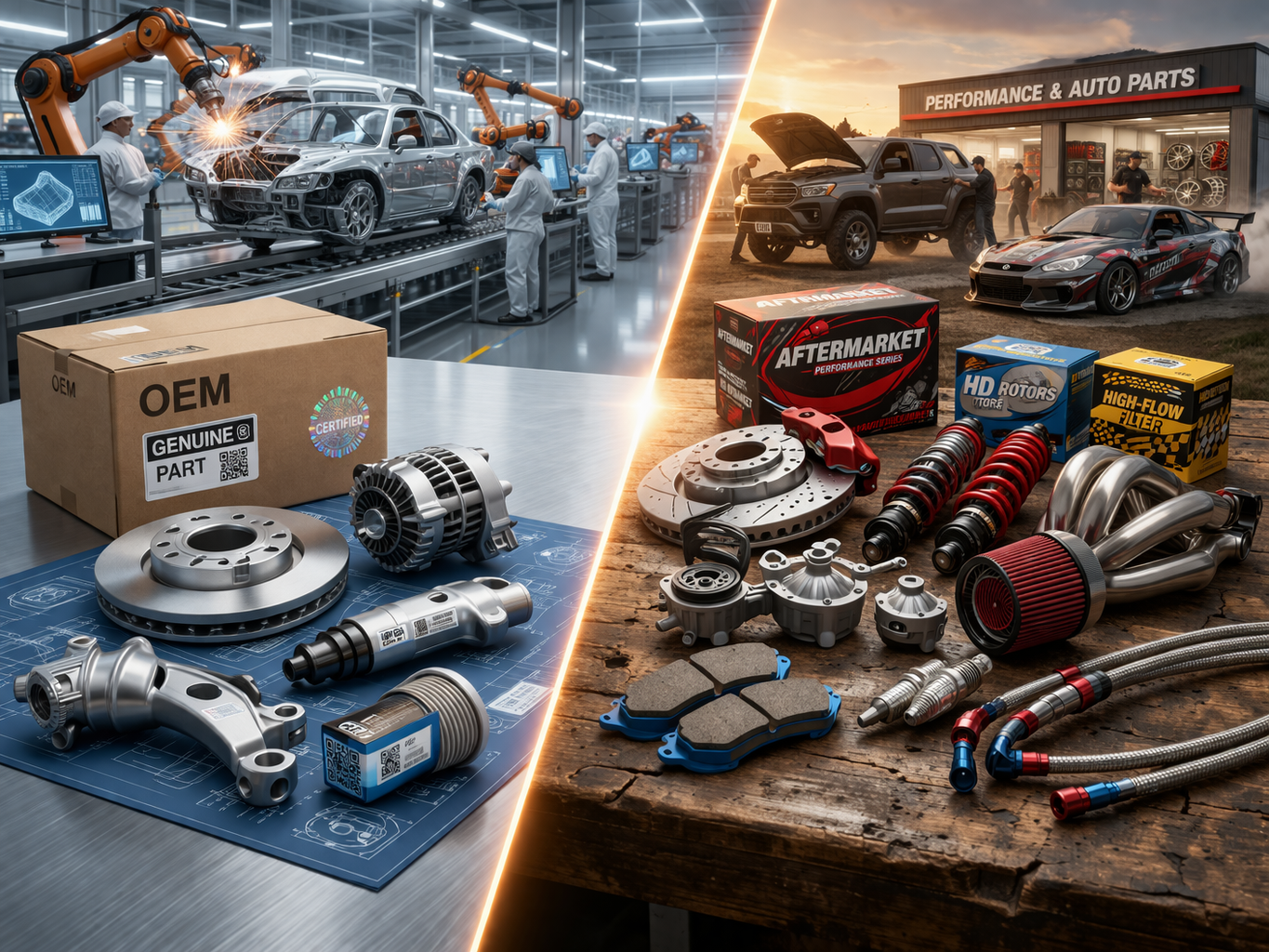
OEM vs aftermarket parts is one of the most important comparisons in automotive parts manufacturing, influencing quality, cost, and performance across the industry. For a deeper industry breakdown, this PartsTech automotive parts manufacturing guide explains how OEM and aftermarket components impact supply chains and repair workflows. From large-scale production facilities to independent suppliers, understanding these differences helps businesses make smarter decisions.
In this expert guide, we’ll break down how OEM and aftermarket parts are produced, how they differ in quality and performance, and what role they play in the broader automotive manufacturing ecosystem.
What Are OEM Parts in Automotive Manufacturing?
OEM parts are components that are designed and manufactured by the same company that produced the original parts used in a vehicle. These parts are either made directly by the automaker or by contracted manufacturers following strict specifications.
Key Characteristics of OEM Parts
- Exact specifications: Built using the same design, materials, and tolerances as the original
- Quality assurance: Subject to strict quality control and testing standards
- Compatibility: Guaranteed fit and function with specific vehicle models
- Brand alignment: Often packaged and sold under the automaker’s brand
OEM Manufacturing Process
OEM parts manufacturing involves highly controlled processes such as:
- Precision machining (CNC): Ensures tight tolerances
- Robotic assembly lines: Improves consistency and speed
- Advanced materials engineering: Includes alloys, composites, and polymers
- Quality validation: Includes stress testing, thermal testing, and lifecycle simulations
Because OEM parts must match original specifications exactly, the production process is less flexible but more consistent.
What Are Aftermarket Parts?
Aftermarket parts are components produced by third-party manufacturers that are not directly affiliated with the original vehicle manufacturer. These parts are designed to replace or enhance OEM components.
Key Characteristics of Aftermarket Parts
- Variety of options: Multiple brands offer alternatives for the same part
- Cost flexibility: Typically more affordable than OEM parts
- Innovation potential: Some offer performance upgrades or design improvements
- Wide availability: Distributed through global supply chains
Aftermarket Manufacturing Process
Unlike OEM manufacturing, aftermarket production can vary widely depending on the manufacturer:
- Reverse engineering: Studying OEM parts to replicate or improve them
- Flexible production methods: Including batch manufacturing and modular tooling
- Material variations: Use of alternative materials to reduce cost or improve performance
- Less standardized QA: Quality depends heavily on the manufacturer’s standards
Aftermarket manufacturers often compete on price, performance, or availability rather than strict adherence to original specifications.
OEM vs Aftermarket Parts: Core Differences
Understanding the differences between OEM and aftermarket parts is critical for decision-making in manufacturing and procurement.
1. Quality and Standards
- OEM: High and consistent quality due to strict adherence to original design specifications
- Aftermarket: Varies widely; premium brands may match or exceed OEM quality, while low-cost options may compromise durability
2. Cost Structure
- OEM: Generally more expensive due to brand, certification, and controlled production
- Aftermarket: More competitive pricing due to mass production and alternative materials
3. Manufacturing Control
- OEM: Centralized and tightly regulated manufacturing process
- Aftermarket: Decentralized, with varying levels of quality control
4. Innovation and Customization
- OEM: Focused on standardization and reliability
- Aftermarket: Encourages innovation, customization, and performance upgrades
5. Supply Chain Dynamics
- OEM: Limited distribution channels, often through authorized dealers
- Aftermarket: Broad distribution via wholesalers, retailers, and online platforms
The Role of OEM Parts in Automotive Manufacturing
OEM parts play a critical role in maintaining vehicle integrity, safety, and warranty compliance. Manufacturers rely on OEM components for:
- Assembly line production: Ensuring consistency in new vehicles
- Warranty repairs: Maintaining manufacturer standards
- Regulatory compliance: Meeting safety and environmental standards
OEM suppliers are often part of a Tier 1 supply chain, working closely with automakers in long-term partnerships.
The Role of Aftermarket Parts in the Industry
The aftermarket sector is a massive and growing segment of automotive manufacturing. It supports:
- Vehicle maintenance and repair
- Performance tuning and upgrades
- Customization and personalization
Aftermarket manufacturers often operate in Tier 2 and Tier 3 supply chains, supplying parts to distributors and repair shops worldwide.
Manufacturing Challenges: OEM vs Aftermarket
Challenges in OEM Manufacturing
- High production costs
- Strict compliance requirements
- Limited flexibility in design changes
- Dependence on long-term contracts
Challenges in Aftermarket Manufacturing
- Quality inconsistency across brands
- Intellectual property concerns
- Reverse engineering limitations
- Market saturation and competition
Technology Trends Shaping Both Segments
Modern automotive parts manufacturing is evolving rapidly, impacting both OEM and aftermarket sectors.
1. Automation and Robotics
- Increased use of robotic arms in assembly
- Improved production speed and accuracy
2. AI and Predictive Manufacturing
- AI-driven quality control systems
- Predictive maintenance in production facilities
3. 3D Printing (Additive Manufacturing)
- Rapid prototyping for OEM parts
- Custom aftermarket parts production
4. Smart Supply Chains
- Real-time tracking and inventory management
- Blockchain for supply chain transparency
5. Sustainable Manufacturing
- Use of recycled materials
- Energy-efficient production processes
Which Is Better: OEM or Aftermarket?
There is no one-size-fits-all answer. The choice depends on the specific application, budget, and performance requirements.
Choose OEM Parts If:
- You need guaranteed compatibility
- The vehicle is under warranty
- Safety and reliability are top priorities
- You require consistent manufacturing standards
Choose Aftermarket Parts If:
- You want cost-effective solutions
- You need performance upgrades
- You are customizing a vehicle
- You have access to reputable aftermarket brands
Business Perspective: OEM vs Aftermarket in Manufacturing Strategy
For entrepreneurs and manufacturers entering the automotive parts industry, understanding where to position your business is crucial.
OEM Manufacturing Business Model
- Requires significant capital investment
- Involves long-term contracts with automakers
- Focuses on precision and compliance
- Lower margins but higher volume stability
Aftermarket Manufacturing Business Model
- Lower entry barriers
- Greater flexibility in product design
- Opportunities for branding and innovation
- Higher competition but scalable growth
Quality Control and Certification Standards
Both OEM and high-quality aftermarket manufacturers follow industry standards such as:
- ISO/TS 16949 (now IATF 16949): Automotive quality management
- ISO 9001: General quality management systems
- SAE standards: Engineering and performance benchmarks
OEM manufacturers must strictly comply with these, while reputable aftermarket companies often adopt them to remain competitive.
Future Outlook of Automotive Parts Manufacturing
The line between OEM and aftermarket is gradually blurring due to technological advancements. Some aftermarket manufacturers now produce parts that meet or exceed OEM standards, while OEMs are expanding into the aftermarket space.
Key future trends include:
- Integration of smart components and sensors
- Growth of electric vehicle (EV) parts manufacturing
- Increased reliance on digital manufacturing ecosystems
- Expansion of globalized supply chains
Conclusion
The distinction between OEM and aftermarket parts is fundamental to understanding automotive parts manufacturing. OEM parts offer precision, reliability, and compliance, while aftermarket parts provide flexibility, affordability, and innovation.
For manufacturers, the decision to focus on OEM or aftermarket production depends on resources, expertise, and market strategy. For buyers and businesses, understanding these differences ensures smarter decisions in sourcing, production, and long-term growth.
As the automotive industry continues to evolve with AI, automation, and sustainability, both OEM and aftermarket sectors will remain essential pillars—driving innovation, competition, and efficiency across the global market.