

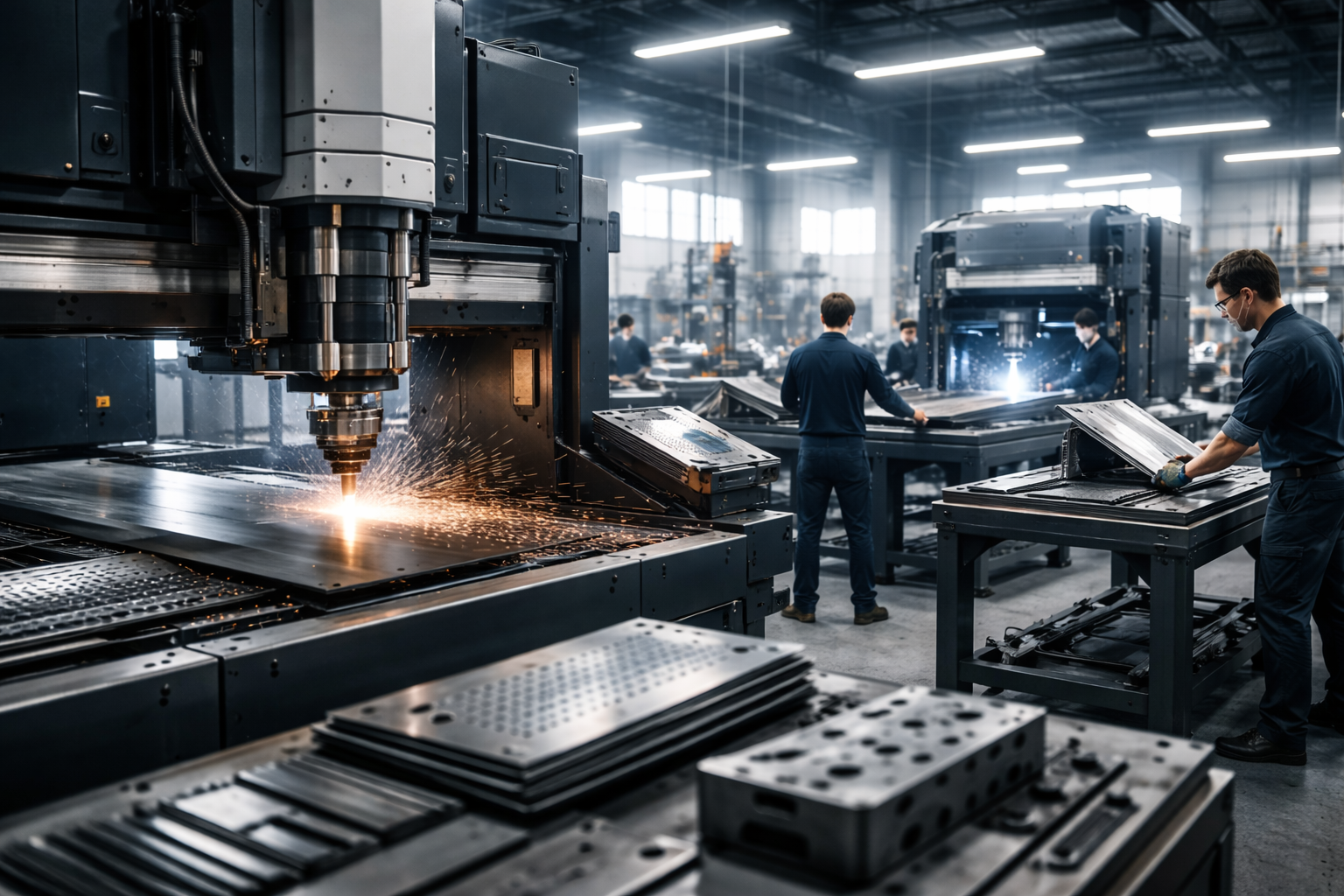
Sheet metal fabrication is a critical process in modern manufacturing, enabling the transformation of flat metal sheets into functional components and structures. Sheet metal fabrication is a critical process in modern manufacturing, and understanding sheet metal fabrication processes is essential for improving efficiency and product quality.
From automotive systems to construction materials and electronics enclosures, this manufacturing method supports a wide range of industries that demand precision, durability, and scalability.
In today’s competitive industrial landscape, manufacturers rely on advanced fabrication techniques to improve efficiency, reduce costs, and accelerate production timelines. This article explores the processes, materials, applications, and emerging trends shaping the future of this essential manufacturing approach.
What Is Sheet Metal Fabrication?
Sheet metal fabrication refers to the process of cutting, bending, and assembling flat metal sheets into finished products. These sheets are typically made from materials such as steel, aluminum, copper, and brass.
The process combines mechanical operations with automated technologies to produce components with high accuracy and consistency. It is widely used for both prototyping and large-scale production due to its flexibility and efficiency.
Importance in Modern Manufacturing
This manufacturing method plays a vital role in producing strong, lightweight, and cost-effective components. Its adaptability makes it suitable for industries that require both high performance and precision.
Key Advantages
- Strength and durability: Ideal for structural and industrial use
- Cost efficiency: Supports mass production with minimal waste
- Design flexibility: Allows complex shapes and custom designs
- Precision: Advanced machinery ensures consistent results
- Scalability: Suitable for both small and large production runs
Core Processes Involved
Understanding the primary processes helps in selecting the most effective approach for specific applications.
1. Cutting
Cutting is the initial stage where raw metal sheets are divided into smaller sections. Modern cutting techniques offer high precision and speed.
Common methods include:
- Laser cutting for detailed and accurate designs
- Plasma cutting for thicker materials
- Waterjet cutting for heat-sensitive metals
- Mechanical shearing for straight cuts
These methods reduce waste and improve production efficiency.
2. Bending
Bending shapes the metal along a straight axis to create angles and forms. This process is essential for producing parts such as brackets, frames, and enclosures.
Tools used:
- Press brakes
- Folding machines
Accuracy in this stage ensures proper fit and functionality during assembly.
3. Forming
Forming goes beyond simple bending to create more complex geometries, including curves and deep shapes.
Techniques include:
- Stamping
- Roll forming
- Deep drawing
These methods are widely used in automotive panels and appliance components.
4. Joining
After shaping, individual parts are assembled into final products using various joining techniques.
Common methods:
- Welding (MIG, TIG, spot welding)
- Riveting
- Mechanical fastening
- Adhesive bonding
The choice of method depends on strength requirements and material compatibility.
5. Finishing
Finishing improves both the appearance and durability of the final product. It also enhances resistance to corrosion and environmental damage.
Common finishing options:
- Powder coating
- Anodizing
- Painting
- Polishing
This step is essential for extending product lifespan and improving aesthetics.
Materials Used in Fabrication
Material selection directly affects performance, cost, and manufacturability.
Steel
- Strong and affordable
- Common in construction and automotive applications
Aluminum
- Lightweight and corrosion-resistant
- Ideal for aerospace and electronics
Copper
- Excellent electrical conductivity
- Used in wiring and electronic components
Brass
- Corrosion-resistant with decorative appeal
- Suitable for architectural applications
Industry Applications
This manufacturing process is used across multiple sectors due to its versatility and reliability.
Automotive Sector
Used for producing:
- Body panels
- Structural components
- Exhaust systems
Its strength and lightweight properties contribute to vehicle performance and efficiency.
Aerospace Industry
Precision is critical in aerospace applications. Fabricated metal components are used for:
- Aircraft structures
- Wing assemblies
- Internal frameworks
Construction and Architecture
Widely used in building systems such as:
- Roofing panels
- Ventilation systems
- Structural supports
Electronics and Enclosures
Metal enclosures protect sensitive equipment and ensure durability.
Examples include:
- Server racks
- Control panels
- Equipment housings
Medical Equipment
High precision and hygiene standards make this process suitable for:
- Medical device housings
- Surgical tools
- Laboratory equipment
Benefits of Modern Fabrication Techniques
High Precision
Computer-controlled machinery ensures tight tolerances and consistent quality.
Faster Production
Automation reduces production time and increases efficiency.
Reduced Material Waste
Advanced cutting techniques optimize material usage.
Customization
Flexible processes allow manufacturers to create tailored solutions.
Scalability
Production can easily scale from prototypes to high-volume manufacturing.
Challenges in Fabrication
Despite its advantages, manufacturers must address certain challenges:
Material Constraints
Different metals behave differently during processing, affecting results.
Equipment Investment
Advanced machinery requires significant capital investment.
Skilled Workforce
Experienced operators are essential for maintaining quality and efficiency.
Design Limitations
Some complex geometries may require multiple processes or specialized tools.
Best Practices for Optimal Results
To maximize efficiency and quality, manufacturers should follow these best practices:
1. Design for Manufacturability
Ensure designs are compatible with available processes to reduce costs and errors.
2. Choose Appropriate Materials
Select materials based on performance requirements and application needs.
3. Use Advanced Software
Leverage CAD and CAM tools for accurate design and streamlined production.
4. Implement Quality Control
Regular inspections ensure consistency and compliance with standards.
5. Optimize Workflow
Efficient production planning reduces lead times and improves output.
Future Trends in the Industry
The industry continues to evolve with advancements in technology and manufacturing techniques.
Automation and Robotics
Robotic systems improve precision, speed, and consistency in production.
Smart Manufacturing
Integration with IoT enables real-time monitoring and predictive maintenance.
Advanced Materials
New alloys and composites expand design possibilities.
Sustainable Practices
Eco-friendly processes and recycling efforts are becoming increasingly important.
Digital Integration
Cloud-based systems and digital twins enhance collaboration and accuracy.
Conclusion
Sheet metal fabrication remains a cornerstone of modern manufacturing, offering a reliable and efficient way to produce high-quality metal components. With advancements in automation, materials, and digital technologies, this process continues to evolve and adapt to the demands of various industries.
By understanding its core processes, benefits, and challenges, manufacturers can make informed decisions that improve efficiency, reduce costs, and maintain a competitive edge. As innovation continues to shape the future of manufacturing, this versatile method will remain essential in delivering durable and precise solutions across multiple sectors.