

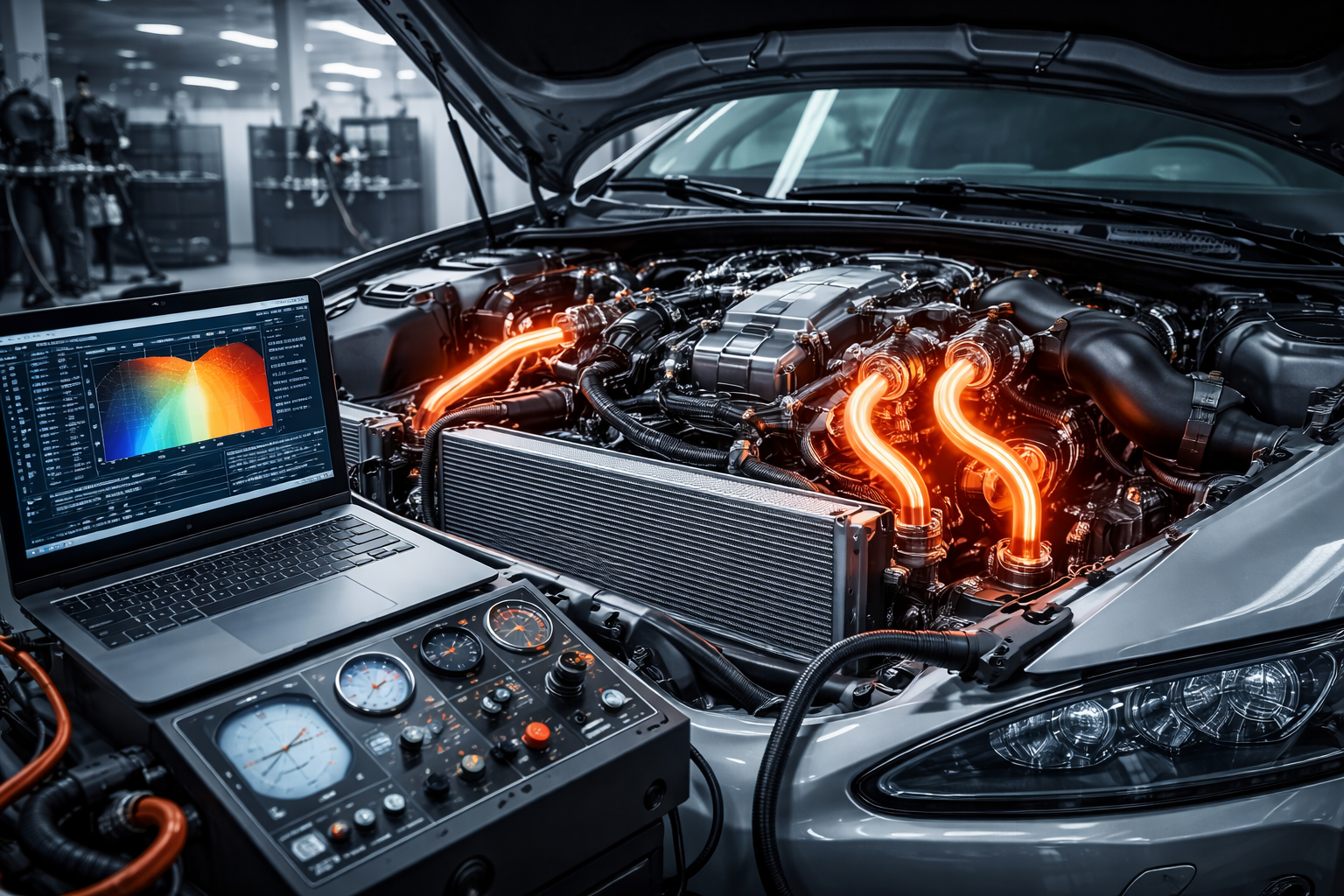
Thermal management in the automotive industry is a critical discipline that ensures vehicles operate efficiently, safely, and reliably under varying conditions. Thermal management in the automotive industry is a critical discipline, and effective automotive thermal management system design ensures optimal performance, energy efficiency, and long-term component reliability.
As engines, batteries, and electronic systems generate significant heat, controlling temperature has become essential for performance optimization and longevity.
This comprehensive guide explains thermal management automotive systems, covering principles, components, technologies, and best practices used in modern vehicles.
What Is Thermal Management in Automotive Systems?
Thermal management automotive refers to the process of controlling heat generation, distribution, and dissipation within a vehicle. It ensures that all components operate within their optimal temperature ranges.
Key Objectives
- Maintain optimal engine temperature
- Prevent overheating and component failure
- Improve energy efficiency
- Enhance passenger comfort
Thermal management systems are essential in both internal combustion engine (ICE) vehicles and electric vehicles (EVs).
Why Thermal Management Is Important
Effective thermal management plays a crucial role in vehicle performance and durability.
Key Benefits
- Improved Engine Efficiency: Maintains optimal combustion conditions
- Extended Component Life: Reduces wear caused by overheating
- Enhanced Safety: Prevents thermal-related failures
- Better Fuel Economy: Reduces energy losses
- Battery Protection (EVs): Maintains stable battery performance
Without proper thermal control, even advanced automotive systems can degrade rapidly.
Core Components of Automotive Thermal Management Systems
A well-designed thermal management automotive system consists of several key components.
1. Radiator
The radiator dissipates heat from the engine coolant into the surrounding air.
Key Features
- Aluminum core for efficient heat transfer
- Cooling fins to increase surface area
- Airflow optimization
2. Water Pump
The water pump circulates coolant throughout the engine and cooling system.
Functions
- Maintains continuous coolant flow
- Prevents localized overheating
3. Thermostat
The thermostat regulates coolant flow based on temperature.
Operation
- Opens at a specific temperature
- Ensures quick engine warm-up
4. Cooling Fans
Cooling fans enhance airflow through the radiator.
Types
- Mechanical fans
- Electric fans (common in modern vehicles)
5. Heat Exchangers
Heat exchangers transfer heat between fluids or between fluid and air.
Applications
- Engine cooling
- Transmission cooling
- Battery thermal management
6. Coolant
Coolant absorbs and transfers heat away from engine components.
Properties
- High thermal capacity
- Anti-corrosion additives
- Freeze and boil protection
Thermal Management in Internal Combustion Engines
Internal combustion engines generate significant heat during operation.
Key Challenges
- High combustion temperatures
- Friction-induced heat
- Exhaust heat management
Solutions
Liquid Cooling Systems
- Circulates coolant through engine passages
- Transfers heat to the radiator
Oil Cooling
- Engine oil absorbs and dissipates heat
- Oil coolers improve efficiency
Exhaust Heat Management
- Turbocharger cooling
- Heat shields to protect surrounding components
Thermal Management in Electric Vehicles (EVs)
Electric vehicles present unique thermal challenges.
Key Heat Sources
- Battery packs
- Electric motors
- Power electronics
Battery Thermal Management Systems (BTMS)
BTMS ensures batteries operate within safe temperature ranges.
Methods
- Air cooling
- Liquid cooling
- Phase-change materials
Importance
- Prevents thermal runaway
- Improves battery lifespan
- Maintains charging efficiency
Advanced Thermal Management Technologies
Modern vehicles use advanced technologies to improve thermal efficiency.
1. Active Thermal Management Systems
These systems dynamically adjust cooling based on real-time conditions.
Features
- Sensors and control units
- Variable coolant flow
- Smart fan control
2. Thermal Insulation Materials
Advanced insulation reduces heat transfer to sensitive components.
Examples
- Ceramic coatings
- Heat-resistant composites
3. Waste Heat Recovery Systems
These systems capture and reuse heat energy.
Applications
- Exhaust heat recovery
- Thermoelectric generators
4. Integrated Thermal Management
Combines multiple systems into a unified architecture.
Benefits
- Improved efficiency
- Reduced system complexity
- Better energy utilization
Design Considerations for Thermal Management Automotive Systems
Designing an effective system requires careful planning.
Key Factors
Heat Load Analysis
- Identify sources of heat
- Estimate thermal output
Material Selection
- Use materials with high thermal conductivity
- Ensure durability under extreme conditions
Airflow Optimization
- Design efficient airflow paths
- Reduce aerodynamic drag
System Integration
- Coordinate cooling systems across components
Thermal Simulation and Testing
Simulation and testing are essential for validating thermal performance.
Simulation Tools
- Computational Fluid Dynamics (CFD)
- Thermal modeling software
Testing Methods
- Wind tunnel testing
- Thermal cycling tests
- Real-world driving tests
Benefits
- Predict performance
- Identify hot spots
- Optimize design
Common Challenges in Automotive Thermal Management
1. Increasing System Complexity
Modern vehicles have more heat-generating components.
2. Space Constraints
Limited space for cooling components.
3. Energy Efficiency Trade-offs
Cooling systems consume energy.
4. EV-Specific Challenges
Battery safety and thermal stability.
Best Practices for Effective Thermal Management
To optimize thermal management automotive systems, follow these best practices:
1. Use Integrated System Design
Coordinate all thermal components for maximum efficiency.
2. Monitor Temperature in Real Time
Use sensors and control systems.
3. Optimize Coolant Flow
Ensure efficient heat transfer.
4. Maintain Cooling Systems
Regularly inspect and replace components.
5. Adopt Advanced Materials
Use high-performance thermal materials.
Future Trends in Automotive Thermal Management
The future of thermal management is driven by innovation.
Emerging Trends
Electrification
- Advanced battery cooling technologies
Smart Thermal Systems
- AI-driven temperature control
Lightweight Materials
- Improved efficiency and performance
Sustainability
- Eco-friendly coolants and materials
Conclusion
Thermal management automotive systems are essential for ensuring vehicle efficiency, safety, and performance. From traditional cooling systems in internal combustion engines to advanced battery thermal management in electric vehicles, controlling heat is a fundamental aspect of modern automotive design.
By leveraging advanced technologies, optimizing system design, and following best practices, manufacturers can create vehicles that perform reliably under all conditions. Understanding thermal management automotive principles is key to building the next generation of efficient and high-performance vehicles.