

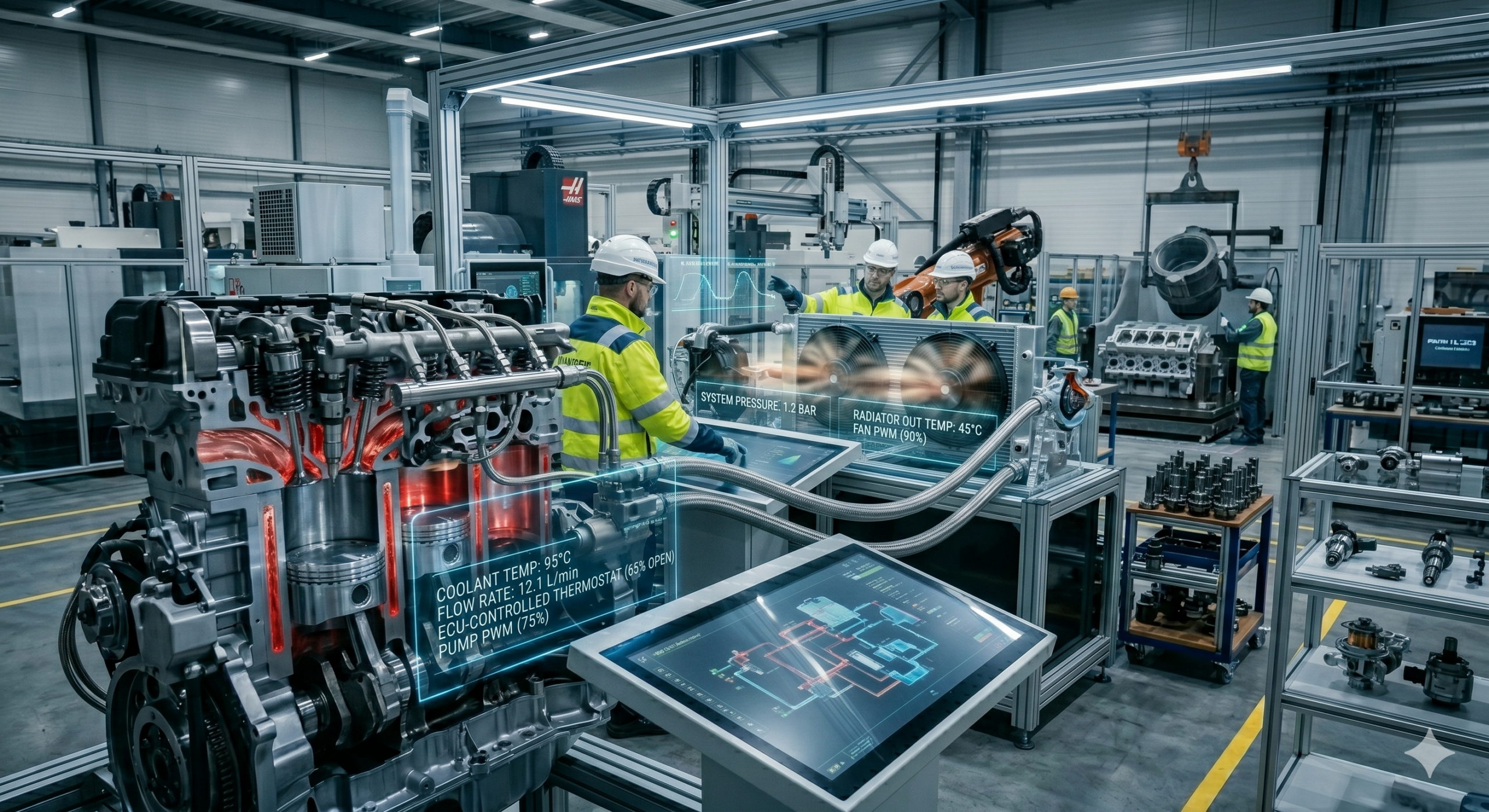
Cooling system parts are essential to maintaining optimal engine temperature, preventing overheating, and ensuring long-term reliability. Modern engines generate intense heat during combustion, and without an efficient cooling system, components can fail quickly, leading to costly damage.
In 2026, automotive cooling systems have evolved with smarter sensors, improved materials, and more efficient heat exchange technologies. This guide explains all major cooling system parts, how they work together, and the innovations shaping next-generation thermal management.
What Is an Engine Cooling System?
An engine cooling system is a network of components designed to regulate temperature and prevent overheating. For a deeper breakdown, explore how automotive cooling systems explained in modern vehicles. It ensures the engine operates within a safe temperature range for maximum efficiency and durability.
Main Functions of a Cooling System
- Absorb heat from the engine
- Transfer heat away from critical components
- Maintain consistent operating temperature
- Prevent overheating and freezing
- Support engine efficiency and emissions control
Key Cooling System Parts Explained
1. Radiator
The radiator is the primary heat exchanger in the cooling system. It removes heat from the coolant before it recirculates through the engine.
How it works:
- Hot coolant flows into the radiator
- Air passing through fins dissipates heat
- Cooled fluid returns to the engine
Modern features:
- Aluminum cores for better heat transfer
- Multi-row designs for higher efficiency
2. Water Pump
The water pump circulates coolant throughout the engine and cooling system.
Types:
- Mechanical water pumps (belt-driven)
- Electric water pumps (modern systems)
Importance:
- Ensures continuous coolant flow
- Prevents localized overheating
3. Thermostat
The thermostat regulates coolant flow based on engine temperature.
Function:
- Remains closed during cold starts
- Opens when engine reaches optimal temperature
Benefit:
- Helps engine warm up quickly
- Maintains consistent operating conditions
4. Cooling Fan
The cooling fan increases airflow through the radiator, especially at low speeds or when the vehicle is stationary.
Types:
- Mechanical fans
- Electric fans (most modern vehicles)
Smart control:
- Activated by temperature sensors and ECU
5. Coolant (Antifreeze)
Coolant is the fluid that absorbs and transfers heat within the system.
Composition:
- Water mixed with antifreeze (ethylene glycol or propylene glycol)
Functions:
- Prevents freezing in cold conditions
- Raises boiling point
- Protects against corrosion
6. Radiator Hoses
Radiator hoses transport coolant between the engine and radiator.
Types:
- Upper radiator hose (hot coolant)
- Lower radiator hose (cooled fluid)
Features:
- Heat-resistant materials
- Reinforced for durability
7. Expansion Tank (Coolant Reservoir)
The expansion tank stores excess coolant and accommodates thermal expansion.
Benefits:
- Maintains system pressure
- Prevents coolant loss
- Allows easy monitoring of fluid levels
8. Heater Core
The heater core is a small radiator inside the cabin that provides heat for passengers.
Function:
- Uses engine heat to warm air inside the vehicle
- Enhances comfort in cold weather
9. Temperature Sensors
Sensors monitor engine and coolant temperature in real time.
Types:
- Coolant temperature sensor
- Ambient temperature sensor
Role:
- Sends data to ECU
- Triggers fans and adjusts engine performance
10. Pressure Cap (Radiator Cap)
The radiator cap maintains proper pressure within the cooling system.
Function:
- Raises coolant boiling point
- Releases excess pressure when needed
How Cooling System Parts Work Together
Cooling system parts operate as a synchronized system:
- The water pump circulates coolant through the engine
- Coolant absorbs heat from engine components
- Hot coolant flows to the radiator
- The radiator dissipates heat into the air
- The cooling fan enhances airflow when needed
- The thermostat regulates flow for optimal temperature
This continuous cycle ensures the engine remains within safe operating limits.
Types of Cooling Systems
1. Air Cooling System
- Uses air to dissipate heat
- Common in motorcycles and small engines
2. Liquid Cooling System
- Uses coolant for heat transfer
- Most common in modern vehicles
3. Hybrid Cooling Systems
- Combine air and liquid cooling
- Used in advanced and high-performance engines
Materials Used in Cooling System Parts
Modern cooling systems use advanced materials for efficiency and durability:
- Aluminum for radiators
- High-strength plastics for tanks
- Silicone and rubber for hoses
These materials improve heat transfer, reduce weight, and resist corrosion.
Common Cooling System Problems
1. Overheating
- Caused by low coolant levels or faulty components
2. Coolant Leaks
- Occur in hoses, radiator, or water pump
3. Faulty Thermostat
- Leads to improper temperature regulation
4. Radiator Blockage
- Reduces heat dissipation efficiency
Maintenance Tips for Cooling System Parts
- Check coolant levels regularly
- Replace coolant as recommended
- Inspect hoses for cracks or leaks
- Ensure radiator and fan are functioning properly
- Monitor temperature gauge
Regular maintenance helps prevent costly repairs and ensures system efficiency.
Innovations in Cooling Systems (2026)
1. Smart Cooling Systems
- Use sensors and AI to optimize temperature control
- Adjust cooling dynamically based on driving conditions
2. Electric Water Pumps
- Improve efficiency and reduce engine load
- Provide precise coolant flow control
3. Advanced Coolants
- Longer lifespan
- Better heat transfer properties
4. Thermal Management for Hybrid Vehicles
- Integrated systems for battery and engine cooling
- Improved energy efficiency
Applications of Cooling System Parts
Cooling systems are used in:
- Passenger vehicles
- Commercial trucks
- Industrial machinery
- Marine engines
Each application requires tailored cooling solutions.
Future of Cooling Systems
Cooling systems will continue evolving with:
- Increased efficiency
- Integration with smart vehicle systems
- Adaptation for hybrid and alternative energy vehicles
Advanced thermal management will remain critical for engine performance and sustainability.
Conclusion
Cooling system parts are essential for maintaining engine temperature, performance, and reliability. From the radiator and water pump to sensors and coolant, each component plays a vital role in preventing overheating and ensuring smooth operation.
In 2026, innovations in materials, automation, and smart technologies are transforming cooling systems into highly efficient and intelligent networks. Understanding these components helps engineers, technicians, and vehicle owners maintain optimal performance and extend engine life.