

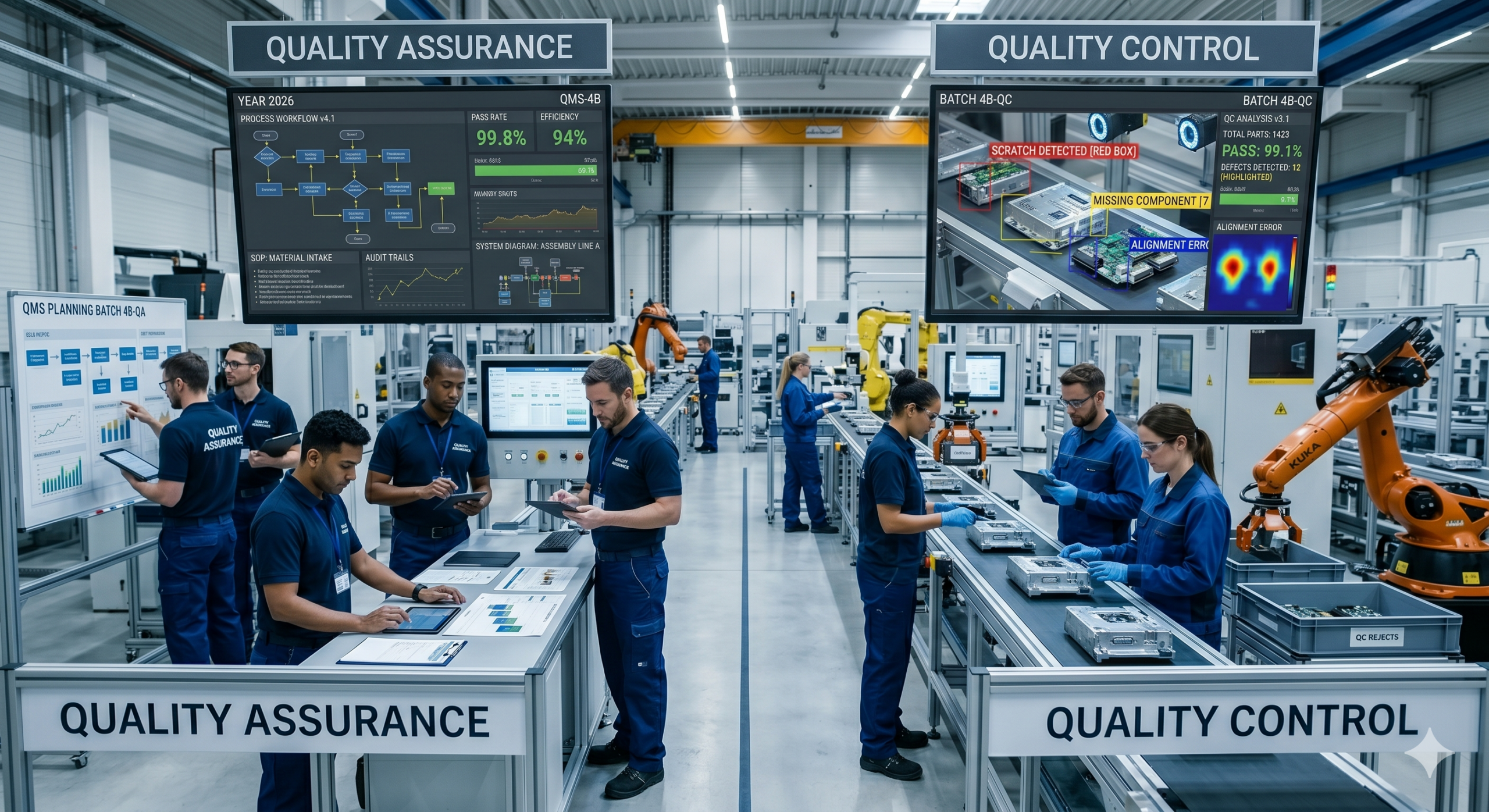
In modern manufacturing and software development, delivering consistent quality is non-negotiable. Yet many organizations still confuse quality assurance vs quality control, using the terms interchangeably despite their distinct roles. Understanding the difference is essential for building efficient systems, reducing defects, and maintaining customer trust.
Yet many organizations still confuse quality assurance vs control, using the terms interchangeably despite their distinct roles. Understanding the difference is essential for building efficient systems, reducing defects, and maintaining customer trust.
This expert guide explains quality assurance (QA) and quality control (QC) in depth, compares their functions, and shows how to implement both effectively in 2026.
What Is Quality Assurance?
Quality assurance (QA) is a proactive, process-focused approach that ensures products are developed correctly from the start. It focuses on preventing defects by improving processes, standards, and workflows.
Key Characteristics of Quality Assurance
- Process-oriented
- Preventive rather than corrective
- Focuses on system improvement
- Applies across the entire production lifecycle
Examples of Quality Assurance Activities
- Defining standard operating procedures (SOPs)
- Conducting process audits
- Implementing ISO standards
- Training employees on best practices
- Designing quality management systems
Goal of Quality Assurance
The primary goal of QA is simple:
👉 Prevent defects before they occur
What Is Quality Control?
Quality control (QC) is a reactive, product-focused process that identifies defects in finished or in-process products. It ensures that outputs meet predefined quality standards.
Key Characteristics of Quality Control
- Product-oriented
- Detection-focused
- Reactive approach
- Conducted during or after production
Examples of Quality Control Activities
- Product inspections
- Testing and validation
- Sampling and measurement
- Defect detection (manual or automated)
- Final product verification
Goal of Quality Control
👉 Identify and correct defects before products reach customers
Quality Assurance vs Control: Core Differences
Understanding quality assurance vs control requires a clear comparison of their roles.
| Feature | Quality Assurance (QA) | Quality Control (QC) |
|---|---|---|
| Focus | Processes | Products |
| Approach | Proactive | Reactive |
| Goal | Prevent defects | Detect defects |
| Timing | Before production | During/after production |
| Responsibility | Entire organization | Inspection teams |
| Tools | Audits, SOPs, training | Testing, inspection, measurement |
How QA and QC Work Together
It’s a mistake to think of QA vs QC as competing approaches. In reality, they are complementary systems.
- QA builds the foundation for quality
- QC verifies the final output meets expectations
Example Workflow
- QA defines manufacturing standards
- Production follows those standards
- QC inspects products for defects
- Feedback loops improve QA processes
This creates a continuous improvement cycle that enhances both efficiency and quality.
Importance of Quality Assurance vs Control in 2026
1. Rising Customer Expectations
Customers expect flawless products and fast delivery. QA ensures consistency, while QC ensures reliability.
2. Automation and AI Integration
Modern systems rely on automation, making structured QA processes essential and QC more precise.
3. Regulatory Compliance
Industries like healthcare, aerospace, and automotive require strict adherence to standards.
4. Cost Efficiency
Preventing defects (QA) is far cheaper than fixing them (QC).
Quality Assurance in Manufacturing
In manufacturing, QA focuses on process optimization and standardization.
Key QA Strategies
- Lean manufacturing principles
- Six Sigma methodologies
- Process documentation
- Supplier quality management
Benefits
- Reduced variability
- Improved efficiency
- Lower defect rates
- Better scalability
Quality Control in Manufacturing
Quality control ensures that products meet specifications through inspection and testing.
QC Techniques
- Visual inspection
- Dimensional measurement
- Automated defect detection systems
- Statistical sampling
Benefits
- Immediate defect detection
- Improved product reliability
- Reduced customer complaints
QA vs QC in Software Development
The difference between quality assurance vs control is equally important in software.
Quality Assurance (Software)
- Code standards and guidelines
- Continuous integration processes
- Code reviews
- Development methodologies (Agile, DevOps)
Quality Control (Software)
- Software testing (manual and automated)
- Bug tracking
- Performance testing
- User acceptance testing (UAT)
Tools Used in Quality Assurance vs Control
QA Tools
- Process management systems
- Documentation platforms
- Audit tools
- Workflow automation tools
QC Tools
- Inspection equipment
- Testing software
- Machine vision systems
- Measurement instruments
Key Metrics for QA and QC
To measure effectiveness, organizations track:
QA Metrics
- Process compliance rate
- Defect prevention rate
- Audit success rate
- Training effectiveness
QC Metrics
- Defect rate (DPMO)
- First pass yield (FPY)
- Rejection rate
- Customer return rate
Common Mistakes in QA vs QC Implementation
1. Treating QA and QC as the Same
This leads to gaps in quality management.
2. Over-Reliance on QC
Focusing only on inspection increases costs and misses root causes.
3. Poor Documentation
Without clear processes, QA becomes ineffective.
4. Lack of Feedback Loops
QC findings must feed into QA improvements.
Best Practices for Effective Quality Management
To maximize results from quality assurance vs control, follow these best practices:
1. Integrate QA and QC Systems
Ensure both teams collaborate and share data.
2. Use Automation
Leverage AI and machine vision for faster QC.
3. Standardize Processes
Document and enforce procedures across operations.
4. Train Your Workforce
Employees should understand both QA and QC roles.
5. Implement Continuous Improvement
Use data to refine processes over time.
Future Trends in Quality Assurance vs Control
1. AI-Driven Quality Systems
AI will predict defects before they occur.
2. Real-Time Monitoring
IoT devices will provide instant feedback on production quality.
3. Digital Twins
Simulating processes to optimize QA strategies.
4. Autonomous Inspection
Robots performing QC with minimal human intervention.
Benefits of Balancing QA and QC
Organizations that properly balance QA and QC achieve:
- Higher product quality
- Reduced operational costs
- Faster production cycles
- Improved customer satisfaction
- Stronger competitive advantage
Conclusion
Understanding quality assurance vs control is essential for any organization aiming to deliver high-quality products consistently. While QA focuses on preventing defects through process improvement, QC ensures that products meet standards through inspection and testing.
The most successful companies in 2026 are those that integrate QA and QC into a unified quality management strategy. By doing so, they reduce costs, improve efficiency, and build lasting customer trust.