

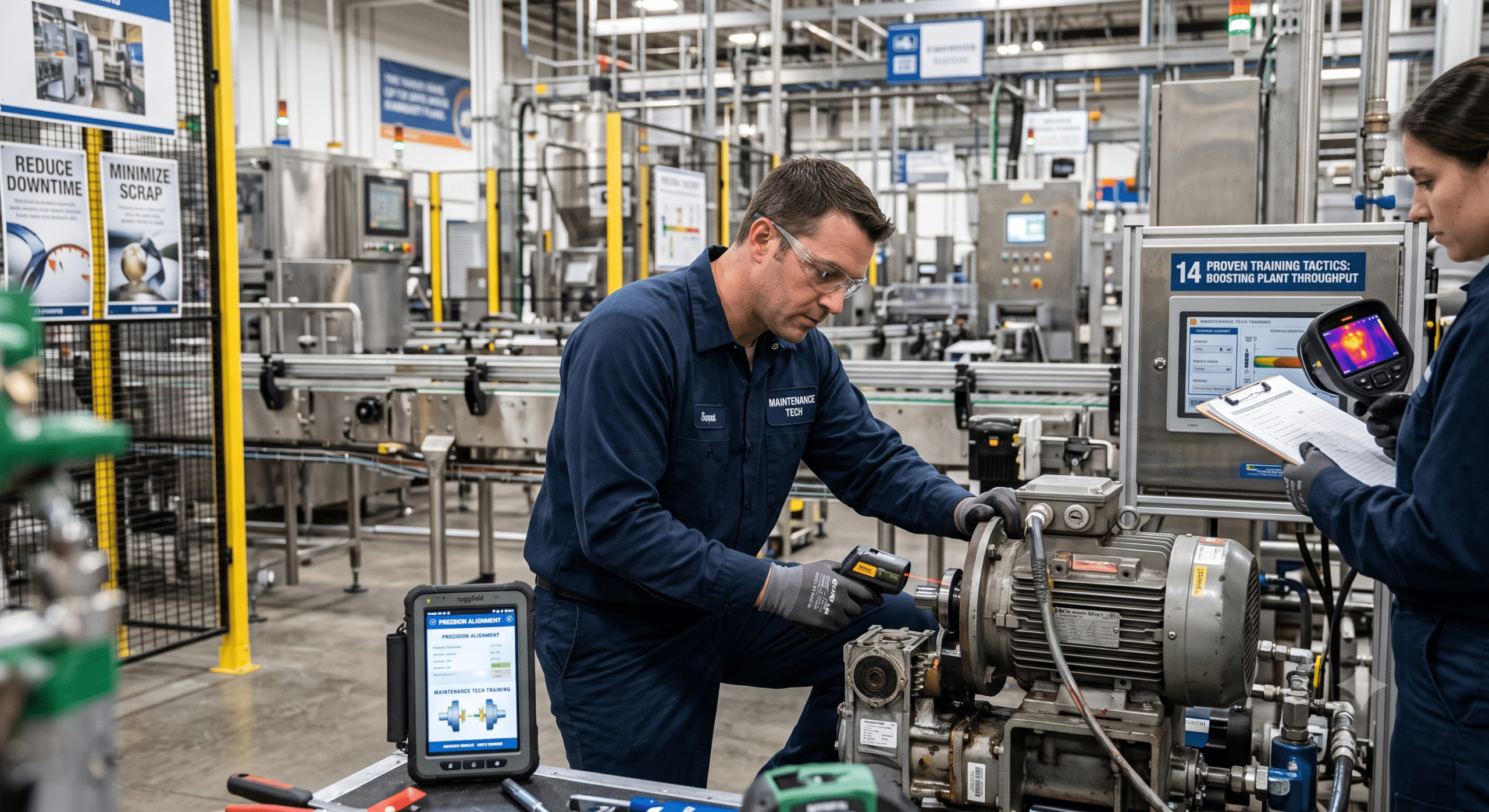
When managing high-volume production lines, implementing structured maintenance technician training is the absolute fastest way for a factory to maximize throughput, minimize scrap rates, and compress cycle times. As a Maintenance and Reliability Engineering Manager, my daily focus is simple: keep the factory floor moving smoothly, safely, and efficiently. When our production lines fall behind schedule, it is easy to just tell everyone to push the machines to run faster. However, rushing a machine that is already struggling is a recipe for a massive breakdown. It causes longer delays and creates piles of wasted raw materials. Real success comes from making sure our equipment is reliable, and that starts with having a highly skilled team.
The Industrial Maintenance Management Guide clearly shows that a team’s technical skills directly impact how well a factory performs. When we look at the daily challenges on the shop floor, the best way to get more product out the door, shorten production times, and eliminate wasted material is to focus on comprehensive training programs. By teaching our team the right skills, we change our maintenance department from a group that just runs around fixing emergencies into a proactive team that keeps the plant running perfectly. Let us look at how smart training transforms the three most important goals on our floor.
The Big Three: Throughput, Cycle Time, and Scrap Rate
To see why training matters so much, we have to look closely at how machine breakdowns hurt a factory’s bottom line.
Getting More Out the Door: Maximizing Plant Throughput
Throughput is simply the total amount of good product our factory makes in a day, week, or month. When a major packaging line or a big molding machine stops working unexpectedly, our throughput drops to zero. That is lost time and money we can never get back.
The Industrial Maintenance Management Guide reminds us that these sudden breakdowns are almost never random accidents. They happen because someone missed an early warning sign or used a quick, temporary fix in the past.
When our team undergoes thorough maintenance technician training, they stop guessing and start fixing the root cause of the issue. Instead of just resetting a machine and walking away, a trained technician looks deeper to see why it stopped in the first place. This detailed care keeps the machine running safely for its entire shift, helping us hit our daily production goals.
Speeding Up the Process: Reducing Cycle Time
Cycle time is the total time it takes to turn raw ingredients or parts into a finished item ready for shipping. Slow or unpredictable cycle times make it hard to hit delivery deadlines. In a factory with poor maintenance habits, cycle times drag out because of slow adjustments, messy product changes, and long guessing games during a breakdown.
If a technician spends three hours trying to figure out which electrical sensor is broken, the whole line sits idle.
Advanced technical training fixes this problem by teaching a clear, step-by-step approach to troubleshooting. Technicians learn to read machine programs, use smart diagnostic software, and use tools like thermal cameras to find hidden heat buildup. This turns hours of guessing into minutes of precise work. It speeds up repairs and normalizes our cycle times.
Stopping Waste: Minimizing Scrap Rate
Scrap rate is the percentage of raw materials or products that are defective and must be thrown away. High scrap rates hurt a company because they waste expensive materials, lose precious machine time, and increase trash bills. From an engineering perspective, scrap happens when a machine becomes unstable.
If a mechanical part gets loose or a fluid valve loses its exact settings, the machine starts drifting. It keeps running, but it creates tiny, hidden mistakes on the product that fail quality inspection later.
A technician with proper maintenance technician training knows how to spot these tiny shifts before they cause problems. They know how to perform exact calibrations and use precision tools to keep the machine perfectly stable. By stopping these mechanical shifts early, we keep our scrap rates incredibly low.
14 Proven Training Tactics to Improve Your Factory Floor
Building a great maintenance team requires a clear, practical plan. Here are fourteen straightforward tactics that use sound engineering principles to improve your team’s skills and maximize your factory’s output.
1. Teach Simple Root Cause Analysis
True progress means moving away from temporary fixes that only last a few hours. Technicians must learn how to use simple problem-solving methods like the “Five Whys” technique. This means when a machine breaks down, the technician asks “why” five times until they find the real, hidden reason for the failure. Training your team to log these answers into your maintenance software ensures the true issue is fixed for good, preventing future disruptions to your plant throughput.
2. Standardize Laser and Mechanical Alignment
When moving parts do not line up perfectly, they experience heavy friction, wear out too fast, and cause product defects. Technicians need hands-on training with modern laser alignment tools to ensure that shafts and gearboxes match up exactly. Understanding how metal expands when it gets hot allows technicians to make perfect adjustments. This precision prevents early part failures and keeps the machines running smoothly to protect your scrap rate.
3. Provide Basic Programmable Logic Controller Training
Modern factory machines are controlled by small, specialized computers called PLCs. When a machine stops mid-cycle, an untrained technician is completely blind to the cause. By providing basic maintenance technician training focused on reading these computer control screens, your team can instantly see which switch or sensor is holding up the process. This speeds up troubleshooting and gets the line moving again quickly, reducing cycle times.
4. Focus on Proper Machine Lubrication
Lubrication is vital for rotating machinery, but it is often done incorrectly on the factory floor. Using the wrong grease or putting too much oil into a high-speed bearing can actually destroy the part. Technicians must be trained on the exact amount of oil to use and how to keep dirt out of the lubricants. Keeping our machines cleanly lubricated protects internal parts and keeps production moving at top speed.
5. Use Predictive Tools to Spot Failures Early
Waiting for a machine to break down before you fix it is an outdated, stressful way to run a factory. Training your team to use predictive tools is a massive upgrade. Technicians can learn to use handheld infrared cameras to find hot electrical wires or use ultrasound devices to listen for air leaks. Finding a failing part weeks before it actually snaps allows you to schedule the repair during a normal break, keeping your throughput high.
6. Master Hydraulic and Pneumatic Systems
Fluid and air systems create the heavy power needed to move items across a high-speed production line. When air pressure drops or a fluid valve moves slowly, cycle times stretch out and product quality suffers. Technicians must be trained to read fluid diagrams and test systems safely without opening sealed loops unnecessarily. This skill protects expensive pumps and maintains the smooth movement needed to prevent product scrap.
7. Create Clear Standard Operating Procedures
Even the most talented maintenance team will struggle if everyone fixes things differently. We must train our technicians to write and follow clear, simple standard operating procedures for every major repair job. These guides must list the exact tools to use, the right safety steps, and how to test the machine afterward. Standardizing this work ensures every repair is done perfectly, eliminating the guesswork that hurts throughput.
8. Partner Maintenance with Production Operators
A maintenance team cannot watch every machine all the time. We need to train our technicians to teach production operators basic machine care, which is a major part of Total Productive Maintenance. Technicians can show operators how to clean their machines correctly, look for loose bolts, and check fluid levels. This teamwork frees up your skilled technicians to focus on larger engineering improvements, lifting overall plant efficiency.
9. Optimize Spare Parts Tracking
A smart technician can find a mechanical fault in record time, but they are stuck if the replacement part is missing from the stockroom. Training must include learning how to track parts correctly inside the plant’s computer system. Technicians need to log parts out immediately and report when stock runs low. Keeping the parts room organized and accurate eliminates long waiting times during a breakdown, protecting your cycle times.
10. Prioritize Electrical Safety and Arc Flash Awareness
Industrial control panels carry high voltages that require total respect and safe habits. Technicians must receive regular training on how to turn off and lock out power safely before touching any wiring. Beyond the vital goal of keeping our people safe, a safe team is an efficient team. Knowing how to safely test a live circuit avoids dangerous electrical accidents that would instantly halt the entire factory.
11. Learn Machine Importance Rankings
Not every machine in a factory is equally important. Technicians must be trained to understand our plant’s machine importance list, which ranks equipment by how much it impacts safety and production. When several work orders appear at the same time, a trained technician knows exactly which machine to fix first to keep the main production line moving. This focus ensures our time is spent where it matters most for throughput.
12. Track and Use Daily Maintenance Data
To make a factory better, you have to measure its performance accurately. Technicians must be trained to enter clean, simple data into our maintenance software, such as the exact time spent on a repair and a clear description of what broke. This data helps us track how long machines stay broken. Reviewing these numbers allows the engineering team to see which machines need an upgrade, driving down long-term cycle times.
13. Support On-the-Job Mentorship
Classroom lessons and computer modules are helpful, but nothing beats learning directly on the factory floor. Setting up a simple mentorship program pairs experienced senior technicians with newer team members. This style of training ensures that special machine tricks, safety habits, and decades of practical floor knowledge are passed down smoothly, preventing drops in plant efficiency when older workers retire.
14. Mandate Post-Repair Testing Checklists
A maintenance job is not done just because the last bolt is tight. Technicians must be trained to use a strict testing checklist before giving a machine back to the production crew. This includes checking the machine while it is running under a full load, testing the safety doors, and running a small test batch of product. Thorough testing prevents the machine from breaking down again immediately, protecting throughput and scrap rates.
The Clear Benefits of Team Training
When a plant launches a simple, organized training program, the benefits show up clearly in our daily manufacturing numbers.
| Goal | Before Training | After Training | Operational Result |
| Unplanned Downtime | High (Constantly fixing emergencies) | Low (Proactively stopping issues) | Maximizes plant throughput |
| Repair Time | Slow (Trial-and-error guessing) | Fast (Step-by-step troubleshooting) | Compresses line cycle times |
| Machine Stability | Poor (Quick, temporary fixes) | Strong (Exact calibrations) | Minimizes raw material scrap |
This shift completely transforms how a factory feels. In a reactive plant, the maintenance office is loud, stressful, and chaotic. Technicians rush from one emergency to the next, using quick fixes just to keep things moving. This chaos makes it impossible to improve cycle times or scrap rates because nobody has the time to look at why the machines keep breaking.
Once your technicians receive targeted maintenance technician training, the entire floor becomes calm and predictable. Technicians spend their days doing careful preventive work and checking machine health indicators. They catch worn parts early and fix them during normal breaks. This quiet, controlled environment allows production teams to plan their shifts perfectly, keeping cycle times low and throughput high.
Frequently Asked Questions
How do we see the financial return on a technician training program?
We measure the savings by comparing the cost of the training against the money saved from fewer breakdowns, lower spare parts costs, and less wasted raw material. When a trained technician uses proper alignment skills to prevent a major machine failure, the saved production time can easily pay for the training budget for the whole year.
What is the best mix of classroom lessons and hands-on practice?
The best approach uses about forty percent classroom or digital learning combined with sixty percent hands-on practice on the actual factory floor. Classroom lessons are great for learning basic rules and reading diagrams, but technicians need to work on physical machinery to truly master the skills.
Does upgrading technician skills help keep employees from leaving?
Yes. Technicians prefer to work for companies that actively invest in their growth and safety. Providing clear maintenance technician training paths shows your team that you care about their future, which increases job satisfaction. This investment builds a skilled, loyal workforce and lowers expensive employee turnover.
How quickly can we expect to see a drop in scrap rates after training?
You will typically see a noticeable drop in product waste within three to six months of starting precision maintenance and calibration training. This timeframe gives your technicians enough time to check active machinery, find settings that are drifting out of spec, and make the precise adjustments needed to stabilize production.
Where can we find structured resources to build our training material?
Many companies look at industrial guides to start. Incorporating proven guidelines into your maintenance technician training program allows you to match global standards while addressing the unique mechanical bottlenecks of your specific facility.
Can predictive maintenance tools be taught to entry-level technicians?
Yes, basic predictive maintenance tools can be introduced early. While advanced data analysis requires deeper experience, basic maintenance technician training can easily teach incoming staff how to safely operate thermal cameras or grease guns with digital ultrasonic meters to capture accurate field readings.
How often should a factory refresh its technical training programs?
Technology on the floor changes quickly. A good framework updates its core maintenance technician training modules every two years, or whenever a new piece of automated production machinery is installed on the floor.
Reference Material for Further Reading
For factory leaders and engineering teams looking to learn more about improving asset performance, these helpful industry resources offer excellent deep-dive guides:
-
For useful tips on tracking machine health, organizing work orders, and modernizing a factory, read the helpful guides available at the MaintainX Resource Library.
-
To learn more about setting up precision maintenance habits, building training paths, and closing skills gaps on your team, visit the detailed plant strategy guides at the Limble Industrial Maintenance Guide.