
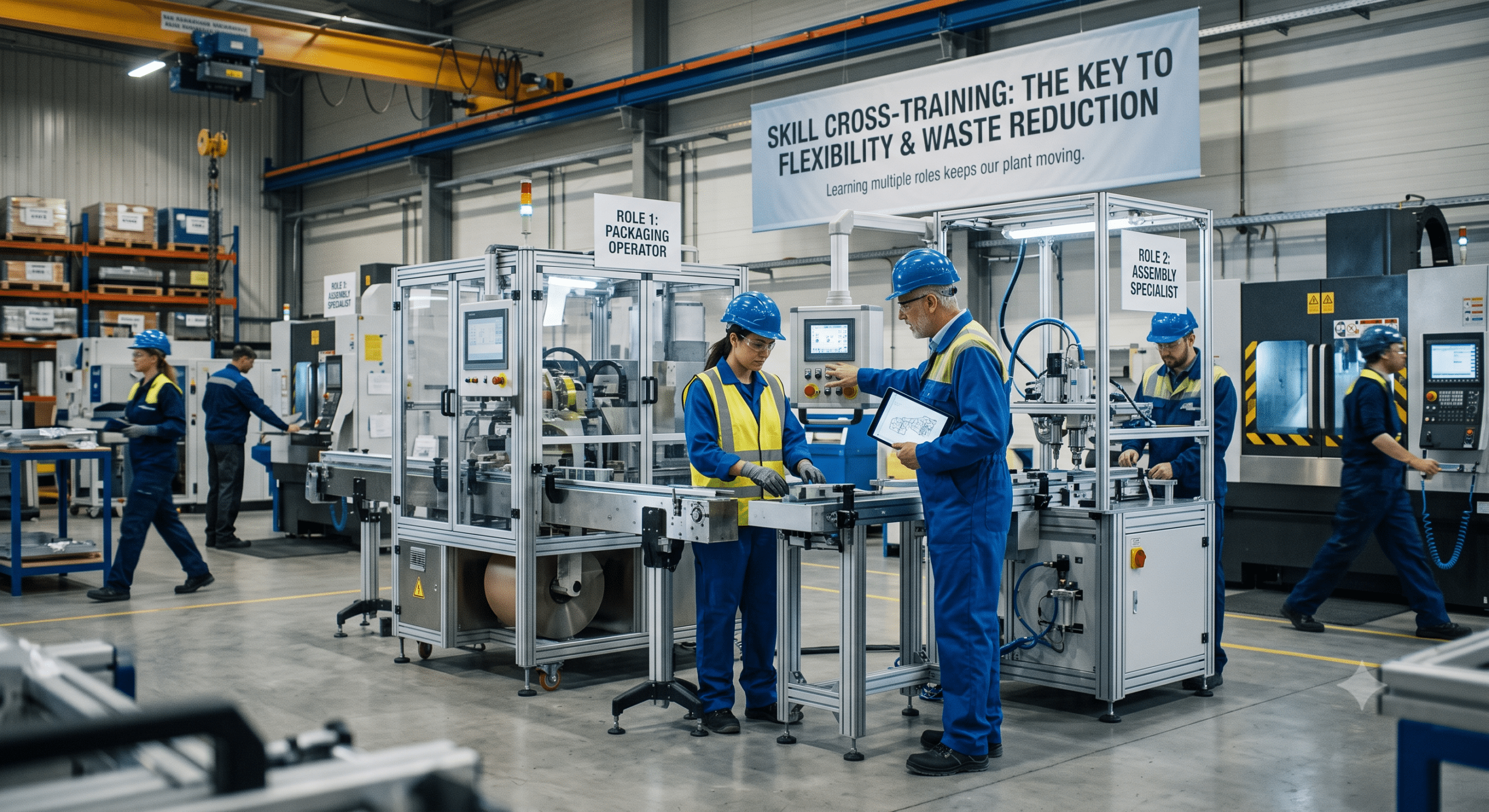
Every plant manager knows the feeling when a critical machine operator calls in sick and the whole floor grinds to a halt. In modern manufacturing, successfully cross-training workers is the ultimate shield against these unexpected, costly line stoppages. Parts pile up at one station, the next team is left waiting around with nothing to do, and shipping deadlines start slipping. When only one person knows how to run a vital piece of machinery, your entire business is vulnerable. Rushing to catch up later usually leads to mistakes, which means more expensive raw materials end up in the trash. Relying on workers who only know how to do one single task is a massive risk that kills productivity.
The best way to fix this problem is simple: start cross-training workers across your team. When you commit to cross-training workers, you build a flexible crew that can adapt to anything the day throws at them. Let’s look at exactly how cross-training workers helps you get more products out the door, speeds up production times, and slashes material waste.
The Big Three: Getting Products Out, Speeding Up the Line, and Cutting Waste
To understand why flexibility matters, we have to look at the three main goals on the factory floor. First, we want to maximize the number of good products we finish each shift. Second, we want to cut down the total time it takes to turn raw materials into a finished box ready for shipping. Third, we want to keep our scrap rate—the amount of ruined material we throw away—as low as possible.
These three goals are completely tied together. When one station gets backed up, the whole line slows down, and total output drops. If supervisors pressure workers to move faster to make up for lost time, people make mistakes, and the amount of ruined material spikes.
Focused programs for cross-training workers fix this cycle by breaking up those labor jams. When you focus on cross-training workers, your team knows how to do multiple jobs, and you can move people around instantly to help out wherever production slows down.
1. Clearing Out Jams to Keep Products Moving
Every factory floor has a few specific spots that set the pace for the whole building. A line can only move as fast as its slowest station. In a lot of traditional plants, these slow spots happen because only one person knows how to do a highly specialized job. For example, if only one technician knows how to program a specific cutting machine, that machine becomes a major risk.
If that person gets sick or takes a vacation, the whole line suffers. Proactively cross-training workers changes the game by sharing that special knowledge with a few other team members.
[Old Way]     Station A ───► [Station B: Only One Expert] ───► Station C (High Risk of Stopping)
                                            ▲
                                    (Worker Absent = Line Stops)

[New Way]    Station A ───► [Station B: Three People Ready]  ───► Station C (Line Keeps Moving)
                                            ▲
                                (Backup Worker Steps Right In)
When backup operators can step in without missing a beat, the machine never sits idle. Boosting your daily output isn’t about forcing people or machines to work at a crazy, stressful pace. It is simply about making sure no one is stuck waiting around for parts, allowing the work to flow naturally.
2. Cutting Down Wait Times to Speed Up Delivery
A lot of the time, products take forever to get made not because the machines are slow, but because parts spend hours sitting on a pallet waiting for the next step. When workers are strictly locked into one single role, they have to sit on their hands when their station slows down, even if the team right next to them is buried under a mountain of work.
Strategy models for cross-training workers break down those invisible walls. A flexible crew can help each other out in real time. If the sub-assembly line suddenly gets flooded with parts, workers from quieter areas can jump over to help clear the logjam.
This teamwork keeps parts moving through the plant instead of gathering dust. By removing these human-caused delays and balancing the workload across the team, the total time it takes to build a product from start to finish drops significantly.
3. Lowering Scrap Rates with Smart, Standard Work
Material waste usually happens because of simple mistakes, poor machine setups, or because a worker doesn’t understand how their job affects the rest of the product. When an employee only knows their one small task, they don’t see the bigger picture. They might not notice a defect coming from a previous station, or they might do their job in a way that makes things harder for the assembly crew later.
The process of cross-training workers solves this problem by showing workers the entire journey of the product. When an operator spends time working in assembly or quality control, they understand exactly why their primary job needs to be done perfectly. They become much more careful and precise.
Plus, to train multiple people on a machine, you have to write down crystal-clear, step-by-step instructions. Forcing your experts to write down the best way to do a job removes guesswork. This keeps the work consistent across every shift, which prevents costly mistakes and keeps your scrap pile small.
The 13 Steps to Building a Flexible Workforce
Building a truly flexible team requires a clear, step-by-step plan. Moving workers around at random without preparation will only cause confusion and cause more mistakes. To do this right, managers should follow these thirteen practical steps.
1. Make a Clear Skills Chart
The first step is figuring out what your team actually knows right now. Create a simple chart that lists every job on the floor against the names of your workers. This chart will instantly show you your danger zones, highlighting the critical tasks that rely on just one person. Seeing these gaps allows you to focus your training efforts where you need them most.
2. Set Simple, Clear Training Goals
Don’t just aim for general flexibility; pick specific targets you can measure. Decide to train at least three people on the primary laser cutter by the end of the month. Align these training goals directly with your busiest production areas so you are solving real floor problems from day one.
3. Talk Openly with Your Team
Workers can sometimes worry that learning new jobs just means double the work for the same pay. To get everyone on board, talk to your team openly about the benefits. Explain that learning new skills makes the day less boring, reduces physical strain from doing the same motion all day, and sets them up for promotions.
4. Write Down Simple Work Guides
You can’t train someone properly if the instructions only live in an older worker’s head. Before you start teaching, make sure every machine has simple, up-to-date, and easy-to-read guides. These sheets should show the exact way to set up, run, and troubleshoot the machine, ensuring everyone learns the safest and best way to operate.
5. Pick the Right Teachers
Just because someone is great at running a machine doesn’t mean they are great at teaching others how to use it. Choose internal trainers who are patient and good at explaining things. Give these mentors a little extra support and guidance so they feel confident passing their knowledge down to the trainees.
6. Set Aside Dedicated Training Time
The biggest reason training programs fail is that managers try to force it to happen during normal, busy production hours. Learning a new skill requires focus. You must build specific training blocks into the weekly schedule, lowering the output expectations for that day so both the teacher and the learner can focus without feeling rushed.
7. Use Short, Hands-On Lessons
Sitting a worker down for hours in front of a long, boring video rarely works for hands-on factory jobs. Instead, use short, five-minute explanations on a tablet or computer to cover the basics. Follow that up immediately with real practice on the machine. This mix helps people remember the safety rules and operating steps much better.
8. Expect an Initial Learning Curve
It’s important to remember that when someone starts learning a brand-new machine, they will be slow at first, and they might make a few minor mistakes. Plant leaders need to expect this and plan for it in the schedule. Giving people a supportive environment to learn makes them confident and keeps them safe.
9. Test Skills Before Letting People Work Alone
Never assume someone is ready to run a machine just because they watched a video or said they feel good about it. Create a simple, fair test where the worker has to set up the machine, run a standard batch of parts, and pass a quality check completely on their own. This ensures they can meet production standards safely.
10. Keep a Regular Rotation Schedule
Skills rust quickly if they aren’t used. To keep your team sharp, create a simple schedule where cross-trained workers regularly take turns doing their secondary jobs. Rotating positions every few shifts keeps the work interesting, gives people a break from repetitive motions, and ensures everyone is always ready to step in during an emergency.
11. Tie New Skills to Better Pay
If your workers take the time to learn new skills and handle more responsibility, their paychecks should reflect that effort. Connect your cross-training program to a clear, skill-based pay system. Rewarding your team as they master new areas boosts morale and keeps your best workers from leaving for another job.
12. Review and Update the Plan Regularly
A modern factory is always changing with new tools, updated machines, and different products. Your training plan can’t just sit on a shelf. Talk to your operators, look at production data, and update your training methods every few months to make sure you are still teaching the right skills for the current setup.
13. Track the Results on the Floor
To keep company leadership supporting your training efforts, you need to show them the math. Track how your initiative for cross-training workers improves the total number of finished products, lowers delivery times, and cuts down on material waste. Showing a direct link between a flexible team and better profits proves that training is worth every penny.
Overcoming Common Roadblocks
Even the best training plans will face a few speed bumps. The most common hurdle is that people naturally resist change. Some veteran workers might want to keep their machine secrets to themselves, thinking that being the only one who knows a job makes them unreplaceable.
To fix this, leadership needs to build a culture where sharing knowledge is celebrated. Make sure the team knows that a flexible, successful factory provides better job security for every single person in the building.
Another common issue is trying to teach one person too many different things, which can cause them to lose their edge on their main job. You can easily avoid this by being smart about your pairings.
The goal isn’t to make every single employee an expert at every single station in the building. Instead, focus on building smart backup pairs, ensuring that every vital machine has two or three highly capable people ready to run it when needed.
The Long-Term Win for Your Plant
Investing in a flexible, well-trained workforce pays off in a major way over time. Beyond the obvious wins like getting more products out the door, moving faster, and throwing away less ruined material, cross-training workers changes the vibe of the whole floor. It breaks down walls between different departments, builds a friendlier and more helpful culture, and keeps workers happier because they see a clear path to grow their careers.
When your company buys new machinery or updates its process, a team that is already used to learning new things will adapt to the new tech instantly. Ultimately, building a flexible workforce turns daily scheduling headaches into your plant’s greatest strength.
Frequently Asked Questions
How do we choose which jobs to cross-train first?
Look at your floor data to see which stations cause the most delays or fall behind when someone calls in sick. Match those spots against your team’s current skills to find the jobs that rely entirely on one person. Target those high-risk spots first to protect your production line right away.
What should we do if a worker doesn’t want to learn a new role?
People usually resist because they are nervous about making mistakes or feel like they are being given extra work for no reason. Address this by explaining the support they will get, like patient mentors and dedicated practice time. Show them how learning these new skills helps them earn more money and grow within the company.
How often should workers rotate jobs to keep their skills sharp?
Every factory is different, but a good rule of thumb is to have cross-trained workers handle their secondary jobs for at least one or two full shifts every couple of weeks. Regular rotation keeps safety rules and machine settings fresh in their minds so they don’t forget the details.
Will training new people temporarily cause more waste?
When someone is practicing on a new machine for the first few times, they might move a bit slower or make a minor mistake. You can prevent major issues by using experienced mentors, clear step-by-step guides, and checking their work closely before letting them run the station alone. Over time, the extra knowledge they gain through cross-training workers actually reduces your overall factory waste.
References and Further Reading
-
To see the business benefits and step-by-step frameworks for building flexible teams, check out the Docebo Guide on Cross-Training Employees: Top Benefits, Tips, and Plans.
-
To learn how shared skills improve workplace culture and reduce team dependency risks, read the Thirst L&D Analysis on the Advantages of Cross-Training Employees.
-
For practical tips on managing factory floor labor resources and boosting long-term production resilience, look into the MJCPA Insights on Implementing a Cross-Training Program for a Productive Workforce.