

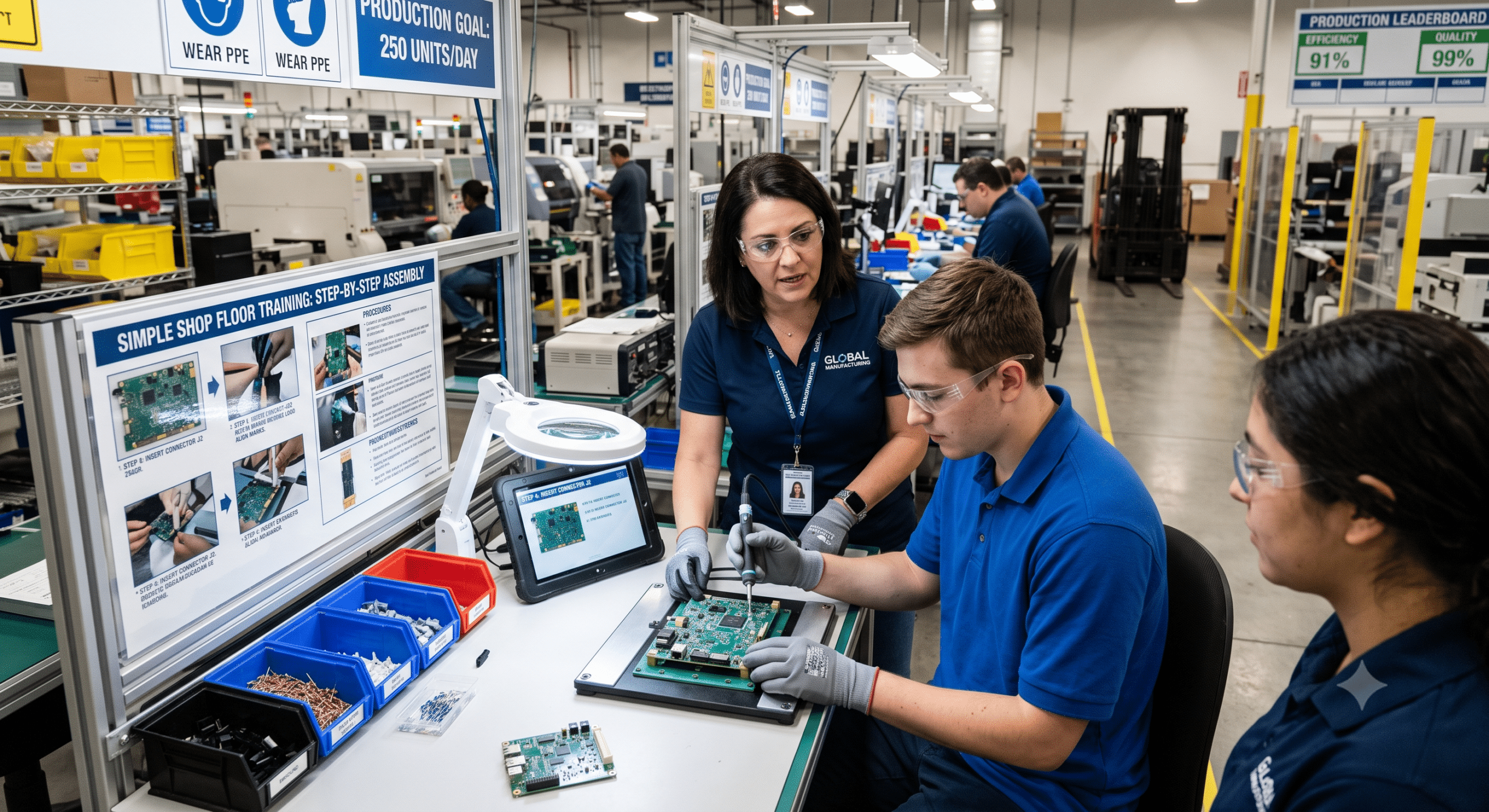
Every morning, the startup of floor machinery brings a reminder that our success depends on clear manufacturing career pathways. Specifically, we must keep machines running smoothly, ship orders out on time, and stop mistakes fast by training our people well. As a workforce development director, I see these operational problems clearly. Hiring and training hurdles are not just paperwork issues. On the contrary, they create real roadblocks on the factory floor. For example, when workers lack proper training, expensive machines sit idle and parts get ruined. Consequently, the whole company loses money.
Therefore, we must stop looking at worker training as a painful business expense. Instead, we should treat training as our best tool to improve daily numbers. By creating clear manufacturing career pathways, we can directly fix three major plant problems. First, we can make more parts per shift. Second, we can cut down total production time. Ultimately, we can stop wasting expensive raw materials. Good training is not just a nice idea; rather, it is a smart business plan that optimizes the whole floor.
Unfortunately, many owners buy million-dollar automated machines but forget to train their staff. As a result, this oversight causes massive confusion, slows down production, and leads to scrap. Fortunately, this guide shows you exactly how to match worker skills with your technology. By offering structured manufacturing career pathways, you will get the absolute most out of your plant.
1. Connecting Worker Skills to Daily Factory Goals
To see how training helps a factory, we must look at daily numbers. When an operator knows their machine inside and out, that machine spends less time turned off. In addition, speeding up production requires removing confusion and stopping wasted movement. Fewer broken parts mean workers pay attention and, as a result, catch errors early. Therefore, implementing standardized manufacturing career pathways should make these three core numbers better.
+---------------------------------------------------------------------------------+
|                          HOW TRAINING HELPS THE SHOP                            |
+---------------------------------------------------------------------------------+
|  1. Better Training     -->  Less Hesitation  -->  Faster Production Time       |
|  2. Uniform Standards   -->  Fewer Mistakes   -->  Less Wasted Material         |
|  3. Multi-Skill Workers -->  Balanced Lines   -->  More Finished Goods          |
+---------------------------------------------------------------------------------+
When a plant lacks clear career steps, workers get stuck in one simple job. Consequently, this creates a huge risk for the company. For instance, if your only CNC programmer calls in sick, the whole line stops. Orders get delayed immediately. But when you build comprehensive manufacturing career pathways, you build a highly flexible workforce. Afterwards, supervisors can easily move workers around to different stations during busy shifts. This keeps production moving at a steady pace.
2. Setting Clear Standards for New Hires to Stop Waste
Building a great team starts on day one with our newest employees. The main goal here is to stop rookie mistakes before they ruin good materials. Usually, mistakes made by new workers cause a massive amount of scrap metal. However, by using simple visual guides, we can make sure every new hire learns fast. They quickly master reading blueprints and using measuring tools correctly.
Importantly, this simple step takes the guesswork out of the job. It means parts are made the exact same way on every shift. Plus, when new hires learn the ropes fast, they work independently. They do not have to keep stopping to ask supervisors for help. By focusing early training on doing the job right every time, we create a steady baseline.
3. Teaching Advanced Technical Skills to Speed Up Machine Runs
Once workers master the basics, they need to learn how to run complex machines. This middle step in our training program compresses run times. It also extracts the most value out of our expensive equipment. In these advanced tracks, workers learn about quick setups and tool maintenance. They also learn to tweak machine settings on the fly. A highly skilled operator does not just watch a machine; instead, they listen to the motor to spot minor issues.
       [Raw Material In]
               │
               ▼
     ┌───────────────────┐
     │ Basic Worker Tier │ ──► Goal: Stop Early Mistakes and Waste
     └───────────────────┘
               │
               ▼
     ┌───────────────────┐
     │ Advanced Tech Job │ ──► Goal: Speed Up Machine Run Times
     └───────────────────┘
               │
               ▼
     ┌───────────────────┐
     │ Quality Inspector │ ──► Goal: Keep Whole System Moving Fast
     └───────────────────┘
               │
               ▼
     [Perfect Finished Products]
Indeed, this deep knowledge drastically cuts down changeover times. This is the time it takes to switch a machine between different parts. A worker who truly understands their machine can swap out tools quickly. Because of this, the machine gets back to full speed much faster. This allows the factory to handle custom orders without slowing down the schedule.
4. Moving Experienced Workers into Roles That Stop Errors Early
The next step is moving our most experienced workers into quality checking. At this level, their job changes from fixing problems to stopping them early. By teaching senior workers how to track data, they become floor leaders. They easily see when a tool is getting dull or when fluid pressure drops. They catch these signs before the machine breaks down.
As a result, catching these issues early keeps junk parts out of the scrap bin. Our team catches the root cause immediately instead of finding a mistake late. Furthermore, this proactive approach prevents sudden machine breakdowns. These breakdowns completely ruin a busy workday, so avoiding them keeps lines moving predictably.
5. Adding Robot and Automation Basics to Training Paths
Modern factories use more robots and smart sorting tools than ever before. Because of this, our training plans must include automation instruction. The goal isn’t to turn every operator into a software engineer. Rather, we just need them to use digital screens and control panels safely. Workers must know how to reset a stuck robot arm, clean sensors, and adjust paths.
+---------------------------------------------------------------------------------+
|                       ROBOT TRAINING STEP-BY-STEP                               |
+---------------------------------------------------------------------------------+
| New Automated Tool Installed --> Teach Workers How to Use the Screen            |
|                                         │                                       |
|                                         ▼                                       |
|                           Learn to Fix Simple Jams                              |
|                                         │                                       |
|                                         ▼                                       |
|                         No More Waiting for Engineers                           |
|                                         │                                       |
|                                         ▼                                       |
|                        MACHINES RUN WAYS LONGER AND FASTER                      |
+---------------------------------------------------------------------------------+
When a robot jams in a traditional factory, the whole line stops for hours. The team usually waits until an outside engineer arrives. But when your floor team knows automation basics, they fix minor jams fast. Consequently, this quick turnaround keeps the assembly line moving. It also ensures we get the most out of our technology investments.
6. Using Digital Badges to Track Skills in Real Time
To run a fast-paced factory floor, managers need accurate information. They must know exactly who holds specific skills at any given moment. Using a digital badge system is a great way to track these competencies. Think of a digital badge like a virtual certificate. Specifically, it proves a worker has mastered a task, like setting up a mill. Thus, this system replaces old paper logs with a live, accurate list.
For supervisors, this makes assigning daily jobs incredibly easy. When a high-priority, difficult order comes in, management checks the dashboard. They instantly find the workers with the right badges for the job. Surely, this ensures our toughest projects are handled by our best people. This practice cuts down on errors and prevents production delays.
7. Cross-Training Workers to Eliminate Staffing Bottlenecks
Relying too heavily on just one person is a massive risk. If only one worker knows how to run a critical machine, your business is vulnerable. For instance, if that person gets sick, production hits a bottleneck. To fix this threat, our structured manufacturing career pathways must reward cross-training. We must encourage workers to learn multiple jobs across the shop.
                  [OLD SILOED WAY]
          Worker A ──► Only Runs Station 1 (Big Risk!)
          Worker B ──► Only Runs Station 2
          Worker C ──► Only Runs Station 3

                 [NEW FLEXIBLE WAY]
          Worker A ◄──► Can Run Station 1 & Station 2
          Worker B ◄──► Can Run Station 2 & Station 3
          Worker C ◄──► Can Run Station 3 & Station 1
Ultimately, cross-training creates a flexible team that can pivot anywhere. If parts pile up at the packaging station, supervisors act fast. They instantly shift cross-trained workers over to help clear the backup. In this way, fluid movement keeps the work flowing smoothly. It also prevents workers at other stations from sitting idle.
8. Creating Fast and Simple Onboarding Programs for New Hires
Speed to proficiency is a crucial operational metric for new hires. Old-school onboarding programs are often slow and messy, allowing bad habits to form. To improve this, we use structured onboarding paths. These paths include digital simulations and direct guidance from a mentor. This hands-on practice helps new hires build muscle memory before touching live customer orders.
By speeding up this learning phase, we prevent production drops. New hires step onto the live floor with high confidence. They are ready to keep up with standard shift speeds right away. Because they practiced the right way first, they make far fewer mistakes. This keeps our scrap rates low and our quality high.
9. Setting Up Peer Mentorship to Save Hard-to-Find Factory Tips
On every experienced factory floor, veteran workers hold valuable knowledge. They know the unique quirks of every machine. They also know how raw materials change when the room gets hot. If these veteran workers retire without sharing these secrets, the company loses out. Therefore, we need to make mentoring part of the senior job description.
+---------------------------------------------------------------------------------+
|                        SHARING THE SECRETS OF THE SHOP                          |
+---------------------------------------------------------------------------------+
| Retiring Experts (Tips & Tricks) --> Friendly On-the-Job Mentoring              |
|                                                      │                          |
|                                                      ▼                          |
|                                     New Generation of Workers                   |
|                                                      │                          |
|                                                      ▼                          |
|                                    Best Methods Stay in the Factory             |
|                                                      │                          |
|                                                      ▼                          |
|                                   PRODUCTION NEVER DROPS OR SLOWS               |
+---------------------------------------------------------------------------------+
By connecting veteran masters with newer apprentices, we save these time-saving tips. Meanwhile, the next generation learns how to avoid subtle mistakes. They completely skip years of painful trial and error. This constant sharing keeps our production quality high across different shifts. It protects the company across generations of workers.
10. Matching Internal Training with National Industry Standards
Our internal training programs shouldn’t be created in a vacuum. Instead, they need to match up with trusted, national industry standards. By aligning our classes with groups like the Manufacturing Skill Standards Council, we guarantee quality. This alignment proves to our team that their skills are highly valuable. Furthermore, it opens the door for us to work with local technical colleges.
For our plant, this teamwork creates a direct pipeline of pre-trained students. They come straight from local trade schools into our entry-level jobs. Because these new hires already understand factory basics, onboarding time drops. Consequently, we don’t have to waste time teaching basic math. We get straight to teaching our specific machinery.
11. Using Real Production Data to Give Fair, Clear Promotions
A good factory manager tracks machine data closely. We should manage our people with that same level of accuracy. Therefore, we need to replace vague performance reviews with clear data. We tie reviews to actual floor output. By tracking station setup speeds and scrap percentages, we map our team’s true strengths.
       [Real Floor Data] ──► Track Speed, Mistakes, and Assembly Times
               │
               ▼
     ┌───────────────────┐
     │   Simple Review   │ ──► Spots Who Needs Extra Help Right Away
     └───────────────────┘
               │
               ▼
     ┌───────────────────┐
     │ Quick Mini-Lesson │ ──► Fixes the Mistake Before it Spreads
     └───────────────────┘
               │
               ▼
    [Perfect Team Matches] ──► Best Workers Put on the Hardest Jobs
When data shows a worker is struggling with waste, we do not punish them. Instead, we immediately give them a helpful refresher lesson. This quick fix corrects the misunderstanding before it costs the company money. Additionally, it helps us place our fastest, most accurate workers at our busiest stations. This drives the best results.
12. Training Experienced Technical Staff to Become Great Floor Bosses
The mood and focus of a shift depend heavily on front-line supervisors. A common mistake in manufacturing is promoting the fastest operator to boss without leadership training. Often, this backfires, leaving you with a stressed supervisor and a messy floor. To avoid this, our modern manufacturing career pathways must include a clear leadership track.
Specifically, this supervisor training should focus on clear communication and scheduling. It must also cover safety rules and rapid problem-solving. A team lead trained this way knows exactly how to keep the floor organized. As a result, their ability to support their crew keeps the work environment efficient. This actively prevents delays.
13. Building a Supportive Culture That Keeps Workers Long-Term
Technical career paths improve numbers, but they only work if people like their jobs. If a factory culture is stressful or disorganized, workers will quit. High employee turnover is terrible for production. For example, it forces you to constantly put untrained, slower people onto the line. This slows down run times and causes a massive spike in ruined parts.
+---------------------------------------------------------------------------------+
|                       HOW KEEPING WORKERS HELPS OUTPUT                          |
+---------------------------------------------------------------------------------+
| Good, Supportive Workplace Culture --> Workers Stay with the Company Long-Term  |
|                                         │                                       |
|                                         ▼                                       |
|                        Experienced Teams Who Know Each Other                    |
|                                         │                                       |
|                                         ▼                                       |
|                        Steady Run Speeds & Next-to-Zero Waste                   |
|                                         │                                       |
|                                         ▼                                       |
|                        MAXIMUM PRODUCTS SHIPPED WEEK AFTER WEEK                 |
+---------------------------------------------------------------------------------+
Therefore, building clear manufacturing career pathways is a powerful way to improve culture. When people see a path to earn more, they stay for the long haul. Ultimately, this stability creates tightly knit, expert teams. They know our machinery inside and out. The final result is a smooth, high-output factory floor that beats the competition.
14. Working with Local Trade Schools for a Steady Supply of Talent
To keep a factory growing, our workforce plans must connect with the local community. High schools and community colleges are vital extensions of our supply chain. By participating in local trade school boards, we help shape lessons. We ensure schools teach the exact technical skills our factory needs today, like CNC basics.
  [Local High Schools & Colleges] ──► Lessons Teach What Our Factory Actually Needs
                 │
                 ▼
     ┌───────────────────────┐
     │ Youth Apprenticeships │ ──► Students Practice on Non-Busy Machines
     └───────────────────────┘
                 │
                 ▼
     ┌───────────────────────┐
     │ Pre-Vetted Hires Pool │ ──► Zero Wait Time for New Grads to Start
     └───────────────────────┘
                 │
                 ▼
   [Smooth Running Shop Floor] ──► New Hires Work at Peak Speed on Day One
In addition, these partnerships make it easy to set up internship programs. Students spend part of their week in a classroom and the rest getting practical floor experience. This gives us a great chance to see how a student works in real life. Consequently, establishing these local manufacturing career pathways eliminates hiring delays that slow down factory expansions.
15. Constantly Updating Training Paths for Future Industrial Tools
The final step in our plant blueprint requires constant training program updates. Factory tools never stop changing, so our lessons must keep pace with new innovations. As our plant introduces advanced software and collaborative helper robots, training must adapt. Therefore, we should look at our training guides as living documents. We review them regularly.
By staying flexible, we ensure our team’s skills match our physical machines perfectly. Our workers never get left behind using outdated methods. Furthermore, our multi-million-dollar machine cells never sit empty due to a lack of trained operators. In conclusion, keeping human skills in sync with advanced machines through agile manufacturing career pathways drives the highest output.
Frequently Asked Questions
How do clear manufacturing career pathways help a factory make more parts every day?
Clear manufacturing career pathways ensure all workers get uniform, high-quality training. This expands their skills across different workstations. This cross-training allows managers to move people around instantly to clear up backups. By keeping our busiest stations fully staffed, we maximize the total volume of products finished per shift.
How does investing in worker skills speed up production run times?
Production run times slow down when workers hesitate or take too long to switch tools. By teaching workers advanced setup tips and basic automation troubleshooting, we eliminate this wasted time. Operators can handle changeovers quickly and fix minor faults themselves. This keeps the line running at peak engineered speeds.
Why does a clear training track cut down on wasted factory materials?
A huge percentage of ruined raw materials comes from untrained workers making simple errors. Training programs fix this by checking worker skills at the entry level. They also teach senior staff how to monitor machine accuracy. Operators learn to spot dull tools early, stopping bad parts before they end up in the scrap bin.
What is the easiest way to measure the financial return on a training program?
You can easily measure the financial return by tracking real production numbers. Look for a drop in the money lost to scrapped parts. Also, check for faster delivery times and an increase in total units shipped. A good training plan also saves thousands of dollars by reducing employee turnover.
References for Further Reading
-
For simple strategies on using lean principles to improve factory floor efficiency, see the updates at Kaizen Institute Insights on Global Manufacturing Trends.
-
To learn how modern plants team up with local schools to fix hiring issues, check out the guides at IndustryWeek Talent and Recruiting Solutions.
-
For official toolkits and step-by-step guides on building great worker training programs, visit the NIST Manufacturing Extension Partnership Excellence Center.