

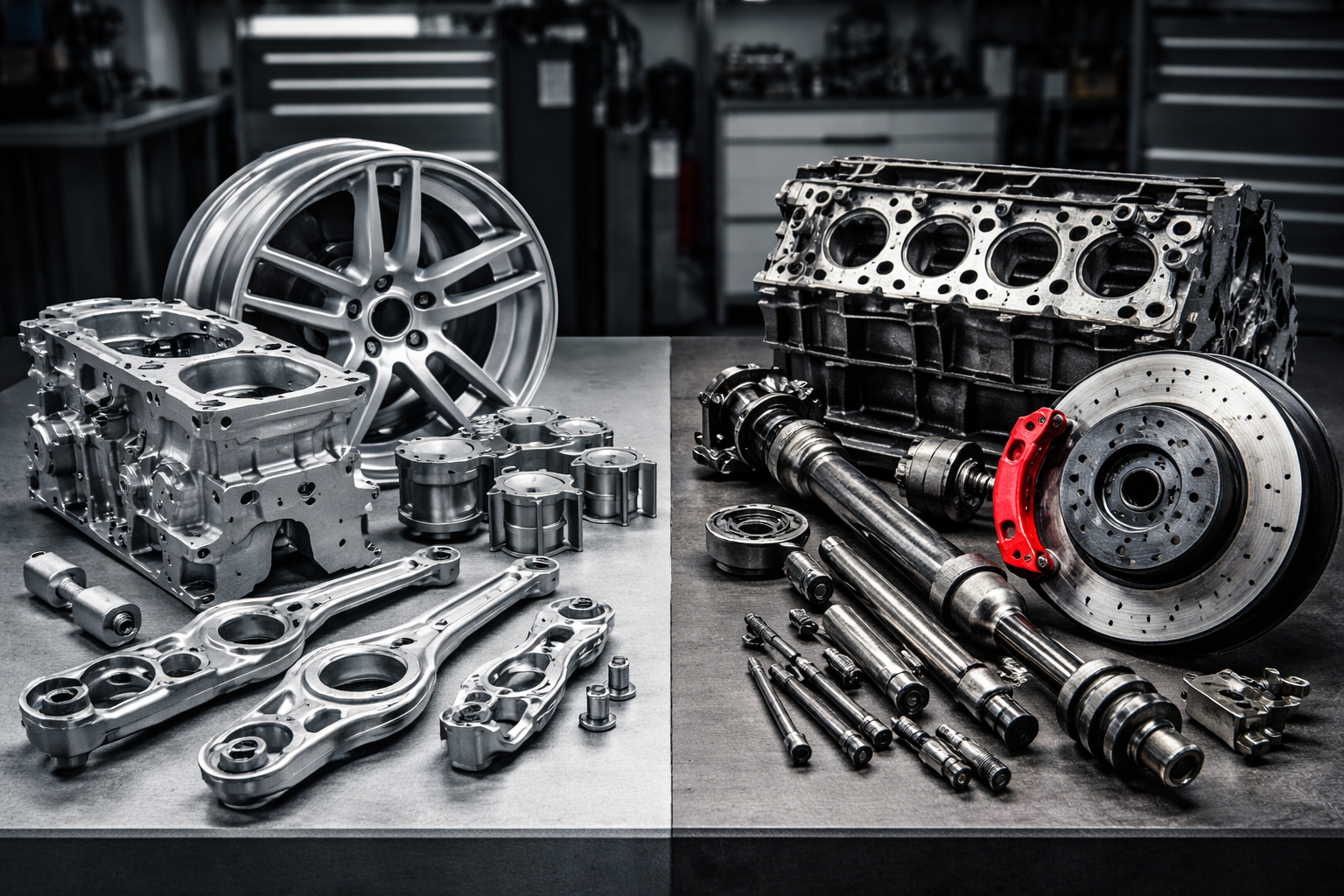
Choosing between aluminum vs steel automotive parts is a critical decision in modern vehicle design and manufacturing. Choosing between aluminum and steel depends on performance and design goals, and this automotive material comparison highlights how each material performs in real-world applications.
Both materials offer unique advantages, and the right choice depends on performance goals, cost constraints, safety requirements, and manufacturing processes.
From lightweight aluminum body panels to high-strength steel frames, automakers carefully select materials to balance durability, efficiency, and performance. In this guide, we’ll break down the differences, advantages, applications, and how to choose the best material for your automotive needs.
What Are Aluminum and Steel Automotive Parts?
Automotive parts are commonly made from metals that provide structural strength and reliability.
- Aluminum parts are known for being lightweight and corrosion-resistant
- Steel parts are valued for their strength, durability, and affordability
These materials are used in everything from engine components and chassis structures to body panels and suspension systems.
Key Differences Between Aluminum and Steel
Understanding the differences between these materials helps in selecting the right one for specific applications.
| Feature | Aluminum | Steel |
|---|---|---|
| Weight | Lightweight | Heavier |
| Strength | Moderate to high | Very high |
| Corrosion Resistance | Excellent | Moderate (needs coating) |
| Cost | Higher | Lower |
| Machinability | Easier | More challenging |
| Recyclability | Highly recyclable | Highly recyclable |
Advantages of Aluminum Automotive Parts
Lightweight Performance
Aluminum is significantly lighter than steel, which improves fuel efficiency and vehicle handling.
Corrosion Resistance
Aluminum naturally forms a protective oxide layer, making it resistant to rust and environmental damage.
Better Fuel Efficiency
Reduced vehicle weight leads to lower fuel consumption and emissions.
Easier Machining
Aluminum is easier to machine, allowing faster production and lower manufacturing costs in some cases.
Advantages of Steel Automotive Parts
Superior Strength
Steel offers exceptional strength, making it ideal for structural components like frames and crash zones.
Cost-Effective
Steel is generally more affordable than aluminum, making it suitable for mass production.
High Durability
Steel can withstand heavy loads and impacts, ensuring long-term reliability.
Wide Availability
Steel is widely available and compatible with various manufacturing processes.
Applications of Aluminum in Automotive Parts
Aluminum is commonly used in:
- Engine blocks
- Wheels
- Body panels
- Suspension components
- Transmission housings
Its lightweight nature makes it ideal for performance and electric vehicles.
Applications of Steel in Automotive Parts
Steel is widely used in:
- Chassis and frames
- Structural reinforcements
- Crash safety components
- Exhaust systems
- Body structures
Its strength makes it essential for safety-critical parts.
Aluminum vs Steel in Vehicle Performance
Weight and Efficiency
Aluminum reduces overall vehicle weight, improving:
- Acceleration
- Fuel efficiency
- Handling
Steel, while heavier, provides structural stability and safety.
Strength and Safety
Steel is often preferred for safety components due to its high tensile strength. However, advanced aluminum alloys are increasingly being used in modern vehicles for structural applications.
Durability and Longevity
Steel tends to be more durable under extreme stress, while aluminum performs better in corrosion-prone environments.
Cost Comparison: Aluminum vs Steel
Cost plays a major role in material selection.
- Aluminum: Higher upfront cost but may reduce long-term fuel costs
- Steel: Lower initial cost but heavier weight may increase fuel consumption
Manufacturers often use a combination of both materials to optimize cost and performance.
Manufacturing Considerations
Machining and Fabrication
- Aluminum is easier to machine and shape
- Steel requires more effort and stronger tooling
Welding and Joining
- Steel is easier to weld
- Aluminum requires specialized welding techniques
Repair and Maintenance
- Steel is easier and cheaper to repair
- Aluminum repairs can be more complex and costly
Environmental Impact
Both materials are recyclable, but aluminum has advantages in sustainability.
Aluminum
- Requires more energy to produce initially
- Highly recyclable with lower long-term environmental impact
Steel
- Also recyclable
- More energy-efficient to produce initially
When to Choose Aluminum vs Steel Automotive Parts
Choose Aluminum When:
- Weight reduction is critical
- Corrosion resistance is needed
- Performance and efficiency are priorities
Choose Steel When:
- Maximum strength is required
- Budget constraints are important
- Structural integrity is critical
Hybrid Approach in Modern Vehicles
Many manufacturers now use a multi-material approach, combining aluminum and steel to maximize benefits.
Examples include:
- Aluminum body panels with steel frames
- Steel reinforcements with aluminum components
This approach balances weight, cost, and safety.
Future Trends in Automotive Materials
The automotive industry continues to evolve with new materials and technologies:
- Advanced high-strength steel (AHSS)
- Aluminum alloys with improved strength
- Carbon fiber composites
- Electric vehicle material optimization
These innovations are shaping the future of vehicle design.
Conclusion
Understanding aluminum vs steel automotive parts is essential for making informed decisions in automotive manufacturing and design. Each material offers unique benefits, and the best choice depends on the specific application, performance goals, and budget.
By carefully evaluating strength, weight, cost, and environmental impact, manufacturers can select the right material—or combination of materials—to achieve optimal results.