

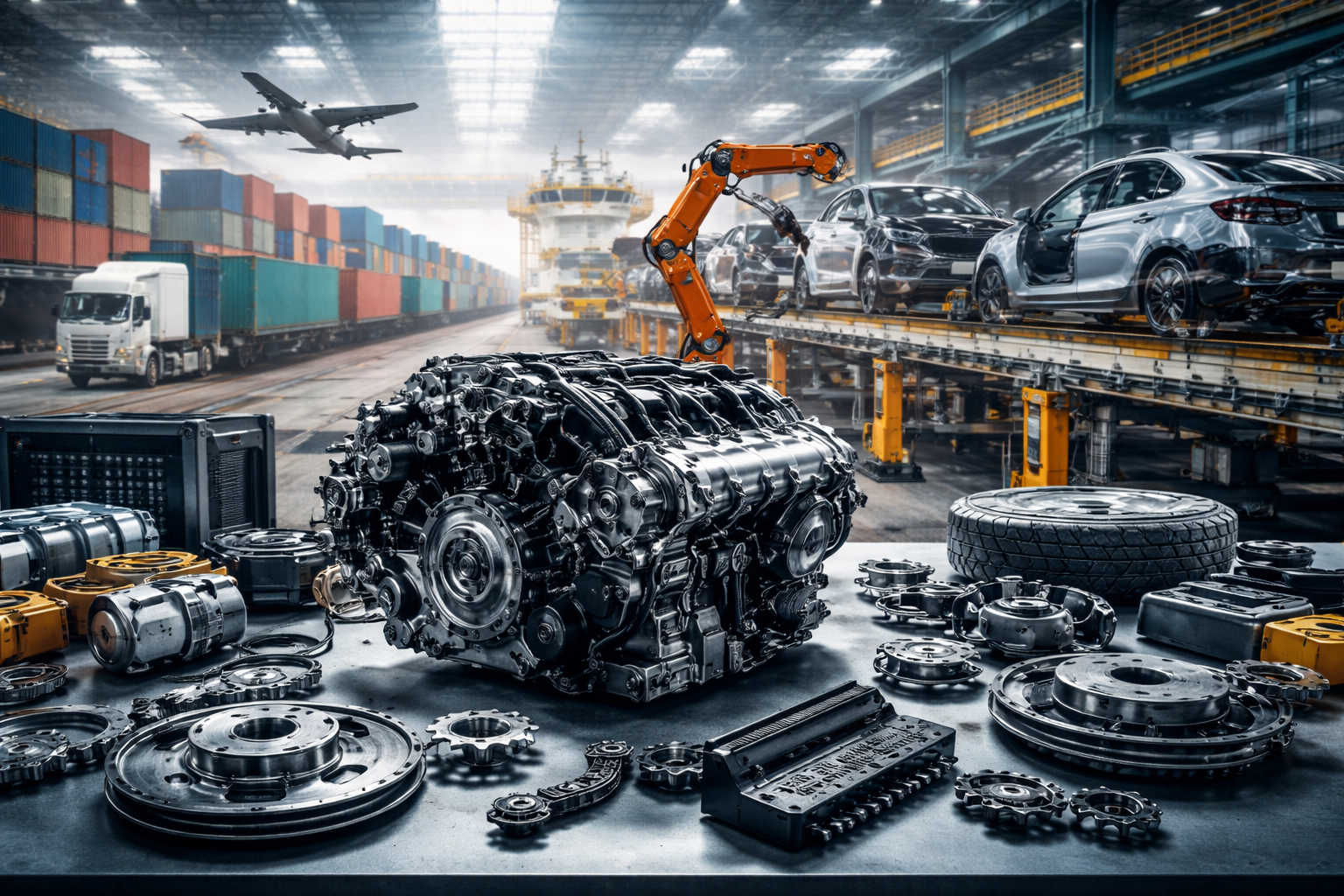
The automotive supply chain refers to the entire process involved in producing and delivering automotive parts—from sourcing raw materials to final delivery. This complex network includes multiple stakeholders, systems, and technologies working together seamlessly. According to industry insights on automotive supply chain processes, manufacturers rely heavily on integrated systems to maintain efficiency and visibility across operations.
Understanding how the automotive supply chain works is essential for manufacturers, suppliers, and businesses aiming to improve efficiency, reduce costs, and stay competitive in a rapidly evolving market. In this guide, we will break down the automotive supply chain in a clear, tech-friendly, and expert-level way.
What Is the Automotive Supply Chain?
The automotive supply chain refers to the entire process involved in producing and delivering automotive parts—from sourcing raw materials to delivering finished components to manufacturers or consumers.
It includes multiple interconnected stages such as:
- Raw material sourcing
- Parts manufacturing
- Assembly and integration
- Logistics and distribution
- Aftermarket support
Each stage depends heavily on advanced technologies, data integration, and real-time communication systems to ensure seamless operations.
Key Stages in Automotive Parts Manufacturing Supply Chain
1. Raw Material Procurement
The supply chain begins with sourcing raw materials such as:
- Steel and aluminum
- Plastics and polymers
- Rubber
- Electronic components
Modern procurement systems use AI-driven forecasting tools and blockchain technology to ensure transparency and reduce risks associated with supplier reliability.
Tech Insight:
Predictive analytics helps manufacturers anticipate material shortages and adjust procurement strategies in advance.
2. Tiered Supplier Network
The automotive supply chain operates through a structured tier system:
- Tier 1 Suppliers – Deliver complete systems (e.g., braking systems, transmissions)
- Tier 2 Suppliers – Provide components to Tier 1 suppliers
- Tier 3 Suppliers – Supply raw materials or basic parts
This tiered structure ensures specialization and scalability in automotive parts manufacturing.
Example:
A Tier 3 supplier provides aluminum → Tier 2 converts it into components → Tier 1 assembles it into a full subsystem.
3. Manufacturing and Production
This is the core of automotive parts manufacturing, where raw materials are transformed into functional components.
Key manufacturing processes include:
- CNC machining
- Injection molding
- Metal stamping
- 3D printing (additive manufacturing)
- Robotic assembly
Smart factories now dominate the industry, powered by:
- Industrial IoT (IIoT)
- AI-driven quality control
- Digital twins for simulation
Tech Insight:
Digital twin technology allows manufacturers to simulate production lines and optimize workflows before physical implementation.
4. Quality Control and Compliance
Quality assurance is critical in automotive manufacturing due to strict safety and regulatory requirements.
Modern systems use:
- Computer vision for defect detection
- Automated testing systems
- Real-time data monitoring
Standards such as ISO/TS 16949 ensure consistency across global supply chains.
5. Logistics and Distribution
Once parts are manufactured, they must be transported efficiently across global markets.
Logistics includes:
- Warehousing
- Inventory management
- Transportation (land, sea, air)
- Just-in-time (JIT) delivery systems
Technology in Logistics:
- GPS tracking and fleet management
- AI-powered route optimization
- Warehouse automation using robotics
Key Trend:
Many manufacturers are shifting from Just-in-Time (JIT) to Just-in-Case (JIC) strategies to reduce risks from global disruptions.
6. Assembly and OEM Integration
Original Equipment Manufacturers (OEMs) integrate parts into final vehicles.
This stage requires:
- Precise coordination
- Real-time inventory synchronization
- Seamless communication between suppliers
Advanced ERP (Enterprise Resource Planning) systems ensure that production schedules align with supply availability.
7. Aftermarket Supply Chain
The automotive supply chain does not end after production. The aftermarket plays a crucial role in:
- Replacement parts distribution
- Maintenance and repairs
- Upgrades and customization
E-commerce platforms and digital marketplaces are transforming how aftermarket parts are sold and delivered.
Technologies Transforming the Automotive Supply Chain
The modern automotive parts manufacturing ecosystem is heavily influenced by digital transformation.
Artificial Intelligence (AI)
AI is used for:
- Demand forecasting
- Predictive maintenance
- Quality inspection
Internet of Things (IoT)
IoT devices enable real-time tracking of:
- Inventory levels
- Equipment performance
- Shipment status
Blockchain
Blockchain enhances:
- Supply chain transparency
- Fraud prevention
- Smart contracts for supplier agreements
Cloud Computing
Cloud platforms allow:
- Data centralization
- Cross-border collaboration
- Scalable operations
Challenges in the Automotive Supply Chain
Despite technological advancements, the automotive supply chain faces several challenges:
1. Global Disruptions
Events like pandemics or geopolitical tensions can disrupt supply chains.
2. Semiconductor Shortages
Modern vehicles rely heavily on chips, making shortages a major issue.
3. Rising Costs
Raw material price fluctuations impact production budgets.
4. Sustainability Pressures
Manufacturers are expected to reduce carbon emissions and adopt eco-friendly practices.
Strategies to Optimize Automotive Supply Chains
To stay competitive, companies are adopting advanced strategies:
Diversified Sourcing
Reducing dependency on a single supplier or region.
Nearshoring
Moving production closer to key markets to reduce logistics risks.
Automation and Robotics
Improving efficiency and reducing labor costs.
Data-Driven Decision Making
Using analytics to optimize operations and reduce waste.
Future Trends in Automotive Parts Manufacturing
The future of the automotive supply chain is driven by innovation and digital transformation.
Electrification
The rise of electric vehicles (EVs) is reshaping supply chains, especially for batteries and electronic components.
Autonomous Supply Chains
AI-powered systems will enable self-optimizing supply networks.
Sustainable Manufacturing
Focus on recycling materials and reducing environmental impact.
Digital Supply Networks (DSN)
Replacing traditional linear supply chains with interconnected digital ecosystems.
Why Understanding the Automotive Supply Chain Matters
For businesses involved in automotive parts manufacturing, understanding the supply chain is critical for:
- Improving operational efficiency
- Reducing production costs
- Enhancing product quality
- Responding quickly to market changes
A well-optimized supply chain can become a significant competitive advantage in today’s global market.
Conclusion
The automotive supply chain explained in this guide highlights the intricate and technology-driven nature of automotive parts manufacturing. From raw material sourcing to aftermarket distribution, every stage relies on precision, innovation, and seamless coordination.
As technologies like AI, IoT, and blockchain continue to evolve, the automotive supply chain will become even more efficient, transparent, and resilient. Businesses that embrace these advancements will be better positioned to thrive in the future of automotive manufacturing.