

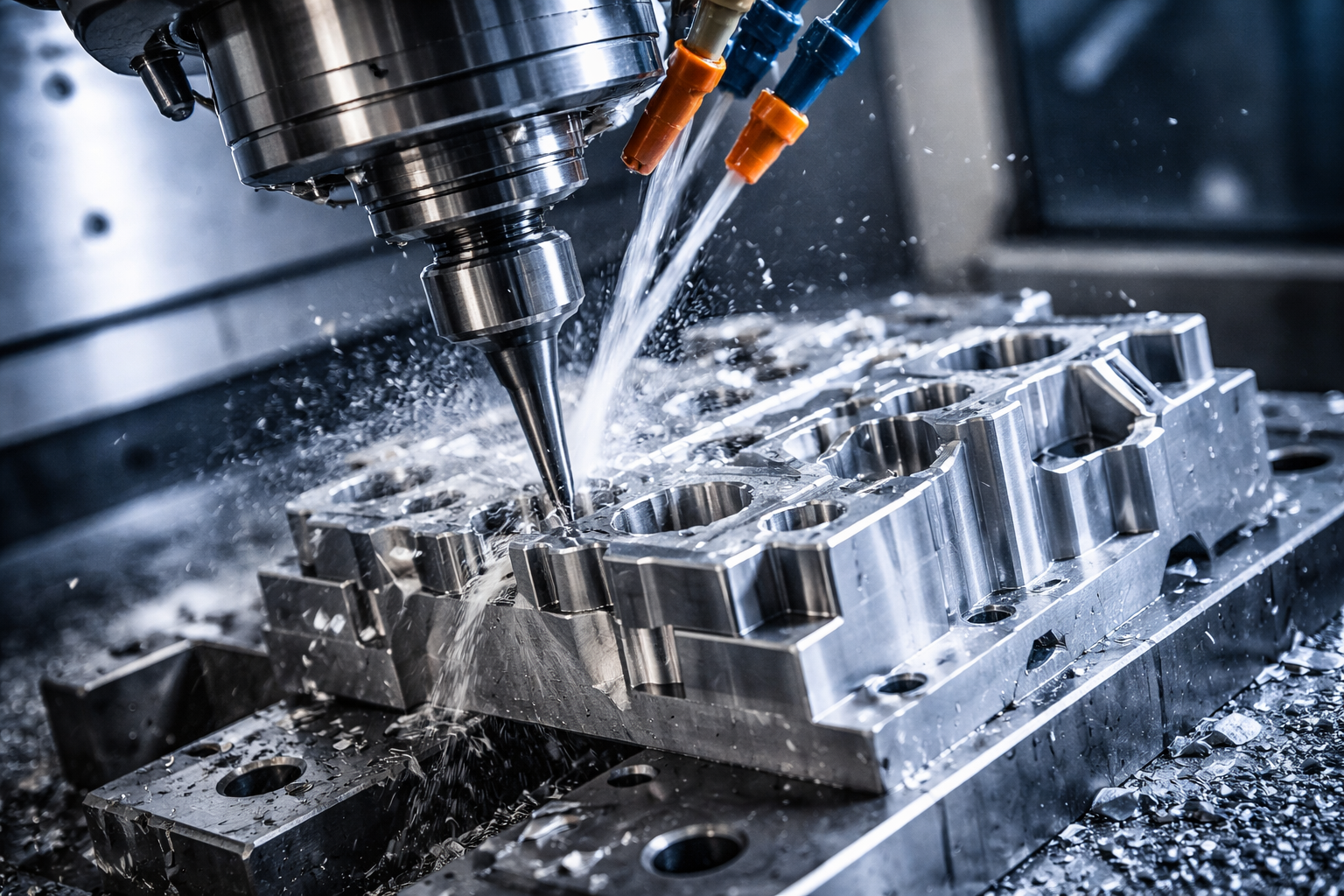
CNC machining is one of the most essential manufacturing technologies driving modern industries—from aerospace and automotive to electronics and medical devices. Short for Computer Numerical Control, CNC machining enables precise, repeatable, and efficient production of complex parts using automated tools guided by programmed instructions.
In this guide, we’ll break down the CNC machining process in a clear, technical, and SEO-optimized way. Whether you’re a beginner or an industry professional, this article will help you understand how CNC machining works, its benefits, types, and real-world applications.
What Is CNC Machining?
CNC machining is a subtractive manufacturing process where material is removed from a solid block (called a workpiece) using cutting tools controlled by computer programs. Unlike manual machining, CNC machines operate with high precision based on digital designs.
At its core, CNC machining transforms CAD (Computer-Aided Design) models into physical components through automated instructions known as G-code.
How the CNC Machining Process Works
The CNC machining process involves several critical stages. Each step contributes to accuracy, efficiency, and product quality. To better understand the workflow, this CNC machining process steps guide explains how machines move from CAD design to final production with precision and efficiency.
1. Designing the CAD Model
The process begins with creating a 3D design using CAD software. Engineers define dimensions, tolerances, and geometry of the part.
- Software examples: AutoCAD, SolidWorks, Fusion 360
- Output: A digital 3D model of the final product
This step ensures the part is fully visualized before manufacturing begins.
2. Converting CAD to CAM
Next, the CAD file is imported into CAM (Computer-Aided Manufacturing) software. This stage converts the design into machine-readable instructions.
- Generates toolpaths
- Determines cutting speeds and feeds
- Outputs G-code
The G-code acts as the “language” the CNC machine understands.
3. Machine Setup
Before machining begins, the operator prepares the CNC machine:
- Secures the workpiece onto the machine bed
- Installs appropriate cutting tools
- Calibrates machine coordinates
Proper setup is critical for avoiding errors and ensuring precision.
4. Executing the Machining Operation
Once everything is set, the CNC machine executes the programmed instructions.
Common machining operations include:
- Milling
- Turning
- Drilling
- Grinding
The machine removes material layer by layer to create the final shape.
5. Finishing and Quality Inspection
After machining, parts often undergo finishing processes:
- Deburring
- Polishing
- Surface coating
Quality control checks ensure the final product meets specifications using tools like calipers and coordinate measuring machines (CMM).
Types of CNC Machining Processes
Different CNC machining processes are used depending on the complexity and design of the part.
CNC Milling
CNC milling uses rotating cutting tools to remove material from a stationary workpiece. It is ideal for complex geometries and multi-axis operations.
CNC Turning
In CNC turning, the workpiece rotates while a cutting tool removes material. This process is commonly used for cylindrical parts like shafts.
CNC Drilling
This process creates precise holes in materials using rotating drill bits. It is often combined with milling operations.
CNC Grinding
Grinding provides high surface finish and tight tolerances using abrasive wheels.
Key Components of a CNC Machine
Understanding the parts of a CNC machine helps clarify how the process works.
- Controller Unit – Interprets G-code instructions
- Machine Bed – Holds the workpiece
- Spindle – Rotates cutting tools
- Tool Changer – Automatically switches tools
- Drive System – Controls movement along axes (X, Y, Z)
Advanced machines may include multi-axis capabilities (3-axis, 4-axis, 5-axis), allowing more complex designs.
Materials Used in CNC Machining
CNC machining supports a wide range of materials, including:
Metals
- Aluminum
- Steel
- Titanium
- Brass
Plastics
- ABS
- Nylon
- Polycarbonate
Composites
- Carbon fiber
- Fiberglass
Material selection depends on strength, durability, and application requirements.
Advantages of CNC Machining
CNC machining offers several benefits that make it indispensable in manufacturing.
High Precision and Accuracy
CNC machines can achieve tolerances as tight as ±0.001 inches, making them ideal for critical applications.
Repeatability
Once programmed, CNC machines can produce identical parts consistently.
Automation and Efficiency
Minimal human intervention reduces errors and increases production speed.
Complex Geometry Capability
Multi-axis machines can create intricate shapes that are impossible with manual machining.
Reduced Waste
Efficient material removal minimizes waste compared to traditional methods.
Limitations of CNC Machining
Despite its advantages, CNC machining has some limitations:
- High initial setup cost
- Requires skilled programming and operation
- Not ideal for very large production volumes compared to injection molding
- Material waste due to subtractive process
Understanding these limitations helps businesses choose the right manufacturing method.
Applications of CNC Machining
CNC machining plays a vital role across multiple industries.
Aerospace
Used for producing high-precision components like turbine blades and structural parts.
Automotive
Manufactures engine components, gears, and custom parts.
Medical
Creates surgical instruments, implants, and prosthetics with high accuracy.
Electronics
Produces housings, connectors, and circuit board components.
Industrial Manufacturing
Used for tooling, molds, and machine parts.
CNC Machining vs. 3D Printing
CNC machining is often compared with additive manufacturing (3D printing).
| Feature | CNC Machining | 3D Printing |
|---|---|---|
| Process Type | Subtractive | Additive |
| Material Strength | High | Moderate |
| Surface Finish | Excellent | متوسط |
| Speed | Faster for large parts | Faster for prototypes |
| Waste | More | Less |
Both technologies complement each other depending on the use case.
Tips for Optimizing CNC Machining
To maximize efficiency and quality, consider these best practices:
- Design for manufacturability (DFM)
- Avoid sharp internal corners
- Use standard tool sizes
- Minimize deep cavities
- Optimize tolerances
These strategies reduce machining time and costs.
Future Trends in CNC Machining
The CNC machining industry continues to evolve with new technologies:
- AI-powered machining optimization
- IoT-enabled smart factories
- Automation and robotics integration
- Advanced multi-axis machining
These innovations are improving productivity, precision, and scalability.
Conclusion
The CNC machining process is a cornerstone of modern manufacturing, offering unmatched precision, efficiency, and versatility. From the initial CAD design to the final inspection, each step is carefully controlled to produce high-quality components across various industries.
Understanding how CNC machining works allows businesses and engineers to make informed decisions about production methods, material selection, and design optimization.
As technology continues to advance, CNC machining will remain a critical tool in shaping the future of manufacturing.