

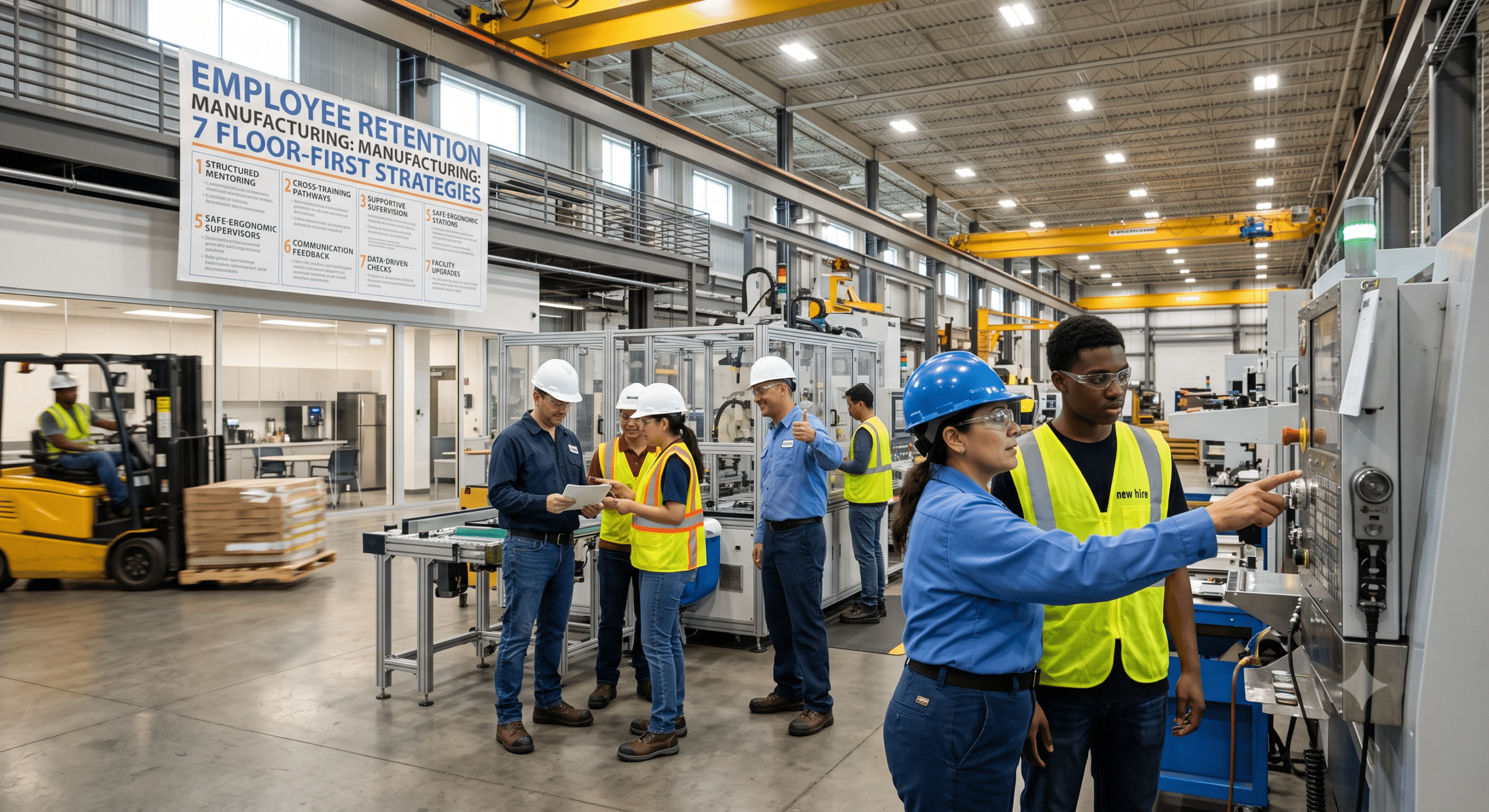
Every plant manager knows the feeling of walking onto the floor and sensing that something is wrong. You don’t even need to look at the daily dashboard to see it. The lines are backed up, the trash bins are full of ruined parts, and shifts are running behind. The usual reaction is to blame a broken machine or a late shipment. But if you look closer, the real problem is almost always a quiet revolving door of employees, making employee retention manufacturing the single most critical challenge facing plant floor leadership today.
When an experienced operator walks out the door, they take a lot more than just a warm body with them. They take years of know-how and the special tricks for getting a stubborn machine to run right. They also take the vital teamwork habits that keep the floor moving safely.
For workforce development directors and training specialists, the big lesson here is simple. Improving employee retention manufacturing programs isn’t just a goal for the human resources office. It is the best way to hit your daily production goals, speed up lead times, and stop wasting expensive raw materials.
If we want to build a truly reliable factory, we must look at our teams through a practical, hands-on lens. By focusing on the daily experience of the people running the machines, we can build a better workplace. We can create an environment where folks want to stay, production stays on track, and waste drops to an all-time low.
1. Upgrade Day-One Training to Get New Hires Up to Speed Faster
The first month on the job is when a new manufacturing worker is most likely to quit. For years, many factories treated the first week as a boring chore full of tax forms and endless handbooks. This hands-off approach leaves a new hire feeling completely lost and stressed out. They struggle when they finally step into the loud, fast-paced world of a real production floor. When people feel that way, they take much longer to reach normal production speeds, which hurts the output of the entire line.
To fix this, we need to build a training plan that feels welcoming and highly practical. The best way to do this is by pairing every new hire with an experienced floor mentor from day one. Instead of forcing a rookie to guess how to run a complex machine, the mentor stands right next to them. They show them the ropes and teach them how to clear a sudden jam on their own.
This hands-on support helps new workers build confidence fast. When an employee knows how to set up their area and fix minor glitches, they work without stress. They hit their target production speeds weeks ahead of schedule. By investing in people right from the start, you take away the fear and confusion that makes new hires look for a different job.
2. Teach Multi-Skilling to Stop Missing Deadlines and Cut Down Delay Times
Relying on just one person to run a vital piece of equipment is a huge risk for any factory. If that single operator wakes up sick or takes a planned vacation, the entire line grinds to a halt. The production step backs up, and every department down the line ends up waiting around. This kind of bottleneck is a direct result of not training a flexible team.
[Old Way: One Skill Per Person]
Worker A (Station 1) -> Worker B (Station 2 - LINE STOPS if sick) -> Worker C (Station 3)

[New Way: Cross-Trained Team]
Worker A <--> Worker B <--> Worker C  (Everyone can help out at Station 2)
Teaching your team to handle multiple jobs changes everything. It turns a rigid schedule into a flexible, cooperative team. When you systematically train operators to run two or three different stations, you build a safety net.
If a pile-up starts forming at the packing station, cross-trained team members can jump over to help clear the load immediately. This quick teamwork keeps your total cycle times steady. It ensures the plant meets its daily shipping promises to customers.
Even better, giving workers a chance to learn new skills satisfies a basic human desire to grow. When operators see that a company invests in their professional growth, they stick around. They know staying means earning a more valuable skill set and a brighter future.
3. Help Supervisors Become Better Leaders to Stop Mistakes and Cut Down Scrap
There is a well-known truth in the manufacturing world: people do not quit bad jobs, they quit bad bosses. On the factory floor, frontline supervisors are often promoted rapidly because they were the fastest operators. They rarely get the job because they knew how to manage people. When these new supervisors lead by barking orders or micromanaging every move, floor morale drops instantly. You can easily see the resulting damage in the scrap pile.
When workers are stressed out, angry, or distracted, they make mistakes. They misread measurement tools and ignore minor flaws in the raw materials. They fail to notice that a machine is misaligned until hundreds of ruined parts have already piled up.
By offering real leadership training tailored specifically for floor supervisors, workforce directors can fix quality problems at the source. Supervisors learn how to give helpful feedback and listen to operator concerns. They create a respectful environment and see immediate improvements in their team’s output.
When an operator feels safe stopping a line to fix a small alignment issue, they do not worry about a boss yelling at them. This open communication saves the company thousands of dollars in wasted materials. A supportive culture keeps the team stable, lowers your scrap rates, and eliminates the frustrating rework loops that eat up daily profits.
4. Design Smart, Comfortable Workstations to Prevent Burnout and Fatigue
Factory work is tough on the body. It involves repetitive movements, long hours standing on hard concrete floors, and constant mental focus. If a workstation is poorly designed, employees burn out physically and mentally very fast. This exhaustion leads to high absence rates and sudden resignations. From a production standpoint, an exhausted worker is a slow, error-prone worker who accidentally slows down the line.
Creating standard work instructions that protect the physical health of your workers is vital. Workforce specialists need to work directly with engineers to study the physical strain of every station.
This means making sure heavy items are lifted using mechanical hoists. It means parts bins are placed within easy arm’s reach, and thick anti-fatigue floor mats are at every standing spot.
In addition, rotating workers to different tasks throughout a shift helps prevent injuries. It makes sure nobody does the exact same repetitive motion all day long. When the work is set up to protect human bodies, employees end their shifts with energy left over. This physical care keeps daily attendance high, keeps production lines moving fast, and builds long-term loyalty.
5. Listen to Employee Ideas to Find Smarter Ways to Run the Shop Floor
The people running the machines every day know them better than anyone else. They know exactly which sensor acts up when the room gets too hot. They know which belt tends to catch the product and which tool change takes too long. Sadly, many traditional factory managers completely ignore these daily insights. This negligence leaves operators feeling invisible and unappreciated.
[The Old Communication Gap]
Management Decisions  <-- (Total Disconnect) -->  Actual Floor Problems

[The New Improvement Loop]
Worker Suggestions -> Reviewed by Team -> Quick Floor Upgrades -> Happier Workers & Less Waste
Creating an easy, open way for workers to share their ideas bridges this communication gap completely. When a workforce development specialist actively gathers suggestions, leadership can review and act on them. This simple change causes the mood on the floor to improve for the better.
Suppose an operator suggests a small adjustment to a guide rail that stops material from jamming. If management actually makes the fix, that worker sees that their mind matters to the company.
From a business standpoint, these small ideas add up to massive wins. They speed up cycle times by stopping annoying delays and cut down scrap by fixing long-term machine flaws. From a human standpoint, this level of inclusion is a powerful reason to stay. People rarely leave a job where their intelligence is respected and their ideas shape the workplace.
6. Use Production Data to Spot Workplace Burnout Before People Quit
Modern factories gather millions of data points about machine speeds, overall efficiency, and material movement. However, many plants are completely blind to the human data that makes those machines run. They treat high employee turnover like a sudden bad weather storm instead of a clear trend that can be tracked.
Smart workforce directors use floor data to spot early signs of turnover. They watch for sudden jumps in employee absences or small drops in individual output. They also track repeated quality mistakes at a specific workstation. By watching these trends shift by shift, leadership can fix problems before they turn into a wave of people quitting.
For example, data might show that the second shift on an assembly line is seeing a sudden spike in scrap parts. If this happens alongside more call-outs, it tells you right away that the team needs extra help. They may need targeted training or a change in leadership.
Sharing this information openly with the team also builds trust. When operators see how their daily output helps the whole company succeed, they feel valued. When their hard work is recognized, they feel like true business partners instead of just another number on a spreadsheet.
7. Clean Up Breakrooms and Facilities to Show Real Respect for the Team
Competitive wages and healthcare benefits are the baseline of any job offer. However, the actual environment where employees spend their breaks makes a massive difference in how they feel. If you walk into a plant where the breakrooms are dark and dingy, morale will be low. If the bathrooms are dirty and the lockers are broken, you will find a team that feels disrespected.
Spending the money to modernize employee break spaces is a simple, highly visible way to show real gratitude. Clean, bright, air-conditioned break areas with good seating give operators a genuine place to rest. They can easily recharge and talk with their coworkers between demanding shifts. Clean, secure locker rooms and spotless restrooms tell the team that management respects their dignity.
When employees feel respected and comfortable during their downtime, they return to the production line focused and refreshed. That renewed focus leads directly to better quality control and faster production speeds. It builds a friendly, connected floor culture that naturally makes people want to stay for the long haul.
The Bottom Line: Happy Workers Make Better Products
At the end of the day, every piece of metal cut, every box packed, and every product shipped depends entirely on your people. They use their hands and minds to run the floor. When leadership treats training as an annoying expense rather than a smart investment, they trap their facility in a frustrating loop. They constantly hire, train, and lose workers over and over again. This chaos keeps daily output low, stretches delivery times, and sends scrap costs through the roof.
By matching your strategies for employee retention manufacturing with simple, smart floor operations, workforce development directors can unlock hidden potential. You will find vast reserves of capacity in your current facilities.
Focusing on hands-on mentoring, team cross-training, kind floor leadership, and comfortable facilities creates a workplace where everyone wins. Operators stay because they feel valued, capable, and respected. The lines run smoothly because experienced eyes are watching the product. In the modern manufacturing industry, the ultimate competitive edge isn’t a faster machine. It is a skilled, happy, and loyal team that takes pride in doing the job right day after day.
Frequently Asked Questions
How does improving employee retention manufacturing strategies directly cut down on our plant’s scrap rate?
When a factory has a low retention rate, the lines are constantly run by brand-new workers. These new hires are still figuring out how the machines work. They are much more likely to misread a blueprint or set up a tool incorrectly. They easily miss the early warning signs that a machine is failing. By focusing on employee retention manufacturing efforts, you ensure the line is staffed by experts. They have the touch, feel, and deep knowledge needed to catch errors early, stopping waste before it hits the scrap bin.
Does teaching workers multiple skills actually support employee retention manufacturing goals, or does it just stress them out?
If you force cross-training on a team without a plan, it can feel like extra work for the same pay. But when it is set up as a clear, voluntary program, it does the exact opposite. You can tie the program to skill certifications and a path to higher pay. This targeted approach to employee retention manufacturing breaks up the boring monotony of doing the same task all day. It reduces physical aches and pains and gives workers a better look at how the whole plant operates. This makes them feel like valuable, highly skilled experts.
Why do old-school annual reviews fail to help with employee retention manufacturing?
Old-fashioned manufacturing reviews are usually just top-down lectures. They focus entirely on past mistakes or low production numbers without offering a real plan to improve. Workers often walk out of these meetings feeling criticized rather than supported. To boost your employee retention manufacturing numbers, these talks need to look forward. They should map out specific skills the worker can learn next. This clarity helps them see how to grow a long-term career right inside your company.
What are the earliest warning signs that a shift is struggling with employee retention manufacturing?
Waiting until an employee turns in a resignation letter is a reactive habit. It costs a factory thousands of dollars in lost time. Savvy workforce managers look for early warning signs instead. They watch for a sudden rise in unexcused absences or a small drop in weekly production numbers. They also track an unusual bump in minor safety slip-ups and quality mistakes on a specific shift. These details point to a team that is burnt out or poorly supported. Tracking this allows you to step in before your employee retention manufacturing metrics drop.
Can upgrading physical facilities really impact employee retention manufacturing?
Yes, the physical workspace plays a massive role in employee retention manufacturing trends. If breakrooms are dirty and locker rooms are broken, employees feel that the company does not respect them. Spending capital to clean up and modernize these areas shows real appreciation for hard physical work. When workers feel comfortable during their downtime, they return to the floor refreshed. This boost in morale naturally creates a sticky workplace environment where people choose to stay for the long haul.
References for Further Reading
-
L2L Manufacturing Insights: l2l.com/blog/manufacturing-trends-to-watch – High authority analysis exploring modern factory operations, frontline upskilling infrastructure, and fixing floor communication issues.
-
Gemba Academy Lean Management Hub: blog.gembaacademy.com – A premier educational network detailing exactly how to weave lean manufacturing methodologies and 5S tools into sustainable personnel development tracks.
-
The Association for Manufacturing Excellence (AME): ame.org – A major community platform dedicated entirely to modern enterprise lean practices, operational efficiency, and building robust shop floor leadership cultures.
-
The National Association of Manufacturers (NAM): nam.org – Provides macroeconomic data, continuous operational studies, and executive tools built for optimizing factory output and labor force pipelines across the United States.