

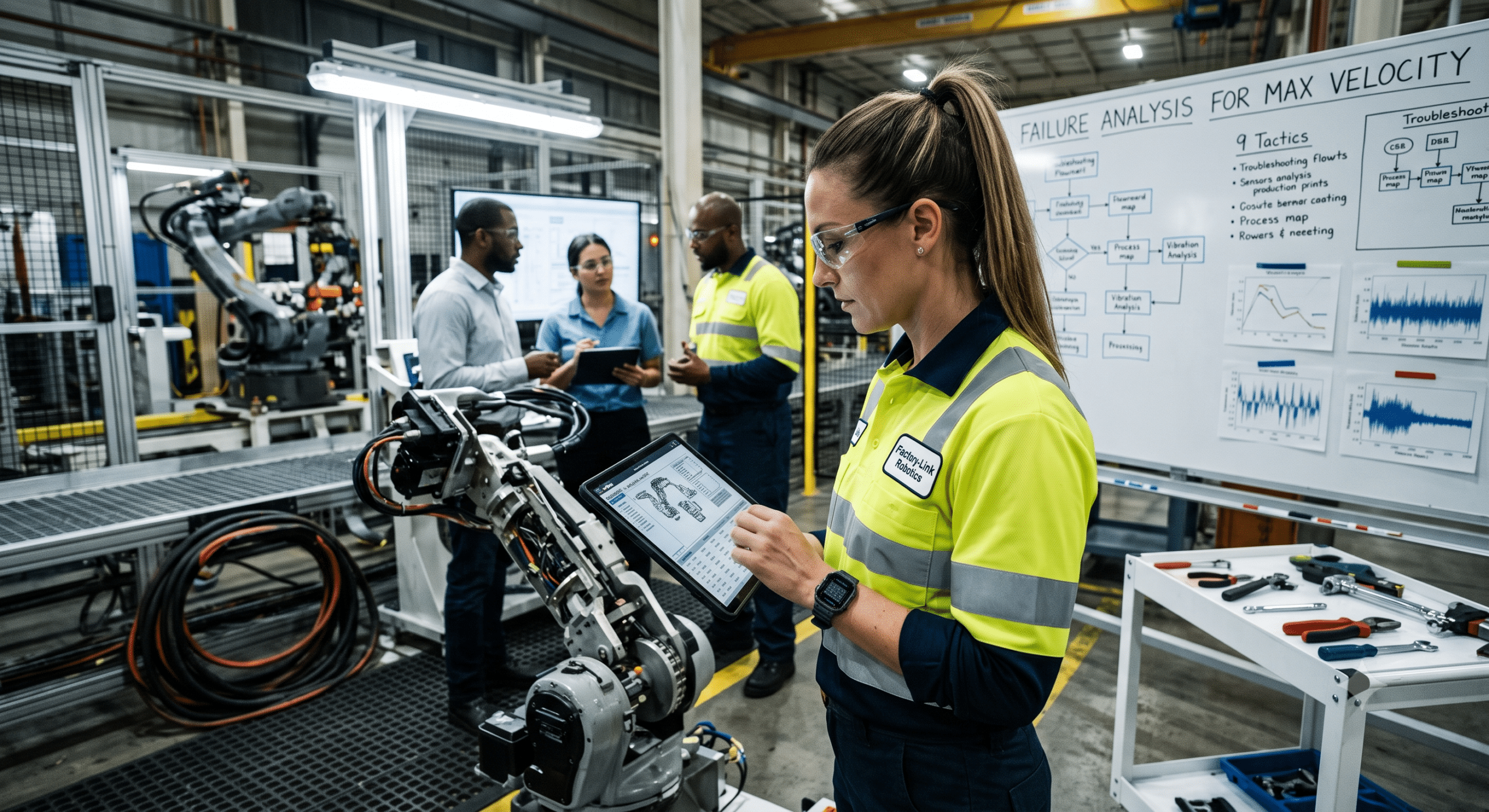
Every morning on the factory floor, a maintenance manager faces the same challenge. A sudden line stoppage requires immediate equipment failure analysis to get things moving again. The loud hum of machinery means the business is making money, but sudden silence means the factory is losing cash by the minute. When a major production line stops, the pressure is immediate. The operations team wants a fast fix, operators stand around waiting, and unfilled orders start stacking up.
However, rushing to slap a quick piece of tape on a broken machine without knowing why it stopped is a big mistake. True success comes from taking care of your machines before they break. To stop constantly chasing emergencies, a factory needs a solid plan. That plan is built on industrial maintenance management.
The secret weapon of this plan is a process called equipment failure analysis. Instead of just playing firefighter, we look deep into the machine to find out exactly why it broke. By doing this, we can hit three major goals: get more products out the door, speed up production time, and cut down on wasted materials.
1. Look Inside the Breakdown to Find the Real Problem
To stop a machine from breaking down over and over, we have to understand how parts actually wear out. Many teams think a breakdown is just bad luck. In reality, machines almost always give tiny warnings before they stop working completely.
There is a big difference between how a machine breaks and why it breaks. How it breaks is what you see with your eyes, like a snapped metal bar or a burnt wire. Why it breaks is the hidden cause behind it, like parts rubbing together or a machine shaking too hard.
+-----------------------------------------------------------------+
|                      THE BREAKDOWN BREAKDOWN                    |
+--------------------------------+--------------------------------+
| WHAT YOU SEE (How it breaks)   | THE HIDDEN CAUSE (Why it breaks)|
| • Snapped metal bar            | • Parts rubbing together       |
| • Burnt electrical wire        | • Machine shaking too hard     |
+--------------------------------+--------------------------------+
When you look closely at mechanical parts, they wear down in predictable ways. Small, repeated movements create tiny cracks in metal shafts until they suddenly snap. Rough surfaces grind against each other, rubbing away metal and making the motor work much harder.
Rust eats away at strong steel frames and drops dirty flakes into clean oil systems. Too much heat cooks the plastic coating inside electrical boxes, causing wires to short out early. When you learn how these problems start, you stop guessing and start fixing things permanently before the machine stops.
2. Stop Hidden Pauses to Get More Products Out the Door
Throughput is simply the total number of good products a factory makes in a day. When a main machine shuts down, your throughput drops to zero immediately. The goal of a smart maintenance plan is to keep the factory floor moving smoothly without any sudden stops.
By using a clear equipment failure analysis plan, we can find and fix the small issues that cause unexpected stops. For example, a fast-moving bottling line might stop for five minutes, multiple times a day, because a guide rail is slightly crooked. These short pauses might not seem like a big deal to a busy worker, but they add up over a week. They steal hours of production time and cost the company thousands of lost products.
When our engineering team tracks and studies every single small stop, we can make permanent mechanical fixes. This keeps the main production line moving at a steady, reliable pace. Making more products is not about forcing machines to run faster than they should. It is about making sure they run consistently without stopping.
3. Speed Up the Assembly Line to Finish Products Faster
Cycle time is the total time it takes to turn raw materials into a finished product ready for sale. In a perfect factory, materials move from one station to the next without waiting in line. But when a machine starts wearing down inside, it takes longer to do its job.
A worn-out screw on a cutting machine or a loose part on a robotic arm forces the machine to work harder and slower. Often, operators will slow down the whole line on purpose so the worn machine does not trigger an alarm. This slows down the entire factory, raises labor costs, and limits how much the plant can produce.
Through careful data checks, we can find these hidden slow spots. By looking at old repair records and comparing them to live machine speeds, we see exactly where friction or slow computer responses are delaying the work. Fixing these parts and bringing them back to perfect shape removes this drag, keeping the production line moving at top speed.
4. Fix Machine Wiggle to Stop Making Wasted Scrap
Making products fast does not matter if half of them end up in the trash bin. A high scrap rate wastes expensive raw materials, burns up valuable time, and frustrates workers. While people often blame bad materials for scrap, the real issue is usually a shaky machine.
Think about a machine that molds plastic trays. If the heaters have loose wires, the temperature will jump up and down. This causes the plastic to have thin spots and warp, meaning the inspection team has to throw them away immediately.
In the same way, a loose bearing in a fast printing press can cause tiny vibrations. This makes the ink blur, ruining thousands of feet of paper in minutes.
Using equipment failure analysis helps us connect a bad product directly to a loose machine part. Once we know the connection, we can set up warning systems on the machine. Catching a loose part or a temperature change before it ruins a product helps keep the factory scrap rate close to zero.
5. Use the Step-by-Step Clue Method to Investigate Breakdowns
When a machine breaks, the team must stay calm and use a structured equipment failure analysis to guide their work. To build a reliable factory, we use a repeatable, multi-step checklist that guides technicians from a broken machine to a permanent fix.
-
Save the Broken Pieces: Treat the area like a puzzle scene by taking photos, checking the oil, and talking to the operator before changing anything.
-
Make a Time Chart: Use your computer system logs to see exactly what happened right before the machine stopped.
-
Ask “Why” Five Times: Dig past the easy answers by asking why something happened until you find the core issue.
-
Draw a Cause Map: Brainstorm every possible reason for the fail, looking at materials, worker methods, and the machine itself.
-
Check the Physical Proof: Use special tools or oil tests to confirm exactly how the metal or wire failed so you have real proof.
-
Create the Final Fix: Change the machine design or update the daily service check to ensure the problem never happens again.
This clear step-by-step review keeps the team from just fixing the surface trouble. Finding the root cause stops the same breakdown from happening next week, protecting your daily production.
6. Trade Sudden Emergencies for Planned Checkups
Waiting for a machine to break before you fix it is the most expensive way to run a factory. It creates a stressful workplace, costs extra money for rushed parts, and stops production when you least expect it. True efficiency means changing to a proactive plan.
A basic preventive maintenance plan means doing regular inspections, cleanings, and part changes based on the calendar or run hours. To get even better, you can use smart tools to predict failures.
Using tools like heat cameras, vibration sensors, and oil testing lets you check the inside health of a machine while it is running fast.
                      +---------------------------------+
                      |    Predictive Sensor Explores   |
                      |   Heat, Vibration, & Oil Health |
                      +----------------+----------------+
                                       |
                                       v
                      +---------------------------------+
                      |   Early Warning Flashes Before  |
                      |     Any Real Damage Occurs      |
                      +----------------+----------------+
                                       |
                                       v
                      +---------------------------------+
                      |  Fix Scheduled Safely During    |
                      |     Normal Planned Down Time    |
                      +----------------+----------------+
This sensor data gives your team a clear warning before any real damage happens. A repair can then be scheduled safely during a normal break time. This keeps production moving predictably and stops a small broken part from breaking the larger pieces around it.
7. Turn Your Maintenance Software into a Smart Tool
A modern Computerized Maintenance Management System (CMMS) is not just a digital folder for paperwork. When used correctly, it acts as a smart tool that tracks machine history, used parts, worker hours, and error codes for the whole factory.
To get the most out of this tool, the maintenance team must put in good information. Using simple, standard problem codes—like “loose,” “too hot,” or “worn out”—helps you run clean reports to find bad trends.
If a certain pump model across the factory always breaks because of a worn bearing, the computer data will show it clearly. This proof lets you buy better replacement parts, stock the right spares, and fix factory-wide problems with confidence.
8. Get Operators and Mechanics Working Together
A great maintenance plan cannot be done by the repair team alone. Keeping a factory running is a team effort that requires smooth communication between operators, mechanics, and managers.
A great way to do this is by setting up an Autonomous Maintenance program. This simply means teaching machine operators to handle basic cleaning, simple greasing, and daily visual checks on their own equipment.
Operators spend all day with their machines, so they are always the first to hear a weird sound, spot an oil leak, or feel extra heat. Giving operators the power to report these early signs lets the specialized mechanics focus on major upgrades and deep equipment failure analysis. This team approach keeps everyone focused on one goal: keeping the machines running.
9. Track Your Progress with Basic Success Numbers
To keep your factory floor improving over time, you must measure your work with clear numbers. Without these tracking numbers, it is impossible to see if your equipment failure analysis work is actually saving money.
The first number to watch is Mean Time Between Failures ($MTBF$). This tracks the average time a machine runs between breakdowns. A rising $MTBF$ means your permanent fixes are working and your machinery is becoming more reliable.
The second number is Mean Time to Repair ($MTTR$). This measures the average time it takes to find the problem, fix it, and restart the line. Shrinking your $MTTR$ shows that your team is well-trained, your parts room is organized, and your fix plans are working well. Tracking these two numbers gives you a clear look at your factory health.
Frequently Asked Questions
What is the difference between a failure mode and a root cause?
A failure mode is the exact problem you can see with your eyes, like a cracked gear tooth or a melted wire. A root cause is the fundamental reason the problem started in the first place, like a crooked machine frame or someone forgetting to add oil.
How does equipment failure analysis lower our scrap rate?
When machines get loose or old inside, they start to shake or experience temperature swings. These changes make the machine work outside its perfect limits, which ruins the product being made. By finding and fixing these loose parts early through a dedicated plan, the machine makes perfect products every time, keeping raw materials out of the trash.
Why should machine operators help with basic maintenance?
Operators work next to their machines every day, making them the best choice for spotting small changes early. Teaching them to handle simple tasks like cleaning, minor tightening, and oil checks helps catch tiny issues before they turn into huge breakdowns. This teamwork lets the engineering team focus on bigger factory improvements.
How does maintenance software help with equipment failure analysis?
The software saves the entire repair history of every machine in the plant, showing past work orders, old parts used, and how often a line stops. When a machine breaks, engineers use this data during an ongoing investigation to see if the problem happened before, see what fixed it last time, and find matching patterns across the factory floor.
References for Further Reading
-
For a deep, actionable dive into step-by-step methodologies on investigating machine issues, check out the expert blog post Equipment Failure Analysis: Steps, Methods, and Best Practices on Limble CMMS.
-
To learn how to structure data collection and eliminate bad metrics from your maintenance program, read Four Red Flags In Your Maintenance Data And 33 Solutions on the Fiix Software Blog.
-
For a comprehensive look at matching the right process care structure to your specific factory assets, explore the guide on Evaluating Different Maintenance Management Strategies by Fiix Software.