

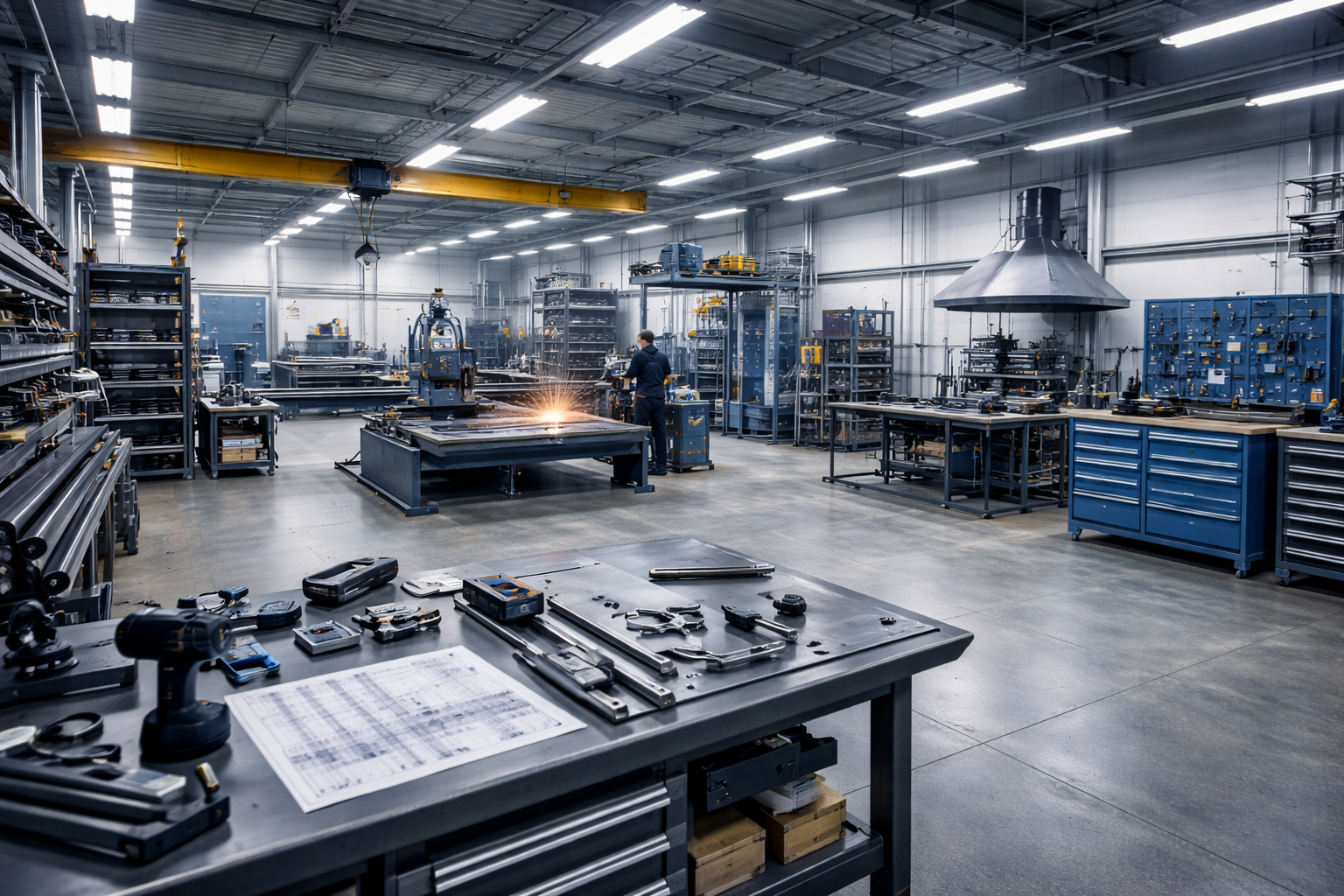
Setting up a fabrication workshop is a strategic process that blends engineering precision, workflow design, and safety planning. Whether you are building a small-scale prototyping lab or a full production facility, the right setup directly impacts productivity, quality, and long-term scalability.
A well-designed fabrication workshop setup ensures that tools, materials, and processes work seamlessly together. This guide provides a comprehensive, technical, and practical approach to designing a workshop that meets modern fabrication demands.
What Is a Fabrication Workshop Setup?
A fabrication workshop setup refers to the planning, layout, equipment selection, and operational structure of a workspace used for manufacturing or prototyping physical components.
Fabrication workshops typically support:
- Metalworking (cutting, welding, machining)
- Woodworking
- CNC machining and automation
- Prototyping and product development
The goal is to create an environment that is:
- Efficient and organized
- Safe for workers
- Scalable for future growth
- Optimized for workflow and production
Planning Your Fabrication Workshop
Before purchasing equipment or designing layouts, proper planning is essential.
Define Your Workshop Goals
Start by identifying:
- Type of fabrication (metal, wood, mixed)
- Production scale (prototype vs. mass production)
- Target output and capacity
Space Requirements
Consider:
- Total floor area
- Ceiling height (important for large equipment)
- Ventilation and airflow
- Power supply capacity
Workflow Mapping
Plan how materials move through the workshop:
- Raw material intake
- Cutting and shaping
- Assembly and finishing
- Storage and dispatch
Efficient workflow reduces unnecessary movement and improves productivity.
Designing the Workshop Layout
The layout is one of the most critical elements of a successful fabrication workshop setup. A well-designed workflow starts with proper fabrication workshop layout and planning, ensuring efficient material flow, reduced bottlenecks, and improved productivity.
Common Layout Types
1. Process-Based Layout
- Group machines by function
- Ideal for custom fabrication
2. Product-Based Layout
- Arrange tools in production sequence
- Suitable for high-volume manufacturing
3. Hybrid Layout
- Combines flexibility and efficiency
- Best for growing workshops
Key Layout Zones
Material Storage Area
- Organized racks for raw materials
- Easy access for loading/unloading
Cutting and Machining Area
- Houses saws, CNC machines, and lathes
- Requires strong dust and chip management
Assembly Area
- Workbenches and hand tools
- Clean and well-lit environment
Finishing Area
- Painting, polishing, coating
- Requires proper ventilation
Best Practices
- Maintain clear pathways
- Separate noisy and hazardous zones
- Ensure logical flow between workstations
Essential Equipment for Fabrication Workshops
Choosing the right equipment is crucial for efficiency and quality.
Core Machines
Cutting Tools
- Laser cutters
- Plasma cutters
- Band saws
Machining Equipment
- CNC machines
- Milling machines
- Lathes
Welding Equipment
- MIG, TIG, and stick welders
Finishing Tools
- Grinders and polishers
- Sandblasting equipment
Support Equipment
- Air compressors
- Dust collection systems
- Workbenches and tool storage
Automation Options
Modern workshops increasingly use:
- CNC automation
- Robotics for repetitive tasks
- Smart monitoring systems
Power and Electrical Setup
A robust electrical system is essential for any fabrication workshop setup.
Key Considerations
- Three-phase power for heavy machinery
- Dedicated circuits for high-load equipment
- Backup power solutions
Safety Measures
- Proper grounding
- Circuit breakers and surge protection
- Clearly labeled electrical panels
Ventilation and Environmental Control
Fabrication processes often produce dust, fumes, and heat.
Ventilation Systems
- Local exhaust ventilation for welding
- Dust extraction systems for cutting and sanding
Temperature Control
- HVAC systems for climate stability
- Insulation to maintain consistent conditions
Air Quality Management
- Filters and scrubbers
- Regular maintenance of ventilation systems
Safety and Compliance
Safety is a non-negotiable aspect of any fabrication workshop.
Personal Protective Equipment (PPE)
- Safety goggles
- Gloves and protective clothing
- Respirators
Workshop Safety Features
- Fire extinguishers and suppression systems
- Emergency exits and signage
- First aid stations
Compliance Standards
- OSHA guidelines
- Local building and safety codes
- Environmental regulations
Best Practices
- Conduct regular safety training
- Perform equipment inspections
- Maintain safety documentation
Workflow Optimization and Efficiency
Efficiency is a key goal in any fabrication workshop setup.
Lean Manufacturing Principles
- Minimize waste
- Optimize processes
- Improve cycle times
Tool Organization
- Use shadow boards for tools
- Label storage areas clearly
Digital Integration
- Use CAD/CAM software for design and production
- Implement ERP systems for inventory and workflow management
Storage and Inventory Management
Proper storage ensures smooth operations.
Material Storage
- Use vertical storage to save space
- Categorize materials by type and size
Tool Storage
- Secure and organized tool cabinets
- Easy access for frequently used tools
Inventory Systems
- Barcode or RFID tracking
- Real-time inventory monitoring
Lighting and Ergonomics
A well-lit and ergonomic workspace improves productivity and reduces errors.
Lighting Setup
- Bright overhead lighting
- Task lighting for detailed work
Ergonomic Design
- Adjustable workbenches
- Anti-fatigue mats
- Proper tool positioning
Scaling Your Fabrication Workshop
As demand grows, your workshop should be able to scale efficiently.
Expansion Strategies
- Modular equipment layout
- Flexible workstations
- Cloud-based monitoring systems
Technology Upgrades
- Advanced CNC machines
- IoT-enabled equipment
- Predictive maintenance tools
Workforce Development
- Continuous training programs
- Skill specialization
Common Challenges in Fabrication Workshop Setup
1. Poor Layout Design
Leads to inefficiency and wasted time.
2. Underestimating Power Needs
Can cause equipment failures and downtime.
3. Lack of Safety Measures
Increases risk of accidents and legal issues.
4. Inefficient Workflow
Reduces productivity and increases costs.
Best Practices for a Successful Setup
To build a high-performing workshop:
Plan for Growth
Design your layout with future expansion in mind.
Invest in Quality Equipment
Reliable tools reduce downtime and maintenance costs.
Prioritize Safety
A safe workshop is a productive workshop.
Embrace Technology
Automation and digital tools improve efficiency.
Maintain Organization
A clean and organized workspace enhances workflow.
Conclusion
A well-executed fabrication workshop setup is the foundation of efficient and scalable production. From layout planning and equipment selection to safety and workflow optimization, every detail plays a crucial role in the success of your operations.
By following a structured approach, you can create a workshop that not only meets current needs but also adapts to future growth. Investing in the right setup ensures higher productivity, better quality output, and long-term operational success.