

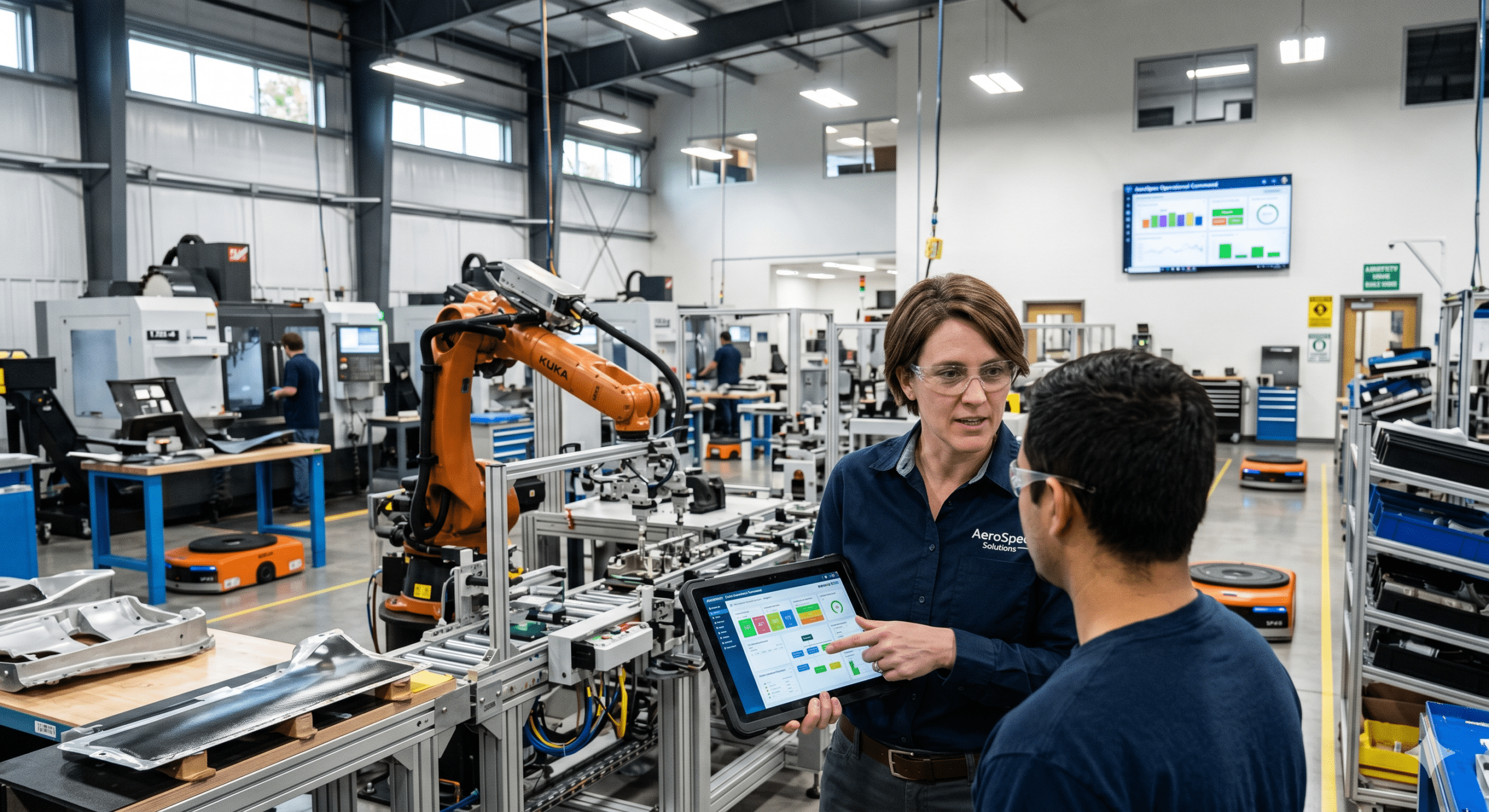
Manufacturing has changed dramatically over the last decade. Today’s factories are no longer driven by machines alone. Instead, successful operations rely heavily on connected systems, real-time data, automation, and smarter decision-making. As production environments become more complex, manufacturers need better ways to manage inventory, production schedules, purchasing, finances, maintenance, and customer orders all at the same time.
This is exactly where manufacturing ERP software becomes essential.
ERP, or Enterprise Resource Planning software, acts as the central nervous system of a manufacturing business. Rather than operating separate systems for accounting, inventory, procurement, warehousing, and production planning, ERP software connects everything into one streamlined platform. Consequently, manufacturers gain better visibility, stronger operational control, and faster decision-making across the entire organization.
From a manufacturing and automation perspective, one of the biggest differences between struggling factories and highly efficient operations often comes down to information flow. Companies that can see problems early, track production accurately, and respond quickly usually outperform competitors that still rely heavily on spreadsheets, disconnected software, or manual reporting.
According to industry insights from TechRadar, ERP adoption continues growing rapidly because manufacturers are prioritizing efficiency, scalability, and real-time operational visibility. Likewise, major ERP providers like Microsoft Dynamics 365 and SAP Manufacturing Solutions continue expanding cloud-based manufacturing platforms to support smarter factory operations.
What Is Manufacturing ERP Software?
Manufacturing ERP software is a business management platform specifically designed to support industrial and production environments. Unlike standard business software, manufacturing ERP systems include specialized tools for production scheduling, inventory tracking, procurement, quality control, warehouse management, and shop floor operations.
In simple terms, ERP software helps manufacturers connect every department into one coordinated system.
For example, when a customer order enters the ERP platform, the software can automatically:
- Check raw material availability
- Generate purchasing requests
- Schedule production runs
- Allocate machine capacity
- Update warehouse inventory
- Create invoices
- Track production progress
- Update financial reports
As a result, departments no longer operate independently. Instead, information flows across the organization in real time.
According to Oracle Manufacturing ERP, integrated ERP systems help manufacturers reduce operational silos while improving visibility across supply chain management, production, finance, and procurement operations.
Why Manufacturers Are Investing in ERP Software
Modern manufacturing operations face enormous pressure from rising costs, global competition, labor shortages, and supply chain disruptions. Because of this, manufacturers can no longer afford inefficient workflows or disconnected systems.
ERP software helps solve many of these operational challenges.
More importantly, it provides manufacturers with real-time visibility into their business operations. Instead of waiting until the end of the week for reports, managers can monitor production, inventory, purchasing, and delivery performance instantly.
Consequently, businesses can react faster to problems before they become expensive.
Manufacturers commonly use ERP software to:
- Improve inventory accuracy
- Reduce production delays
- Strengthen production planning
- Improve forecasting
- Lower operational waste
- Increase efficiency
- Improve on-time delivery rates
- Track profitability more accurately
Additionally, ERP systems improve communication between departments because everyone works from the same live data environment.
According to IBM Industry 4.0 Insights, connected digital systems are becoming increasingly important as manufacturers transition toward smarter and more automated operations.
The Biggest Operational Problem ERP Solves
One of the most common problems inside manufacturing businesses is disconnected information.
Engineering teams may use one system.
Accounting may use another.
Warehouse teams may rely on manual inventory counts.
Meanwhile, production scheduling might happen on spreadsheets or whiteboards.
Eventually, communication gaps start creating operational issues.
For instance:
- Purchasing may order unnecessary materials
- Production schedules may become inaccurate
- Inventory counts may not match reality
- Customer deliveries may get delayed
- Financial reporting may become unreliable
ERP software helps eliminate these problems by centralizing operational data into one system.
As a result:
- Inventory updates happen instantly
- Purchasing becomes more accurate
- Scheduling improves
- Production visibility increases
- Customer service responds faster
Most importantly, leadership gains a clearer understanding of what is happening across the business.
Key Features of Manufacturing ERP Software
Not all ERP systems are designed for manufacturing operations. Some platforms work better for retail or service industries. Manufacturing ERP software includes tools specifically built to support factory workflows and industrial environments.
Below are some of the most important features manufacturers should look for.
Production Planning and Scheduling
Production planning is one of the most difficult parts of manufacturing management. Manufacturers must balance material availability, labor resources, machine capacity, maintenance schedules, and customer deadlines all at the same time.
Without proper planning, delays can spread quickly throughout the factory.
Fortunately, ERP systems help manufacturers create smarter production schedules using live operational data. Rather than relying on guesswork, production planners can make informed decisions based on inventory levels, machine availability, and production priorities.
Additionally, some ERP platforms integrate with MES systems and factory automation tools to improve scheduling accuracy further.
According to ERPNext Manufacturing, integrated manufacturing planning tools help companies improve shop floor efficiency and production coordination.
Inventory Management
Inventory management plays a major role in manufacturing profitability.
Too much inventory ties up cash unnecessarily.
Too little inventory can stop production entirely.
ERP software provides real-time inventory visibility across:
- Raw materials
- Work-in-progress inventory
- Finished goods
- Spare parts
- Warehouse locations
Because of this visibility, manufacturers can reduce shortages while avoiding overstock situations.
Furthermore, many ERP systems now support barcode scanning, RFID tracking, and warehouse automation tools to improve inventory accuracy.
Purchasing and Supply Chain Management
Supply chain management became a major focus after global disruptions exposed weaknesses in procurement and logistics systems worldwide.
ERP software helps manufacturers:
- Track supplier performance
- Monitor purchase orders
- Compare vendor pricing
- Forecast material demand
- Manage lead times
- Improve procurement planning
Consequently, businesses become more proactive instead of constantly reacting to shortages or delays.
According to SAP Supply Chain Manufacturing Solutions, digital supply chain visibility has become essential for improving resilience and operational agility in manufacturing environments.
Quality Control and Product Traceability
Quality control is critical in manufacturing industries where compliance, customer safety, and product consistency matter greatly.
Modern ERP systems often include quality management and traceability tools that track:
- Batch numbers
- Lot codes
- Inspection records
- Material origins
- Production history
- Compliance documentation
This becomes especially important in industries such as:
- Food manufacturing
- Aerospace
- Medical devices
- Pharmaceuticals
- Automotive manufacturing
Additionally, integrated quality management systems help manufacturers reduce defects and improve compliance performance.
Maintenance Management
Unexpected machine downtime can become extremely expensive in manufacturing environments.
For this reason, many ERP systems now include maintenance management modules that support:
- Preventive maintenance scheduling
- Downtime tracking
- Machine history monitoring
- Spare parts management
- Technician assignments
Consequently, maintenance teams can identify issues earlier and reduce production interruptions.
Furthermore, predictive maintenance tools are becoming more common as factories adopt Industry 4.0 technologies and industrial IoT systems.
Financial Management and Cost Tracking
ERP systems also connect production operations directly to financial management.
This integration helps manufacturers track:
- Material costs
- Labor expenses
- Production costs
- Profit margins
- Cash flow
- Product profitability
As a result, business leaders gain clearer insight into which operations generate profit and which processes create unnecessary costs.
According to Oracle ERP Manufacturing Solutions, connected financial and operational systems improve strategic planning and cost management across manufacturing organizations.
Cloud ERP vs On-Premise ERP
One of the biggest decisions manufacturers face when selecting ERP software is choosing between cloud ERP and on-premise ERP systems.
Both options offer advantages depending on operational requirements.
Cloud ERP Systems
Cloud ERP platforms operate online and are accessed through the internet.
Today, many manufacturers prefer cloud ERP because it offers:
- Lower upfront costs
- Faster implementation
- Easier updates
- Remote access
- Better scalability
Additionally, cloud ERP systems simplify multi-site operations because facilities can access the same centralized platform from different locations.
According to Microsoft Dynamics Manufacturing Cloud ERP, cloud-based manufacturing systems help businesses improve flexibility and real-time collaboration.
On-Premise ERP Systems
On-premise ERP software is installed directly on company-owned servers and infrastructure.
Some manufacturers still prefer this model because it provides:
- Greater infrastructure control
- More customization flexibility
- Easier integration with legacy equipment
- Internal security management
However, cloud ERP adoption continues growing because many manufacturers want lower IT overhead and easier scalability.
ERP and Factory Automation
One of the most exciting developments in modern manufacturing is the growing connection between ERP software and industrial automation systems.
Factories now generate massive amounts of operational data every second.
Machines track:
- Production output
- Downtime
- Cycle times
- Equipment performance
- Material usage
ERP software helps convert that operational data into business intelligence.
For example:
- PLC systems monitor machine activity
- MES platforms track production execution
- ERP systems connect production data with inventory, finance, and planning
As a result, manufacturers gain deeper operational visibility and stronger decision-making capabilities.
According to IBM Industry 4.0 Overview, smart manufacturing relies heavily on connected systems that integrate production, analytics, and operational intelligence.
Artificial Intelligence Is Changing ERP Software
Artificial intelligence is rapidly transforming ERP platforms across the manufacturing industry.
Modern AI-powered ERP systems can now help manufacturers:
- Predict inventory demand
- Forecast equipment failures
- Improve scheduling
- Detect inefficiencies
- Automate purchasing decisions
- Generate business insights faster
Because of these capabilities, manufacturers can improve efficiency while reducing operational risks.
Additionally, ERP vendors continue expanding AI-driven analytics and automation tools to support smarter factory management.
Common ERP Mistakes Manufacturers Should Avoid
Although ERP software offers major advantages, poor implementation can create frustration and unnecessary costs.
Some common ERP mistakes include:
Choosing the Wrong Software
Not all ERP systems fit manufacturing environments properly. Therefore, businesses should choose platforms specifically designed for production operations.
Ignoring Employee Training
Even the best ERP software will struggle if employees do not understand how to use it effectively.
Proper training improves adoption and long-term success.
Over-Customizing the System
Too much customization can increase complexity and future maintenance costs.
In many cases, improving internal processes is more effective than endlessly modifying software.
Poor Data Accuracy
ERP systems depend heavily on clean and accurate data.
If inventory counts or bills of materials contain errors, operational problems can spread quickly across the organization.
The Future of Manufacturing ERP Software
Manufacturing ERP systems continue evolving rapidly as factories become more connected and data-driven.
Over the next several years, manufacturers will likely see:
- Greater AI integration
- More predictive analytics
- Expanded IoT connectivity
- Stronger cloud adoption
- Improved cybersecurity
- Real-time operational intelligence
- Better mobile accessibility
Consequently, ERP systems are becoming much more than business databases. Instead, they are transforming into intelligent operational platforms that support smarter manufacturing decisions.
Final Thoughts
Manufacturing today moves far too quickly for disconnected systems, outdated spreadsheets, and manual coordination.
Factories are becoming more automated.
Supply chains remain unpredictable.
Customer expectations continue rising.
Because of this, manufacturing ERP software has become essential for businesses that want long-term growth and operational stability.
The manufacturers gaining a competitive advantage today are not simply investing in better machines. Instead, they are building connected operational ecosystems where production, inventory, finance, purchasing, and supply chain management work together in real time.
As a result, businesses become more agile, efficient, profitable, and scalable.
At the end of the day, ERP software is not just about technology.
More importantly, it is about creating a smarter manufacturing operation that can adapt, compete, and grow in an increasingly demanding global market.
References and Further Reading
If you want to learn more about manufacturing ERP software, smart factory operations, Industry 4.0, and digital manufacturing systems, these resources provide valuable insights and industry information:
- IBM Industry 4.0 Guide
Explains Industry 4.0 concepts, industrial IoT, smart manufacturing, automation, predictive maintenance, and digital transformation. - Autodesk Manufacturing and Industry 4.0 Insights
Discusses modern manufacturing technologies, digital workflows, automation integration, and connected factory operations. - NetSuite Manufacturing ERP Software
Covers cloud ERP for manufacturers, including inventory management, production scheduling, procurement, and financial tracking.