

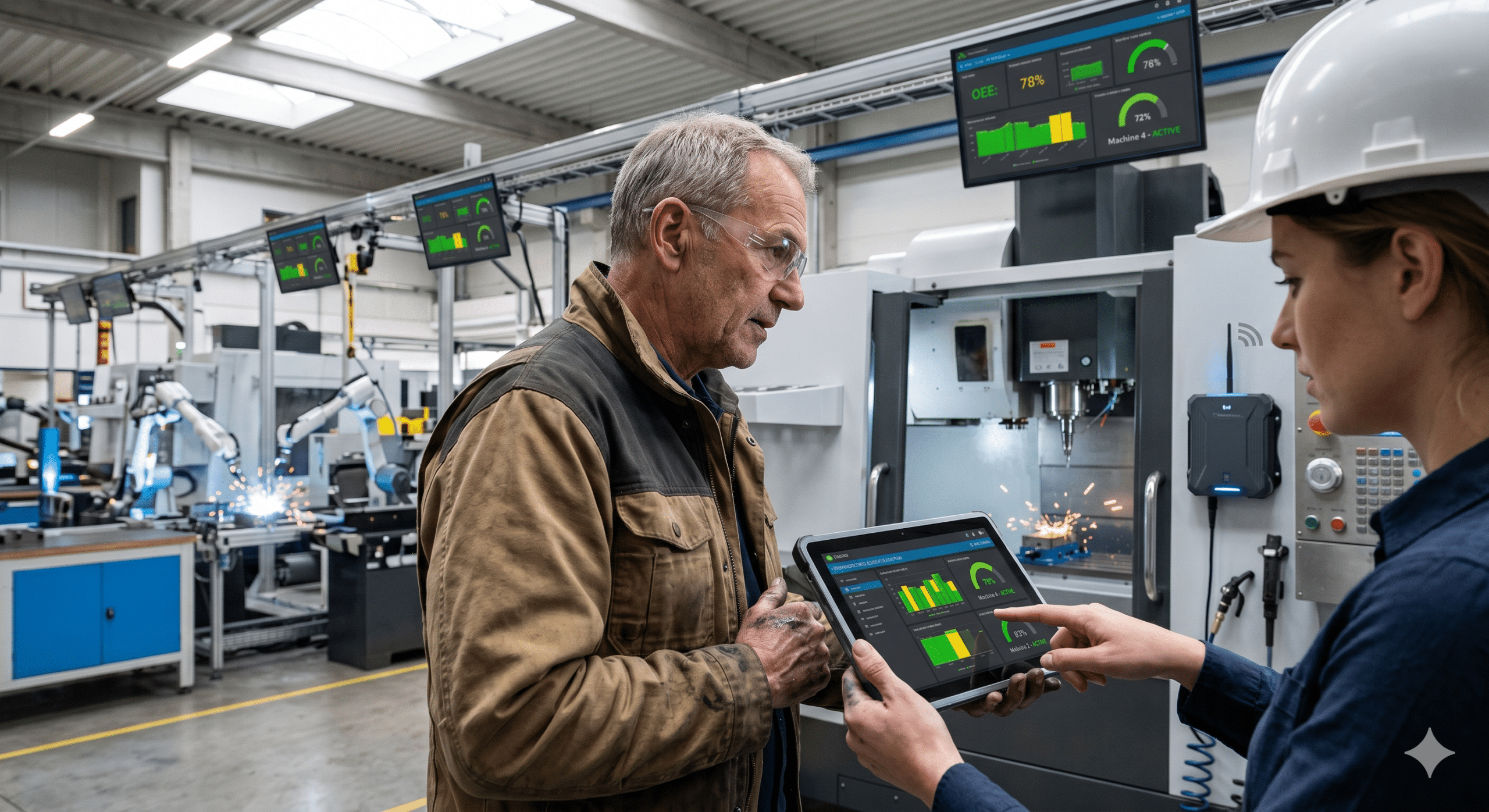
For years, manufacturing companies treated software like heavy machinery. Once installed, it stayed in place for a decade or longer. Systems were hosted inside factory walls, maintained by internal IT teams, and upgraded only when absolutely necessary. That approach worked for a long time. However, manufacturing today moves faster than ever.
Customers expect shorter lead times. Supply chains change overnight. Production schedules shift weekly. Meanwhile, labor shortages, rising costs, and global competition continue to pressure manufacturers to operate leaner and smarter.
This is exactly why SaaS for manufacturers has become one of the biggest shifts in modern industrial operations.
Software-as-a-Service, commonly called SaaS, allows manufacturers to use cloud-based systems through subscriptions instead of buying and maintaining expensive on-premise infrastructure. More importantly, SaaS gives factories something they desperately need: flexibility.
Instead of waiting months for software updates or hardware upgrades, manufacturers can roll out improvements almost immediately. Teams gain real-time visibility across production, inventory, purchasing, maintenance, and quality control. Managers can access dashboards from anywhere. Operators receive live production data instead of outdated spreadsheets.
What used to require a massive IT department can now be managed through modern cloud platforms.
According to recent industry reports, cloud ERP and cloud MES adoption continue to accelerate because manufacturers want faster deployment, better scalability, and improved operational visibility. (IFS Blog)
The interesting part is this: SaaS is no longer only for large enterprises.
Small and mid-sized manufacturers are now adopting cloud systems at a rapid pace because the financial barrier has become lower and implementation has become more practical.
What SaaS Means in Manufacturing
At its core, SaaS simply means software delivered through the internet instead of installed locally on company servers.
Think about tools like cloud accounting software or online collaboration platforms. Manufacturing SaaS works similarly, except the software is designed specifically for industrial operations.
These systems can include:
- ERP platforms
- MES systems
- Inventory management
- Production scheduling
- Maintenance software
- Quality management systems
- Supply chain platforms
- Warehouse management
- Procurement systems
- Predictive analytics tools
Instead of purchasing expensive perpetual licenses and servers, manufacturers pay a recurring subscription fee.
The software provider handles:
- Hosting
- Security updates
- Maintenance
- Infrastructure
- System backups
- New feature releases
That changes the entire economics of manufacturing software.
Traditional factory software projects often required:
- Large upfront capital expenses
- Dedicated servers
- Complex IT infrastructure
- Long deployment cycles
- Internal maintenance teams
SaaS dramatically reduces those requirements.
For many manufacturers, especially growing operations, that difference matters.
Why Manufacturers Delayed Cloud Adoption for So Long
Manufacturing has always been more cautious than other industries when adopting new technology.
That hesitation makes sense.
Factories cannot afford downtime. A failed software implementation can stop production, delay shipments, and damage customer relationships.
Many manufacturers also worried about:
- Data security
- Internet reliability
- Integration challenges
- Compliance requirements
- Loss of system control
For years, plant managers trusted local servers more than cloud systems.
However, the market has changed significantly.
Cloud providers now invest heavily in cybersecurity, redundancy, uptime reliability, and compliance certifications. In many cases, cloud infrastructure is actually more secure than aging on-premise factory servers. (relinns.com)
At the same time, manufacturing itself became more connected.
Modern production lines now generate massive amounts of operational data through:
- PLCs
- Sensors
- Robotics
- IoT devices
- Automated inspection systems
- Barcode scanners
- RFID tracking
Managing that data efficiently requires more scalable infrastructure.
That is where SaaS becomes attractive.
The Biggest Benefits of SaaS for Manufacturers
1. Faster Deployment
Traditional manufacturing software projects could take one to three years.
That timeline created enormous risk.
By the time implementation finished, business needs often changed.
Modern SaaS platforms are much faster to deploy because:
- Infrastructure already exists
- Updates are centralized
- Integrations are more standardized
- Configuration replaces heavy customization
Some cloud MES and planning systems can go live within weeks instead of years. (Fabrico)
For manufacturers, speed matters because operational delays directly affect revenue.
2. Lower Upfront Costs
One reason SaaS adoption is growing among smaller manufacturers is affordability.
Instead of spending hundreds of thousands upfront on:
- Servers
- Licensing
- Databases
- IT infrastructure
Manufacturers spread costs through monthly or annual subscriptions.
That creates predictable operational expenses instead of massive capital expenditures.
It also reduces financial risk during growth phases.
A company can start with:
- One plant
- One production line
- One department
Then scale later as operations expand.
3. Real-Time Visibility
This is where SaaS creates major operational improvements.
Older manufacturing environments often relied on:
- Spreadsheets
- Manual reporting
- Delayed production updates
- Paper-based tracking
That slows decision-making.
Cloud manufacturing platforms provide live operational visibility.
Managers can instantly monitor:
- Machine utilization
- Downtime
- Scrap rates
- Inventory levels
- Production throughput
- Maintenance schedules
- Order status
Real-time visibility helps manufacturers respond faster to operational problems before they become expensive.
SaaS and the Rise of Smart Manufacturing
The push toward Industry 4.0 accelerated SaaS adoption even further.
Smart manufacturing depends on connected systems.
Machines, sensors, ERP platforms, MES systems, and analytics tools all need to communicate continuously.
Cloud infrastructure simplifies that connectivity.
Instead of isolated software silos, SaaS platforms create centralized operational ecosystems.
For example:
- Production schedules update automatically
- Inventory adjusts in real time
- Maintenance alerts trigger instantly
- Quality issues generate automated workflows
- Purchasing teams receive material shortage notifications
This interconnected environment improves responsiveness across the factory.
Manufacturers no longer operate based on yesterday’s data.
They operate in real time.
Cloud ERP vs Traditional ERP
ERP systems remain one of the biggest SaaS investments in manufacturing.
Traditional ERP systems were often difficult to maintain because they required:
- Internal servers
- Specialized IT teams
- Costly upgrades
- Long implementation cycles
Cloud ERP changes that structure entirely.
Modern SaaS ERP systems focus heavily on:
- Scalability
- Automation
- Real-time analytics
- Supply chain visibility
- Mobile accessibility
Many platforms now include AI-driven forecasting and production insights as well. (top10erp.org)
The shift is especially important for mid-sized manufacturers that previously could not afford enterprise-level systems.
Now they can access powerful capabilities without enterprise-level infrastructure costs.
MES Systems Are Also Moving to the Cloud
Manufacturing Execution Systems, or MES platforms, traditionally stayed on-premise because they connected directly to shop floor equipment.
That is changing quickly.
Cloud-based MES platforms now provide:
- Real-time production monitoring
- Digital work instructions
- Operator tracking
- Quality management
- OEE reporting
- Traceability
Cloud MES adoption continues growing because manufacturers want easier scalability and better cross-site visibility. (IoT Analytics)
For multi-plant operations, centralized visibility becomes a major competitive advantage.
Leadership teams can compare performance across facilities without waiting for manual reporting.
SaaS Helps Smaller Manufacturers Compete
Large enterprises once dominated digital manufacturing because they had bigger IT budgets.
SaaS changed that balance.
Now smaller manufacturers can access advanced tools that were previously unavailable to them.
That includes:
- Production planning
- Predictive maintenance
- AI analytics
- Automated reporting
- Demand forecasting
- Workflow automation
Cloud systems level the playing field.
A smaller factory with strong operational discipline and modern SaaS tools can compete surprisingly well against larger competitors running outdated legacy systems.
The Hidden Advantage: Continuous Improvement
One overlooked advantage of SaaS is continuous software improvement.
Traditional manufacturing software often stayed unchanged for years because upgrades were painful and disruptive.
SaaS platforms evolve continuously.
Vendors regularly release:
- Security updates
- Workflow improvements
- New integrations
- Analytics features
- Automation tools
- AI capabilities
Manufacturers benefit from ongoing innovation without rebuilding infrastructure.
That creates long-term operational flexibility.
Common Challenges Manufacturers Still Face
SaaS is not perfect.
Manufacturers still face real implementation challenges.
Integration Complexity
Factories rarely operate on one software platform alone.
Many plants still run:
- Legacy ERP systems
- Old machine controllers
- Custom databases
- Proprietary production software
Connecting everything together can become complicated.
Integration planning is critical.
Internet Dependence
Cloud systems require reliable connectivity.
For factories in remote industrial areas, internet stability still matters.
Many manufacturers now use hybrid architectures where:
- Critical machine operations stay local
- Analytics and business systems run in the cloud
This approach balances operational reliability with cloud flexibility.
Change Management
Technology alone does not improve manufacturing.
People and processes matter just as much.
Some operators and managers resist new systems because they are comfortable with older workflows.
Successful SaaS adoption requires:
- Training
- Leadership alignment
- Clear operational goals
- Realistic implementation timelines
The companies that succeed usually focus on operational improvement first, not software hype.
How AI Is Expanding Manufacturing SaaS
Artificial intelligence is becoming deeply connected to SaaS manufacturing platforms.
Modern systems now support:
- Predictive maintenance
- Demand forecasting
- Automated scheduling
- Quality prediction
- Energy optimization
- Inventory forecasting
AI works best when systems have access to large amounts of operational data.
Cloud SaaS platforms make that data easier to centralize and analyze.
As AI capabilities improve, SaaS platforms will likely become even more valuable for manufacturers seeking operational efficiency.
Cybersecurity Concerns Are Still Real
Cybersecurity remains a serious issue in manufacturing.
Factories are increasingly targeted because production disruptions are expensive.
However, many SaaS vendors now provide stronger security frameworks than smaller manufacturers can build internally.
That includes:
- Encryption
- Multi-factor authentication
- Continuous monitoring
- Automatic patching
- Disaster recovery systems
Still, manufacturers must evaluate vendors carefully.
Security should never become an afterthought.
Choosing the Right SaaS Platform
Not every SaaS platform fits every manufacturer.
A food processor has different operational needs than:
- An automotive supplier
- A CNC machine shop
- A plastics manufacturer
- An electronics assembler
The best manufacturing SaaS implementations usually begin with operational pain points.
Manufacturers should ask:
- Where are delays happening?
- Where is data inaccurate?
- Which processes remain manual?
- What creates downtime?
- Where are inventory problems occurring?
- Which departments lack visibility?
Software should solve real operational problems.
Too many companies chase trendy platforms without defining clear business objectives.
That usually leads to disappointing results.
The Best SaaS Strategy Is Often Gradual
One of the smartest approaches is phased implementation.
Instead of replacing every system immediately, manufacturers often begin with:
- Maintenance management
- Production scheduling
- Quality systems
- Inventory visibility
- Reporting dashboards
Once those improvements stabilize, companies expand further.
This reduces operational risk.
It also gives employees time to adapt.
SaaS and Sustainability in Manufacturing
Another growing trend is sustainability tracking.
Manufacturers now face increasing pressure to reduce:
- Energy consumption
- Waste
- Emissions
- Material inefficiencies
Modern SaaS systems help monitor sustainability metrics in real time.
Some platforms now integrate:
- Energy monitoring
- Carbon tracking
- Waste analytics
- Resource optimization
This operational visibility supports both cost reduction and environmental goals. (TechRadar)
The Future of SaaS in Manufacturing
The future points toward highly connected manufacturing ecosystems.
Factories are moving toward environments where:
- Machines communicate automatically
- AI predicts operational issues
- Production adjusts dynamically
- Supply chains update in real time
- Maintenance becomes predictive
- Decision-making becomes faster
SaaS infrastructure makes much of this possible.
Cloud platforms provide the flexibility needed to support modern manufacturing complexity.
The shift will likely continue accelerating because manufacturers face growing pressure to:
- Improve efficiency
- Reduce downtime
- Increase responsiveness
- Lower operating costs
- Scale faster
Companies still relying entirely on disconnected legacy systems may struggle to compete over time.
Final Thoughts
SaaS for manufacturers is no longer just a technology trend.
It has become a practical operational strategy.
Manufacturing leaders are realizing that cloud-based systems are not simply about IT modernization. They are about improving visibility, flexibility, responsiveness, and profitability across the entire operation.
The most successful manufacturers today are combining engineering discipline with digital agility.
They still care deeply about:
- Production efficiency
- Quality control
- Lean operations
- Equipment reliability
But they also understand that software now plays a major role in achieving those goals.
Factories are becoming more connected, more data-driven, and more adaptive.
SaaS platforms are helping make that transformation possible.
The companies that approach SaaS strategically — with clear operational goals and realistic implementation plans — will likely gain the biggest long-term advantage.
Further Reading and Industry References
Here are some high-authority resources and industry blogs worth exploring for deeper insights into SaaS for manufacturers:
- IFS Manufacturing ERP Insights
- Rockwell Automation Plex Blog
- Top10ERP Manufacturing Guides
- IoT Analytics Manufacturing Research
- ERP Software Blog Cloud ERP Articles
- ABI Research MES Industry Analysis
Manufacturers that continuously learn from industry trends tend to make better long-term technology decisions. The software landscape is evolving quickly, and staying informed helps companies avoid costly mistakes while identifying opportunities earlier than competitors.