

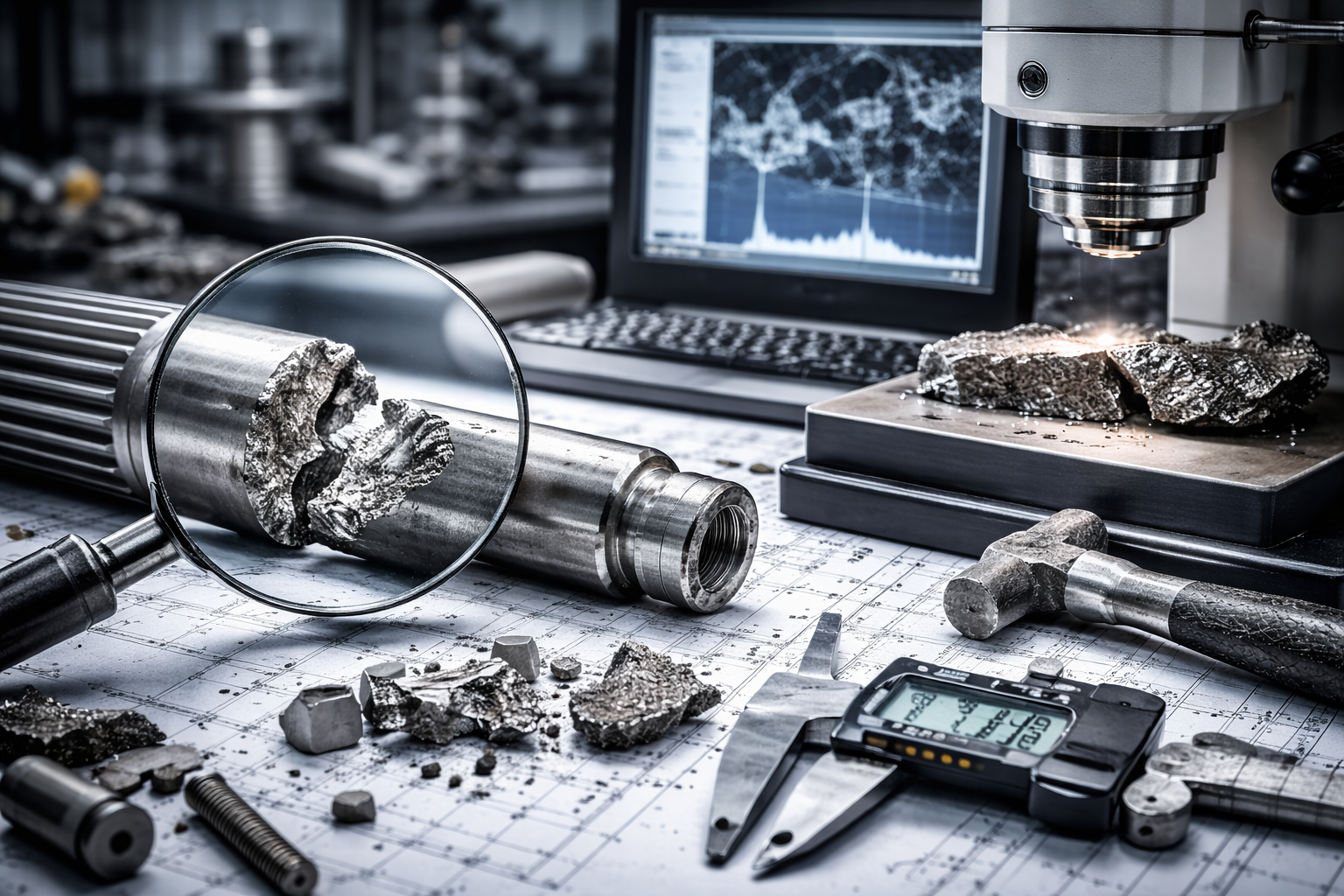
Material failure analysis plays a vital role in engineering, manufacturing, and product development. Engineers rely on proven methods to investigate failures, and this material failure analysis overview explains how identifying root causes helps prevent costly and dangerous issues.
When components fail unexpectedly, engineers must identify the root cause to prevent future issues, improve safety, and reduce costs.From cracked metal parts to worn-out polymers, failures can occur due to stress, fatigue, corrosion, or design flaws.
Therefore, understanding how to analyze these failures is essential for maintaining reliability and performance. In this guide, we explore the methods, causes, tools, and best practices used in modern failure investigations.
What Is Material Failure Analysis?
Material failure analysis refers to the systematic investigation of why a material or component fails. Engineers study the failed part to determine the root cause and recommend corrective actions.
Typically, the process involves:
- Visual inspection
- Testing and measurement
- Microscopic examination
- Data analysis
As a result, organizations can improve product design and prevent recurring issues.
Common Types of Material Failure
Understanding different failure modes helps engineers diagnose problems accurately.
Fatigue Failure
Fatigue occurs when repeated stress causes cracks to develop over time. Eventually, the material breaks even if the load remains below its maximum strength.
Example: Rotating shafts in machinery.
Corrosion Failure
Corrosion weakens materials through chemical reactions with the environment. Over time, this leads to structural damage.
Example: Rusting steel components in outdoor environments.
Overload Failure
Overload happens when a material experiences stress beyond its capacity. Consequently, it fails suddenly.
Example: Structural components under excessive load.
Wear Failure
Wear results from friction between surfaces. As a result, material gradually degrades.
Example: Bearings and moving parts.
Thermal Failure
Extreme temperatures can cause materials to expand, deform, or lose strength.
Example: Engine components exposed to high heat.
Causes of Material Failure
Several factors contribute to failure, and often multiple causes occur together.
Poor Material Selection
Choosing the wrong material for an application can lead to premature failure.
Design Flaws
Improper design can create stress concentrations or weak points.
Manufacturing Defects
Defects such as porosity, cracks, or improper heat treatment reduce material strength.
Environmental Factors
Exposure to moisture, chemicals, or temperature changes can accelerate degradation.
Improper Maintenance
Lack of maintenance increases wear and reduces component lifespan.
Material Failure Analysis Methods
Engineers use various techniques to investigate failures effectively.
Visual Inspection
First, experts examine the failed component for visible signs such as cracks, deformation, or discoloration.
Non-Destructive Testing (NDT)
NDT methods allow inspection without damaging the part.
- Ultrasonic testing
- X-ray inspection
- Magnetic particle testing
These techniques help detect internal defects.
Microscopic Analysis
Using microscopes, engineers study fracture surfaces and microstructures. This reveals crack patterns and failure mechanisms.
Chemical Analysis
Chemical tests identify material composition and detect contamination or corrosion.
Mechanical Testing
Engineers test properties such as strength, hardness, and toughness to determine material performance.
Tools Used in Failure Analysis
Modern analysis relies on advanced tools and equipment.
Scanning Electron Microscope (SEM)
Provides detailed images of fracture surfaces at high magnification.
Spectroscopy Equipment
Analyzes material composition and detects impurities.
Hardness Testers
Measure material resistance to deformation.
Digital Imaging Systems
Capture and analyze failure patterns for documentation.
Steps in the Material Failure Analysis Process
A structured approach ensures accurate results.
Step 1: Data Collection
Gather information about operating conditions, usage history, and failure symptoms.
Step 2: Initial Inspection
Examine the component visually and document findings.
Step 3: Testing and Analysis
Perform mechanical, chemical, and microscopic tests.
Step 4: Root Cause Identification
Determine the primary reason for failure.
Step 5: Recommendations
Provide solutions to prevent future failures.
Applications Across Industries
Material failure analysis is essential in many sectors.
Aerospace
Ensures safety by analyzing failures in aircraft components.
Automotive
Helps improve durability of engines, brakes, and structural parts.
Manufacturing
Reduces downtime by identifying equipment issues.
Construction
Prevents structural failures in buildings and infrastructure.
Benefits of Material Failure Analysis
Improved Product Quality
Identifying defects leads to better design and manufacturing.
Enhanced Safety
Prevents accidents caused by material failure.
Cost Reduction
Reduces repair costs and downtime.
Continuous Improvement
Supports innovation and process optimization.
Challenges in Failure Analysis
Despite its importance, analysis can be complex.
Limited Data
Incomplete information can make diagnosis difficult.
Complex Failure Modes
Multiple factors may contribute to failure.
Time Constraints
Quick analysis is often required in critical situations.
Best Practices for Effective Analysis
Document Everything
Accurate records improve analysis and future reference.
Use Multiple Methods
Combining techniques provides more reliable results.
Collaborate with Experts
Interdisciplinary teams enhance problem-solving.
Implement Preventive Measures
Apply findings to avoid future failures.
Future Trends in Material Failure Analysis
Technology continues to improve failure analysis methods.
AI and Machine Learning
Predict failures based on data patterns.
Advanced Imaging
Provides more detailed insights into material structure.
Real-Time Monitoring
Detects issues before failure occurs.
Digital Twin Technology
Simulates conditions to predict failure scenarios.
Conclusion
Understanding material failure analysis is essential for improving reliability, safety, and performance in engineering applications. By identifying root causes and implementing corrective actions, organizations can prevent costly failures and enhance product quality.
As technology advances, failure analysis will become even more precise, helping industries achieve higher standards of efficiency and safety.