

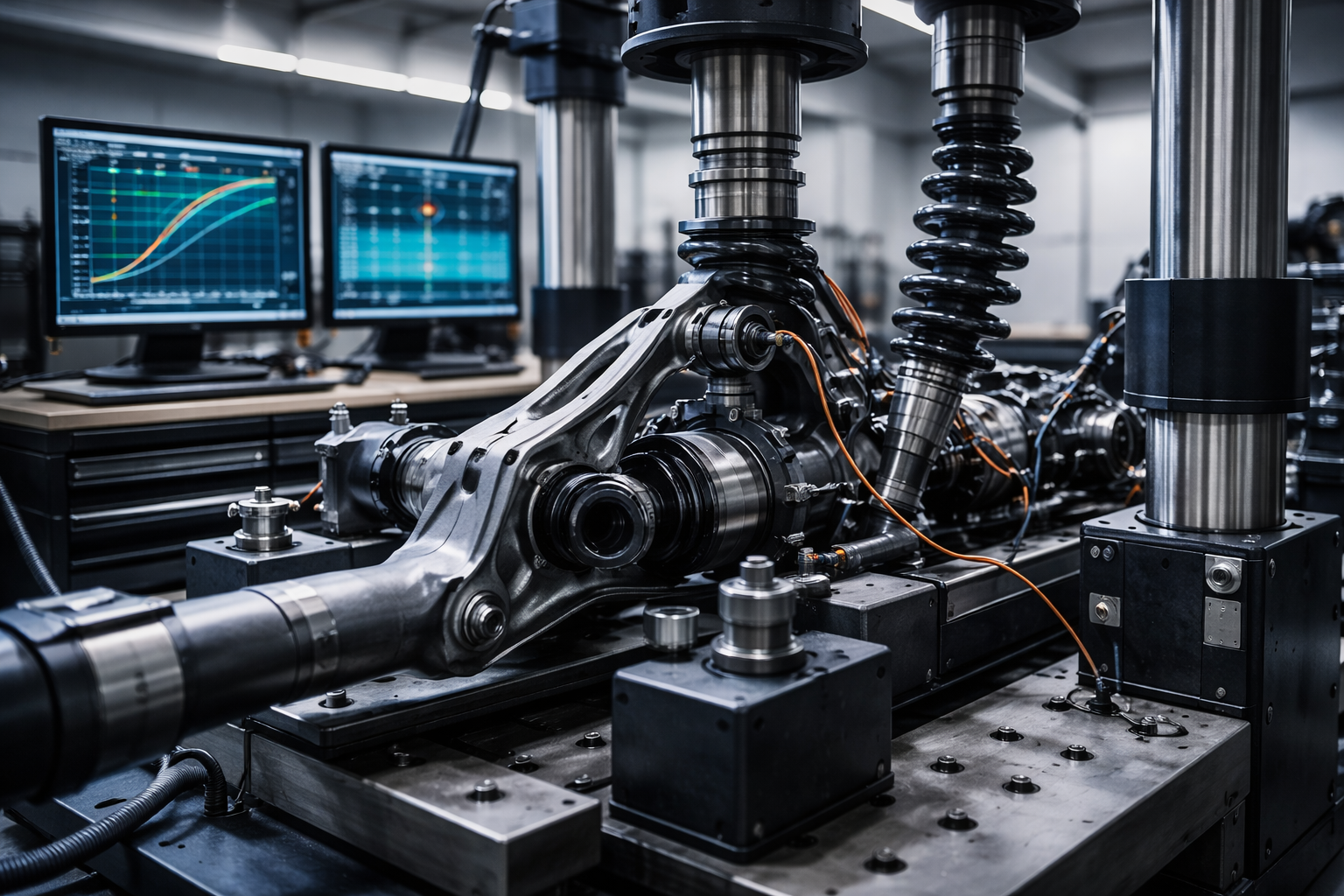
Stress testing car parts is a critical process in modern automotive engineering. Stress testing car parts is a critical process in modern automotive engineering, and understanding the durability testing process for automotive components is essential for evaluating how parts perform under extreme conditions.
It ensures that every component—from engine parts to suspension systems—can withstand real-world conditions, extreme loads, and long-term wear. Without proper stress testing, even the most advanced designs can fail under pressure, leading to safety risks, costly recalls, and reduced vehicle performance.
This guide provides a technical, informative, and expert-level overview of stress testing car parts, including methods, tools, standards, and best practices used in the automotive industry.
What Is Stress Testing Car Parts?
Stress testing car parts refers to the process of evaluating how automotive components perform under extreme physical, thermal, and mechanical conditions. The goal is to identify weaknesses, measure durability, and ensure reliability before parts are used in production vehicles.
Key Objectives
- Determine maximum load capacity
- Identify failure points
- Evaluate fatigue life
- Ensure safety and compliance
Stress testing simulates years of real-world usage in a controlled environment.
Why Stress Testing Car Parts Is Important
Stress testing plays a vital role in automotive design and manufacturing.
Key Benefits
- Improved Safety: Prevents component failure during operation
- Enhanced Durability: Ensures long-lasting performance
- Cost Reduction: Identifies issues before mass production
- Regulatory Compliance: Meets industry safety standards
- Performance Optimization: Improves reliability under stress
In high-performance and commercial vehicles, stress testing is essential for maintaining consistent performance under demanding conditions.
Types of Stress Testing for Car Parts
Different components require different testing methods. Here are the most common types of stress testing car parts:
1. Mechanical Stress Testing
This evaluates how parts respond to physical forces such as tension, compression, and bending.
Common Tests
- Tensile testing
- Compression testing
- Shear testing
Applications
- Chassis components
- Bolts and fasteners
- Suspension systems
2. Fatigue Testing
Fatigue testing measures how components perform under repeated stress cycles over time.
Key Focus
- Crack formation
- Material degradation
- Lifespan prediction
Applications
- Engine components
- Springs and suspension
- Rotating parts
Fatigue testing is crucial because many failures occur after repeated use, not sudden overload.
3. Thermal Stress Testing
Automotive parts often experience extreme temperature variations.
Testing Conditions
- High heat exposure
- Rapid temperature changes
- Thermal cycling
Applications
- Engine blocks
- Exhaust systems
- Cooling components
4. Vibration Testing
Vehicles operate in environments with constant vibration.
Testing Methods
- Random vibration testing
- Sinusoidal vibration testing
Applications
- Electronics and sensors
- Mounting systems
- Interior components
5. Environmental Testing
This evaluates how parts perform under environmental conditions.
Conditions Simulated
- Humidity and corrosion
- Dust and debris
- Water exposure
Applications
- Exterior components
- Electrical systems
- Seals and gaskets
6. Impact Testing
Impact testing determines how parts react to sudden forces or collisions.
Key Metrics
- Energy absorption
- Deformation
- Structural integrity
Applications
- Bumpers
- Crash structures
- Safety components
Tools and Equipment Used in Stress Testing
Modern stress testing car parts relies on advanced tools and technologies.
Mechanical Testing Equipment
- Universal testing machines (UTM)
- Hydraulic presses
- Load frames
Simulation Tools
- Finite Element Analysis (FEA) software
- Computer-aided engineering (CAE) tools
Environmental Chambers
- Temperature and humidity chambers
- Corrosion testing chambers
Data Acquisition Systems
- Sensors and strain gauges
- Real-time monitoring systems
These tools allow engineers to simulate real-world conditions with high precision.
Role of Simulation in Stress Testing
Simulation plays a crucial role in modern automotive testing.
Finite Element Analysis (FEA)
FEA allows engineers to:
- Predict stress distribution
- Identify weak points
- Optimize designs before physical testing
Benefits of Simulation
- Reduces development time
- Lowers testing costs
- Improves design accuracy
Simulation complements physical testing and enhances overall reliability.
Stress Testing Process: Step-by-Step
A structured process ensures accurate and reliable results.
1. Define Testing Objectives
- Identify performance requirements
- Determine load conditions
2. Prepare Test Samples
- Use representative materials
- Ensure consistent manufacturing quality
3. Select Testing Methods
- Choose appropriate stress tests
- Define testing parameters
4. Conduct Testing
- Apply controlled stress conditions
- Monitor performance in real time
5. Analyze Results
- Identify failure points
- Evaluate performance metrics
6. Optimize Design
- Modify components based on findings
- Retest if necessary
Industry Standards for Stress Testing
Automotive stress testing must comply with global standards.
Common Standards
- ISO (International Organization for Standardization)
- SAE (Society of Automotive Engineers)
- ASTM (American Society for Testing and Materials)
Importance of Standards
- Ensures consistency and reliability
- Facilitates global manufacturing
- Enhances safety compliance
Common Challenges in Stress Testing Car Parts
Despite advanced tools, challenges remain.
1. Replicating Real-World Conditions
Simulating real driving conditions accurately can be complex.
2. Material Variability
Different materials respond differently to stress.
3. Cost and Time Constraints
Extensive testing can be expensive and time-consuming.
4. Data Interpretation
Analyzing large datasets requires expertise and advanced tools.
Best Practices for Effective Stress Testing
To achieve optimal results, follow these expert recommendations:
1. Combine Simulation and Physical Testing
Use both methods for comprehensive validation.
2. Test Beyond Expected Limits
Include extreme conditions to ensure reliability.
3. Use High-Quality Materials
Ensure test samples reflect real production quality.
4. Maintain Accurate Documentation
Track all testing procedures and results.
5. Continuously Improve Testing Methods
Adopt new technologies and methodologies.
Future Trends in Stress Testing Car Parts
The automotive industry continues to evolve.
Emerging Trends
AI and Machine Learning
- Predict failures more accurately
- Optimize testing processes
Digital Twins
- Create virtual replicas of components
- Simulate real-world conditions continuously
Advanced Materials Testing
- Evaluate composites and lightweight materials
Automation
- Increase testing speed and consistency
These innovations are transforming how stress testing car parts is performed.
Conclusion
Stress testing car parts is a fundamental aspect of automotive engineering that ensures safety, durability, and performance. By combining advanced testing methods, simulation tools, and industry standards, manufacturers can deliver reliable components that withstand real-world conditions.
Understanding and implementing effective stress testing car parts strategies not only improves product quality but also reduces costs, enhances safety, and supports innovation in the automotive industry.