

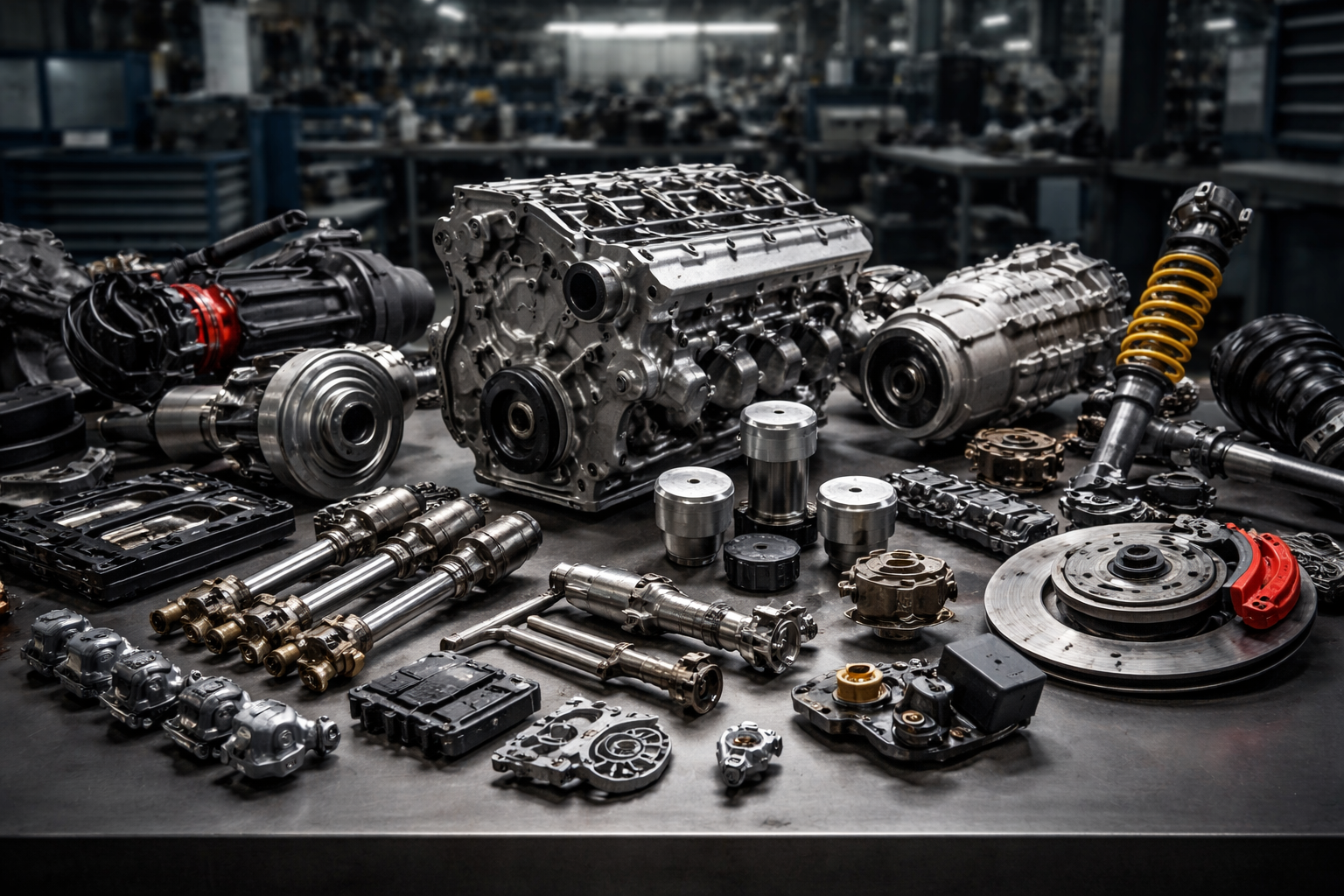
The automotive parts manufacturing industry is a complex and highly specialized sector that powers the global mobility ecosystem. To better understand the broader landscape, this automotive components manufacturing industry guide explains how different components are designed and produced across modern vehicles.
Understanding the types of automotive components is essential for manufacturers, engineers, suppliers, and even business owners entering the automotive supply chain. This guide breaks down the major categories of automotive components, how they are manufactured, and their role in modern vehicles.
What Are Automotive Components?
Automotive components are the individual parts and systems that make up a vehicle. These components are designed, engineered, and manufactured to work together seamlessly to ensure performance, safety, efficiency, and comfort.
In automotive parts manufacturing, components are typically categorized based on their function within the vehicle. These categories help streamline production, quality control, and supply chain management.
Main Types of Automotive Components
1. Engine Components
Engine components are the heart of any vehicle. These parts are responsible for generating power and ensuring efficient combustion.
Key Engine Components Include:
- Cylinder block and cylinder head
- Pistons and piston rings
- Crankshaft and camshaft
- Valves and fuel injectors
Manufacturing Process:
Engine components are typically produced using:
- Casting (for engine blocks)
- Forging (for crankshafts)
- CNC machining (for precision parts)
Modern automotive parts manufacturing integrates high-precision machining and robotics to ensure durability and performance.
2. Transmission Components
Transmission components transfer power from the engine to the wheels. These parts are critical for controlling speed and torque.
Common Transmission Parts:
- Gears and gear shafts
- Clutch assemblies
- Torque converters
- Transmission housing
Manufacturing Techniques:
- Gear hobbing and shaping
- Heat treatment for durability
- Precision grinding
With the rise of electric vehicles, transmission systems are becoming simpler, but still require highly specialized manufacturing.
3. Electrical and Electronic Components
As vehicles become smarter, electrical and electronic components are increasingly vital in automotive parts manufacturing.
Examples Include:
- Batteries and alternators
- Sensors and control units (ECUs)
- Wiring harnesses
- Infotainment systems
Manufacturing Focus:
- PCB assembly (Printed Circuit Boards)
- Semiconductor integration
- Automated testing systems
Advanced electronics manufacturing ensures reliability in safety-critical systems such as braking and driver assistance.
4. Suspension and Steering Components
These components ensure ride comfort, handling, and stability. They are essential for vehicle control and safety.
Key Parts:
- Shock absorbers and struts
- Control arms and ball joints
- Steering racks and linkages
Manufacturing Methods:
- Metal forming and stamping
- Welding and assembly
- Surface coating for corrosion resistance
High-quality suspension components are crucial for both passenger vehicles and heavy-duty applications.
5. Brake System Components
Brake components are among the most critical safety parts in any vehicle. They must meet strict regulatory and quality standards.
Main Brake Parts:
- Brake pads and discs
- Calipers
- Master cylinders
- Brake lines
Production Techniques:
- Powder metallurgy (for brake pads)
- Casting and machining (for discs)
- Rigorous performance testing
Automotive parts manufacturing in this category emphasizes safety, heat resistance, and longevity.
6. Body and Structural Components
These components form the outer shell and structural integrity of the vehicle.
Examples:
- Chassis and frame
- Doors, hoods, and panels
- Bumpers and reinforcements
Manufacturing Processes:
- Sheet metal stamping
- Robotic welding
- Laser cutting
Lightweight materials such as aluminum and composites are increasingly used to improve fuel efficiency.
7. Interior Components
Interior components enhance comfort, aesthetics, and user experience.
Typical Parts:
- Seats and upholstery
- Dashboard and instrument panels
- HVAC systems
Manufacturing Approach:
- Injection molding (for plastic parts)
- Foam processing (for seats)
- Textile and material finishing
Modern automotive parts manufacturing focuses on ergonomics, durability, and design innovation.
8. Exhaust System Components
Exhaust components manage emissions and reduce environmental impact.
Key Parts:
- Exhaust manifolds
- Catalytic converters
- Mufflers
Production Methods:
- Tube bending and welding
- Emission control integration
- Heat-resistant material processing
Strict environmental regulations drive innovation in this segment.
9. Fuel System Components
Fuel system components ensure efficient fuel storage and delivery.
Examples:
- Fuel pumps
- Fuel tanks
- Fuel injectors
Manufacturing Techniques:
- Precision machining
- Plastic molding (for tanks)
- Leak testing and quality assurance
Efficiency and safety are key priorities in fuel system manufacturing.
Emerging Categories in Automotive Components
Electric Vehicle (EV) Components
With the rapid growth of electric mobility, automotive parts manufacturing is evolving.
EV-Specific Components:
- Battery packs
- Electric motors
- Power inverters
These components require advanced materials, thermal management systems, and high-voltage safety standards.
Autonomous and ADAS Components
Advanced Driver Assistance Systems (ADAS) and autonomous technologies are transforming vehicles.
Key Technologies:
- LiDAR and radar sensors
- Cameras and AI processors
- Control software systems
Manufacturing these components involves high-tech electronics, AI integration, and real-time data processing capabilities.
Materials Used in Automotive Parts Manufacturing
The choice of materials significantly impacts performance, cost, and sustainability.
Common Materials:
- Steel (for strength and durability)
- Aluminum (for lightweight applications)
- Plastics and polymers (for flexibility and cost-efficiency)
- Composites (for advanced performance)
Modern automotive parts manufacturing increasingly focuses on sustainable and recyclable materials.
Quality Control in Automotive Components
Quality is non-negotiable in automotive parts manufacturing. Manufacturers follow strict standards such as:
- ISO/TS 16949 (automotive quality management)
- Six Sigma methodologies
- Automated inspection systems
Testing includes:
- Stress and durability testing
- Thermal and environmental testing
- Functional performance validation
The Role of Automation and AI
Automation is revolutionizing automotive parts manufacturing.
Key Technologies:
- Robotics for assembly lines
- AI for predictive maintenance
- IoT for real-time monitoring
These technologies improve efficiency, reduce defects, and enhance production scalability.
Supply Chain Considerations
The automotive industry relies on a multi-tier supply chain:
- Tier 1 suppliers (complete systems)
- Tier 2 suppliers (sub-components)
- Tier 3 suppliers (raw materials)
Efficient supply chain management ensures timely delivery, cost control, and quality consistency.
Conclusion
Understanding the types of automotive components is fundamental to mastering automotive parts manufacturing. Each component category—from engine and transmission systems to advanced electronics and EV technologies—plays a critical role in vehicle performance and innovation.
As the industry shifts toward electrification, automation, and sustainability, automotive parts manufacturing continues to evolve. Businesses that stay informed about component types, materials, and production technologies will be better positioned to compete in this fast-changing landscape.
Whether you are a manufacturer, supplier, or entrepreneur, gaining expertise in automotive components is the key to unlocking opportunities in the global automotive market.