

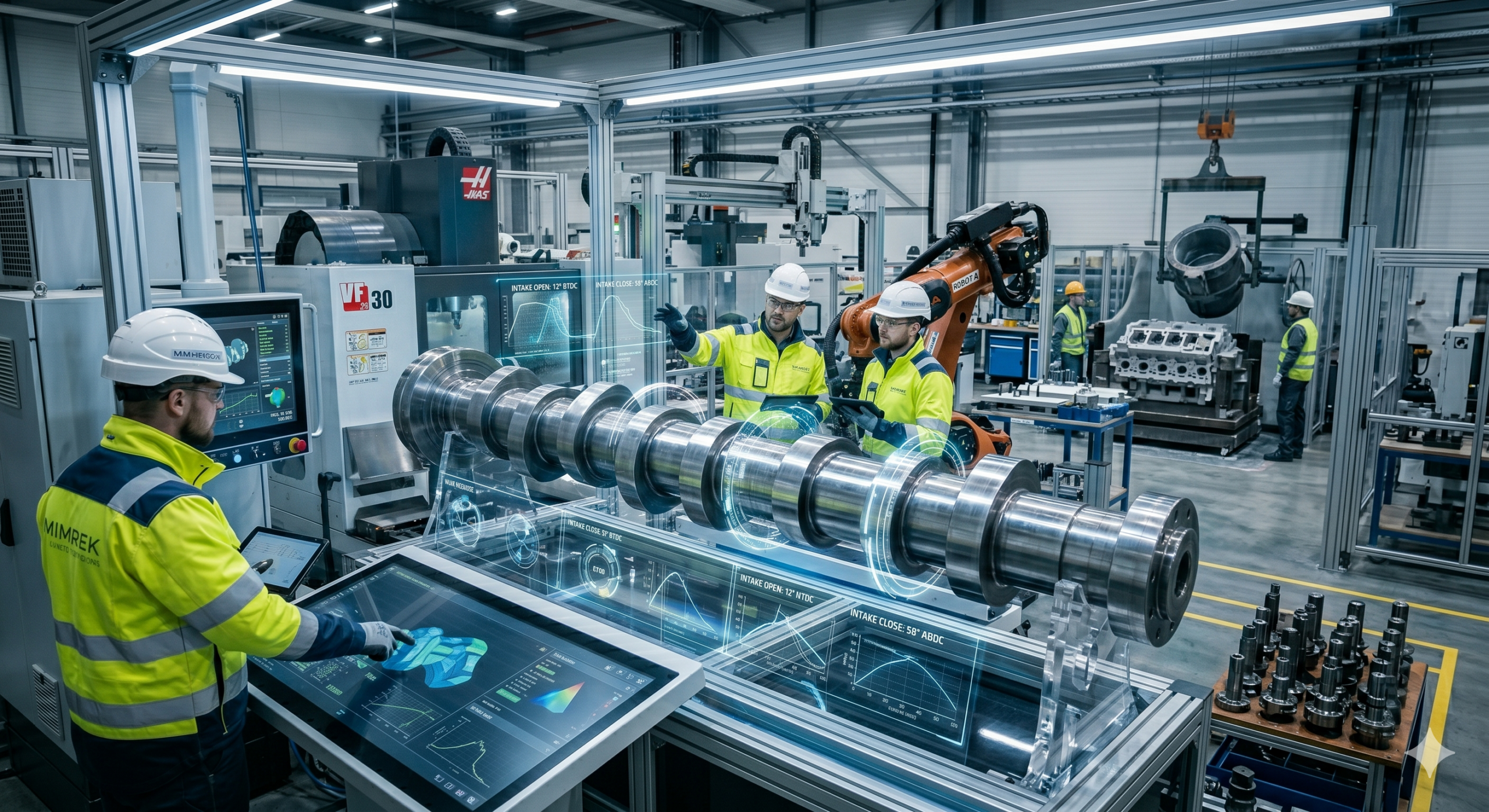
Camshaft design is a cornerstone of modern internal combustion engine performance. It directly controls how and when air and fuel enter the engine and how exhaust gases exit. In 2026, camshaft technology has evolved with advanced materials, precision machining, and variable valve timing systems, making it more efficient and adaptable than ever.
Understanding camshaft design is essential for engineers, automotive professionals, and performance enthusiasts. This guide explains how camshafts work, key design parameters, materials, manufacturing processes, and the latest innovations shaping the future of engine performance.
What Is a Camshaft?
A camshaft is a rotating mechanical component that converts rotational motion into linear motion to operate engine valves. It consists of multiple lobes (cams) that push against valve lifters, opening and closing intake and exhaust valves in precise timing with the crankshaft.
Key Components of a Camshaft
- Cam lobes – control valve lift and timing
- Shaft journals – support rotation within bearings
- Timing gear or sprocket – synchronizes with the crankshaft
- Base circle – the round portion of the cam lobe when the valve is closed
The camshaft operates at half the speed of the crankshaft in a four-stroke engine, ensuring proper valve timing.
How Camshaft Design Affects Engine Performance
Camshaft design directly impacts engine efficiency, power output, fuel economy, and emissions. The shape and arrangement of cam lobes determine how much air enters the engine and how effectively exhaust gases are expelled.
Key Performance Factors
- Airflow optimization – determines engine breathing efficiency
- Combustion efficiency – affects fuel burn and power output
- Engine responsiveness – influences torque and acceleration
- Emissions control – ensures compliance with environmental standards
A well-designed camshaft balances these factors for optimal performance across different engine speeds.
Core Camshaft Design Parameters
1. Valve Lift
Valve lift refers to how far the valve opens. Higher lift allows more air and fuel into the combustion chamber, increasing power.
- High lift = more airflow, higher performance
- Low lift = better fuel efficiency and smoother operation
2. Duration
Duration is the amount of time (in degrees of crankshaft rotation) that a valve remains open.
- Longer duration improves high-speed performance
- Shorter duration enhances low-end torque
3. Lobe Separation Angle (LSA)
LSA is the angle between the intake and exhaust cam lobes.
- Narrow LSA = more valve overlap, better high-RPM power
- Wide LSA = smoother idle and better fuel efficiency
4. Valve Timing
Valve timing determines when valves open and close relative to piston movement.
Precise timing ensures:
- Efficient combustion
- Reduced energy loss
- Optimal engine performance
5. Valve Overlap
Valve overlap occurs when intake and exhaust valves are open simultaneously.
- Improves exhaust scavenging
- Enhances high-speed performance
- Can reduce idle stability if excessive
Types of Camshaft Designs
1. Flat Tappet Camshaft
- Uses flat lifters
- Simpler and cost-effective
- Requires proper lubrication to prevent wear
2. Roller Camshaft
- Uses roller lifters to reduce friction
- Allows more aggressive cam profiles
- Improves durability and performance
3. Overhead Camshaft (OHC)
- Positioned above the cylinder head
- Directly actuates valves
- Common in modern engines
Variants:
- SOHC (Single Overhead Camshaft)
- DOHC (Dual Overhead Camshaft)
4. Variable Camshaft Systems
Modern engines use variable systems to adjust timing dynamically:
- Variable Valve Timing (VVT)
- Variable Valve Lift (VVL)
These systems optimize performance across different RPM ranges.
Materials Used in Camshaft Design
Material selection is critical for durability and performance.
Common Materials
- Cast iron – cost-effective, widely used
- Forged steel – high strength and fatigue resistance
Advanced Materials (2026)
- Chilled cast iron for improved wear resistance
- Alloy steels with enhanced hardness
- Surface-treated materials for reduced friction
Camshaft Manufacturing Process
1. Material Preparation
Raw materials are selected based on performance requirements and cost considerations.
2. Casting or Forging
- Casting is used for mass production
- Forging provides superior strength
3. Machining
CNC machines shape the camshaft:
- Precision grinding of lobes
- Drilling oil passages
- Finishing journals
4. Heat Treatment
Heat treatment improves durability:
- Induction hardening
- Nitriding for surface strength
5. Finishing and Inspection
Final steps include:
- Surface polishing
- Dimensional inspection
- Quality assurance testing
Camshaft Design Optimization
Modern camshaft design relies on advanced engineering tools:
1. Computer-Aided Design (CAD)
- Enables precise modeling of cam profiles
- Allows simulation of valve motion
2. Simulation and Testing
- Predicts engine performance under various conditions
- Reduces development time and cost
3. AI and Machine Learning
- Optimizes cam profiles for efficiency and power
- Enhances predictive maintenance
Challenges in Camshaft Design
1. Balancing Performance and Efficiency
Designers must balance power output with fuel economy and emissions.
2. Wear and Friction
Cam lobes experience high contact stress, requiring durable materials and lubrication.
3. Noise and Vibration
Poor design can lead to engine noise and reduced comfort.
4. Manufacturing Precision
Micron-level accuracy is required to ensure proper valve timing and performance.
Innovations in Camshaft Technology (2026)
Modern engines are increasingly adopting adaptive valve timing and intelligent control systems to improve efficiency and performance. For deeper industry insight, explore these camshaft design trends and engineering insights.
1. Fully Variable Valve Systems
Eliminate traditional camshaft limitations by allowing independent valve control.
2. Camless Engines
Use इलेक्ट्रो-hydraulic or electromagnetic actuators instead of camshafts.
3. Lightweight Designs
Reduce engine weight and improve efficiency.
4. Smart Materials
Adapt to temperature and stress changes for improved durability.
Applications of Camshaft Design
Camshafts are used in various industries:
- Automotive engines
- Motorcycles
- Marine engines
- Industrial machinery
Each application requires specific design considerations.
Maintenance and Longevity
Proper maintenance extends camshaft life:
- Regular oil changes
- Proper lubrication
- Monitoring for wear and noise
A well-maintained camshaft ensures consistent engine performance.
Future of Camshaft Design
Despite the rise of electric vehicles, camshaft technology remains relevant in hybrid and performance engines. Future developments will focus on:
- Greater efficiency
- Reduced emissions
- Integration with smart engine systems
Conclusion
Camshaft design is a critical factor in engine performance, efficiency, and reliability. From valve lift and duration to advanced variable timing systems, every aspect of the camshaft influences how an engine operates.
In 2026, innovations in materials, manufacturing, and digital engineering are transforming camshaft technology. Understanding these principles allows engineers and enthusiasts to optimize engine performance and stay competitive in an evolving automotive landscape.