

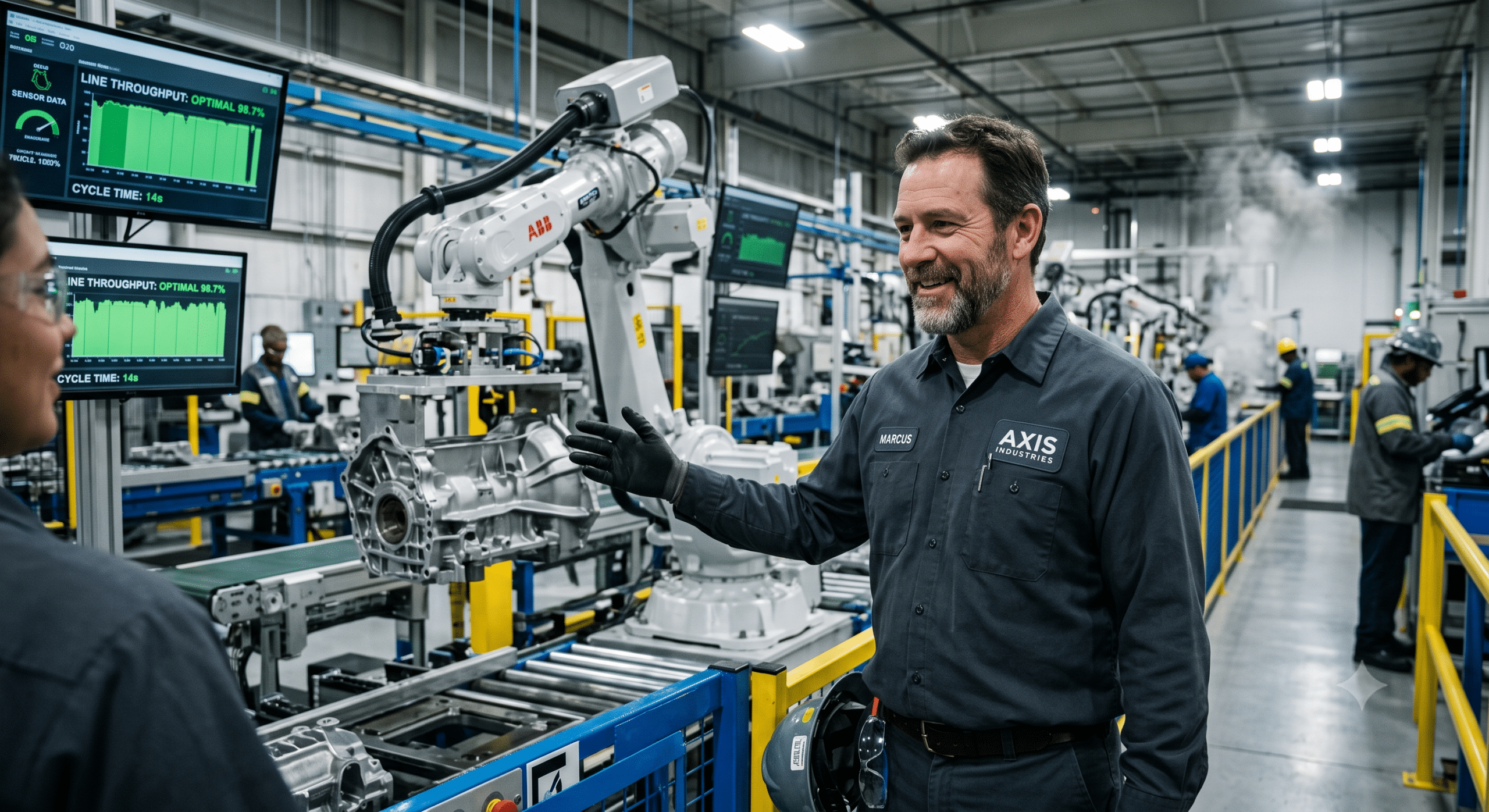
Every plant manager knows that terrible feeling when a reliance on reactive fixes causes a machine to drop offline, which is why adopting reliability centered maintenance right from the start is so vital to protecting your production line. In that sudden quiet of an unexpected breakdown, you are not just thinking about a broken machine part. You are watching your plant throughput drop. You see your delivery times drag into deep backlogs. Worst of all, your scrap rate goes up as half-made products spoil inside the stalled machinery.
For years, factories handled this by guessing. Teams scheduled big repairs based only on the calendar. We tore machines apart every few months whether they needed it or not. This old way often caused new, accidental mistakes in perfectly good machines.
True success requires a new way of thinking. To hit your production targets without wasting money, you must stop waiting for things to break. Instead, you must focus on what your machines need to do to keep things moving. This is where a formal reliability centered maintenance program changes everything.
When you look at your factory floor with three goals—making more product, moving it faster, and cutting out waste—this maintenance plan makes perfect sense. It is the best way to run a successful business.
The Core Idea: Focus on the Job, Not Just the Breakdowns
To build a great maintenance plan, you must realize that some machine breakdowns hurt more than others. Old-school maintenance treats every machine the same way. This wastes time on tasks that do not actually stop the problems that halt your production.
A modern approach to reliability centered maintenance changes the game completely. It asks one simple question: what must this machine do to keep the plant making money?
When you focus on keeping the whole system running rather than just keeping parts clean, your daily work changes. You stop running around putting out fires. You start seeing the factory floor as a smooth, connected pipeline.
If a small cleaning pump breaks, it might not hurt your daily shipments at all. But if a main valve on your primary line slips out of place by a tiny bit, your speed drops instantly. Your scrap rate will jump.
By focusing your care on system asset care and real business results, you put your team where they can protect your daily output the most.
13 Strategies for a Strong Maintenance Plan
1. Rank Your Machines by How Much They Affect Total Output
You cannot treat every machine with the same level of urgency. Your first step is to figure out which machines matter most to your bottom line. You do this by ranking every piece of equipment based on what happens if it stops.
Look at how a sudden halt changes your daily numbers. Find out how long it takes to clear a jam. See if a stop starves the next step in the process. The most important machines get your full attention. The less important ones can wait or be run until they break.
2. Set Clear Rules for How Each Machine Should Perform
You cannot take good care of a machine if your team does not know its exact limits. For every critical asset, you must write down the exact speeds and goals needed to keep production high.
This means listing the exact gallons a pump must move per minute. It means setting the exact heat an oven must hold, or the exact parts a robot must move per hour. When your team knows what a healthy machine looks like, they can spot tiny changes early. This lets them fix problems before a big breakdown happens.
3. List Every Single Way a Machine Can Fail
Machines do not just stop for no reason. They fail in specific ways because of heat, stress, or age. Your team needs to sit down and list every realistic way your critical equipment can break.
Go deeper than just saying the machine stopped. Figure out if it stopped because a bearing dried out, a belt stretched too much, or a motor burned out from a power spike. When you know the exact cause of a failure, you can choose the right task to stop it.
4. Trace the Domino Effect of Every Failure
Once you know how a part can fail, you need to see how that failure hurts the rest of the line. Analyzing this chain reaction means seeing how one small part stops the whole process.
For example, a bad seal on a molding machine causes a drop in pressure. That drop leads to half-empty molds. Those bad parts become instant scrap metal or plastic. The whole line slows down while workers clean up the mess. Mapping these reactions shows you the real cost of small mechanical issues.
5. Protect Your Product Quality by Knowing Failure Costs
Every maintenance choice should balance cost against safety, quality, and profit. When you look at the results of a failure, you calculate the lost hours and wasted raw materials.
If a failure drops the temperature and ruins a whole batch of product, that cost is very high. A high cost justifies buying tools to monitor the machine every single second. This step ensures you spend your repair budget on things that truly protect your money.
6. Swap the Calendar for Condition Inspections
Tearing down a good machine every three months just because a calendar alert says so is a mistake. This habit often introduces human errors into working lines. A smart framework for reliability centered maintenance replaces dates with real-time checks on machine health.
Use simple tools to check for strange vibrations, air leaks, or dirty oil. This lets the machine tell you when it needs help. Your equipment runs much longer, and your production schedule stays on track.
7. Use Smart Sensors to Predict Problems Early
Plugging small, smart sensors into your machinery takes your maintenance to a higher level. Simple acoustic sensors, heat cameras, and digital flow meters send live updates straight to your computer.
If a motor starts drawing too much power, or a bearing gets a few degrees too hot, your team gets an alert. This lets you fix the part quickly during a shift change. You completely avoid a major, unexpected shutdown during a busy day.
8. Use Team Studies to Fix Stubborn Production Lines
When a specific line keeps slowing down or making bad parts, hold a formal study with a small team. Bring your best operators, mechanics, and engineers into a room to look at the machine piece by piece.
Give every problem a score based on how bad it is, how often it happens, and how easy it is to spot. This removes all guesswork. Your team leaves the room with a clear checklist targeting the top three problems causing your biggest delays.
9. Write Simple, Step-by-Step Checklists for Your Crew
Data and meetings will not save a machine if the work on the floor is confusing. You must turn engineering ideas into simple, clear instructions for your mechanics.
Never just write “check pump” on a work order. Instead, tell the technician to check for a specific vibration level, tighten a bolt to an exact tightness, or use two drops of a specific oil. Clear, full sentences prevent mistakes and keep machines running perfectly.
10. Decide in Advance What to Do When Tracking Fails
Some machine failures cannot be predicted with sensors because it is too hard or too expensive. For these specific cases, your plan must state exactly what to do ahead of time.
You might decide to let a cheap, non-critical fan run until it breaks because you keep a spare one on the shelf nearby. Or, you might decide to redesign a part completely if it keeps breaking because of a bad original design.
11. Keep the Right Spare Parts Ready to Save Time
A huge reason repairs take too long is waiting for parts to arrive from a supplier. Your maintenance strategy must guide your inventory room.
Connect your machine rankings directly to your part warehouse. Make sure important, hard-to-find parts are always sitting on your shelves. At the same time, do not waste money buying expensive spare parts for simple machines you can fix with local store supplies.
12. Get Operators and Mechanics Working Together
Reliability is not just a job for the repair crew. It belongs to everyone, especially the people running the machines. Operators are your first line of defense because they hear odd noises and see bad parts first.
Train your operators to do simple daily checks, wipe down surfaces, and tighten loose parts. This teamwork keeps the machines in good shape. It also frees up your expert mechanics to focus on advanced technical jobs.
13. Check Your Data Every Week to Improve the Plan
A great maintenance guide is never truly finished. It must adapt as things change. When you commit to reliability centered maintenance, your team must check your computer records against your actual floor numbers every single week.
See if your planned checks are actually stopping breakdowns. Check if bad parts are still slipping through. If a machine keeps making scrap despite your efforts, change your plan, check it more often, or adjust your tools to get ahead of the wear.
The Throughput Trifecta: Output, Speed, and Waste
When you follow these thirteen strategies, you improve the three most important metrics on your factory floor: making more, moving faster, and cutting waste.
               [ Reliability Centered Maintenance ]
                                |
       +------------------------+------------------------+
       |                        |                        |
       v                        v                        v
[ Peak Throughput ]     [ Compressed Cycle Times ]   [ Minimal Scrap Rates ]
• Steady Machinery      • Quick, Planned Fixes       • Stable Processes
• Constant Speed        • No Hidden Bottlenecks      • Zero Micro-Stops
Here is how these three areas connect in real life:
Peak Throughput
Output depends entirely on steady machinery. When your main assets follow a good plan for reliability centered maintenance, you eliminate the sudden stops that break your daily rhythm. Machines run at top speed for longer periods. This lets your team hit its shipment goals month after month.
Faster Cycle Times
Time is wasted when a line suffers from tiny stops, slow startups, or constant mid-shift tweaks. By tracking machine health, you spot wear early and fix it during brief, planned breaks. This keeps product moving through the plant without piling up as messy, half-done inventory.
Minimal Scrap Rates
High scrap rates happen when machines shake, lose heat, or drop pressure. When a machine wobbles, the material inside is ruined instantly. Grounding your workflow in reliability centered maintenance means your process stays stable. You get good parts on the first try with zero wasted material.
Conclusion: Turning Upkeep into a Business Win
Moving your plant away from constant emergency fixes takes time and strong leadership. But the rewards are worth it. By looking at your equipment as a tool to boost output, save time, and eliminate waste, you turn the maintenance crew into a profit team. Take care of your machines, give your team clear goals, and watch your factory reach its full potential.
Frequently Asked Questions
How is reliability centered maintenance different from old maintenance? Old maintenance uses fixed schedules, like changing parts every six months based on age. Reliability centered maintenance looks at how the machine is doing right now. It uses live checks to perform maintenance only when the machine actually shows signs of wear.
Can small factories use this strategy successfully? Yes, because this plan is about spending time wisely, not spending lots of money. Small shops can start by choosing their single most important line. Use simple checks and operator notes first, then grow the plan as you save money.
What is the fastest way to cut scrap rates with this plan? Look at your quality records to see which machines were running when bad parts were made. Study those specific machines to find the tiny changes in heat or pressure that ruin the product. Set up regular checks to stop those changes before bad parts happen.
How do we get operators to help with a new maintenance plan? Talk about how it makes their job easier. Show them that tracking machine health stops the messy, exhausting breakdowns that force them to clean up spills or work unexpected weekend shifts to catch up on lost volume.
References for Further Reading
-
For a deep, foundational dive into structural asset management frameworks and optimizing factory infrastructure, read the comprehensive MaintainX Reliability Centered Maintenance Guide.
-
To explore technical asset ranking methodologies and building operational criticality models, consult the Tractian RCM and Asset Performance Blog.
-
To review real-world industrial case studies on failure modes and industrial maintenance execution strategies, see the Augury Industrial Reliability Leadership Resource Center.