

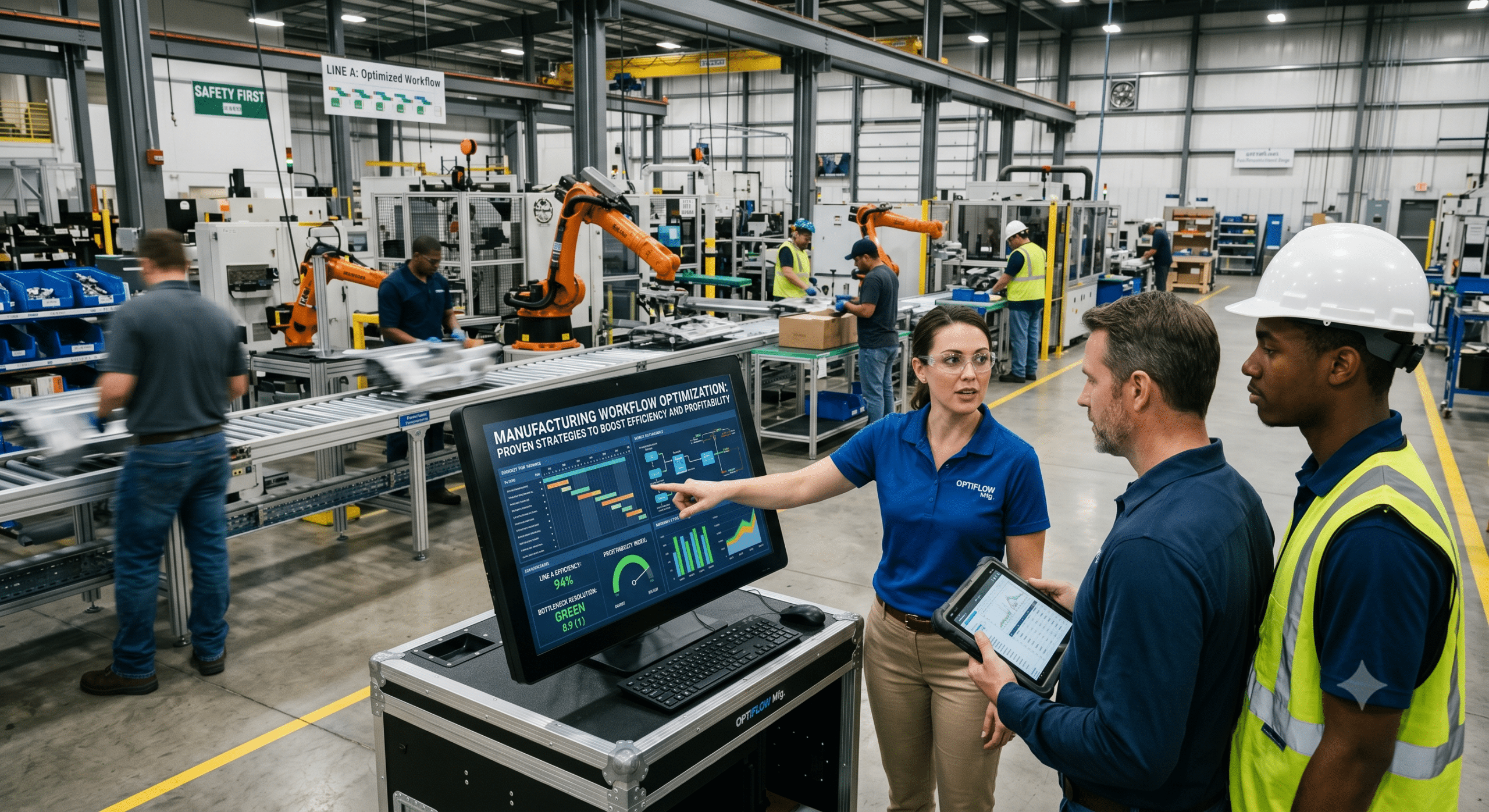
Manufacturing has always been a game of precision, timing, and execution. Yet in today’s competitive environment, producing quality products is no longer enough. Manufacturers must produce faster, reduce waste, control costs, maintain quality, and adapt quickly to changing customer demands. The organizations that succeed are not necessarily those with the biggest factories or the most expensive equipment. They are the ones that have mastered manufacturing workflow optimization.
Many manufacturing leaders spend significant resources investing in machinery, software, and automation technologies. However, despite these investments, production delays, bottlenecks, excess inventory, quality issues, and communication breakdowns continue to occur. The reason is simple. Technology alone does not solve operational inefficiencies. Sustainable improvement happens when workflows are designed, managed, measured, and continuously optimized across the entire operation.
Manufacturing operations management serves as the foundation that connects people, processes, technology, materials, and data. It transforms disconnected activities into a synchronized system that consistently delivers value to customers while maximizing operational efficiency. Modern manufacturing leaders recognize that workflow optimization is not merely a process improvement initiative. It is a strategic capability that directly impacts profitability, customer satisfaction, employee productivity, and long-term competitiveness. (jodoo.com)
This guide explores how manufacturing operations management and manufacturing workflow optimization work together to create high-performing manufacturing organizations.
Understanding Manufacturing Operations Management
Manufacturing operations management refers to the coordination and control of all activities involved in producing goods efficiently and effectively. It encompasses production planning, inventory management, quality assurance, maintenance, workforce management, scheduling, compliance, and continuous improvement.
Think of manufacturing operations management as the central nervous system of a manufacturing organization. Every decision regarding materials, labor, equipment, production schedules, and customer orders flows through this operational framework. When managed effectively, operations become predictable, scalable, and profitable. When managed poorly, even the best products and strongest sales pipelines can suffer.
At its core, manufacturing operations management focuses on ensuring that the right products are produced at the right time, using the right resources, while maintaining quality standards and controlling costs. Modern manufacturers increasingly rely on integrated systems and real-time visibility to support these objectives. (MRPeasy)
The challenge is that manufacturing environments are becoming increasingly complex. Supply chains are more global, customer expectations are higher, product customization is growing, and labor shortages continue to affect many industries. As a result, manufacturing leaders must manage far more variables than ever before.
This is where manufacturing workflow optimization becomes essential.
What Is Manufacturing Workflow Optimization?
Manufacturing workflow optimization is the process of analyzing, improving, and streamlining the flow of work throughout the production process. It focuses on eliminating inefficiencies, reducing delays, improving resource utilization, and ensuring smooth coordination between departments and production stages.
A workflow represents the sequence of activities required to transform raw materials into finished products. Every handoff, approval, machine setup, inspection, material movement, and production task contributes to the workflow.
When workflows are optimized, operations become more efficient because work moves through the system with fewer interruptions and less waste. Production teams spend less time waiting for materials, searching for information, correcting errors, or resolving avoidable issues. Instead, they focus on productive activities that create value for customers.
Manufacturing workflow optimization is not a one-time project. It is an ongoing discipline that requires continuous monitoring, analysis, and improvement.
Why Manufacturing Workflow Optimization Matters More Than Ever
Many operational problems can be traced back to workflow inefficiencies rather than equipment limitations.
A manufacturer may purchase a new machine only to discover that production delays continue because materials are not arriving on time. Another company may implement advanced software yet still struggle because departments operate in silos and critical information is not shared effectively.
The reality is that workflows determine how efficiently an organization converts resources into finished products.
Optimized workflows help manufacturers achieve several critical business outcomes. Production throughput increases because bottlenecks are reduced. Quality improves because processes become more standardized and predictable. Costs decline because waste, rework, and downtime are minimized. Customer satisfaction improves because orders are delivered accurately and on schedule.
Perhaps most importantly, optimized workflows provide organizational agility. In today’s environment, manufacturers must respond quickly to market changes, supply chain disruptions, and customer demands. Flexible and efficient workflows make that possible. (Tulip)
Identifying Workflow Bottlenecks in Manufacturing
One of the most important responsibilities of manufacturing leaders is identifying bottlenecks that restrict operational performance.
A bottleneck occurs when a specific process, machine, department, or resource limits the overall flow of production. Because manufacturing systems operate as interconnected networks, the slowest point often determines overall performance.
Many organizations mistakenly attempt to improve every area simultaneously. Effective leaders focus on identifying and addressing the most significant constraints first.
Common manufacturing bottlenecks include machine downtime, labor shortages, excessive setup times, inefficient material handling, delayed approvals, poor production scheduling, and quality inspection delays.
A practical way to identify bottlenecks is through workflow mapping. By documenting each step of the production process, leaders can visualize how work moves through the organization and identify areas where delays frequently occur. (www.boc-group.com)
Once bottlenecks become visible, improvement efforts can be prioritized based on operational impact.
The Role of Data in Manufacturing Workflow Optimization
Modern manufacturing generates enormous amounts of data. Production systems, equipment sensors, inventory platforms, quality management systems, and workforce management tools all produce valuable information.
Unfortunately, many organizations collect data without effectively using it.
Successful manufacturing workflow optimization depends on transforming data into actionable insights.
Manufacturing leaders should focus on key performance indicators that directly influence operational performance. These include cycle time, throughput, overall equipment effectiveness (OEE), first-pass yield, scrap rates, downtime, inventory turnover, and on-time delivery performance.
Real-time visibility enables leaders to identify issues before they become major problems. Instead of waiting for end-of-week reports, supervisors can respond immediately when production metrics deviate from expected performance. (jodoo.com)
Data-driven decision-making reduces guesswork and helps organizations prioritize improvements that generate measurable results.
Standardization as a Foundation for Optimization
Many manufacturers overlook the importance of process standardization.
Without standard procedures, every operator may perform tasks differently. While individual creativity has value, excessive variation often leads to inconsistent quality, reduced productivity, and operational confusion.
Standardized workflows establish clear expectations regarding how tasks should be performed. They create consistency across shifts, departments, and facilities.
When workflows are standardized, training becomes easier, quality improves, and performance measurement becomes more meaningful because everyone follows the same processes.
Standardization also provides the baseline necessary for continuous improvement. Before organizations can optimize a process, they must first understand and control how it currently operates. (Reddit)
Improving Production Planning and Scheduling
Production planning plays a central role in manufacturing workflow optimization.
Poor scheduling often creates operational chaos. Materials arrive at the wrong time. Machines sit idle waiting for work. Employees receive conflicting priorities. Customer deadlines are missed.
Effective production planning aligns manufacturing capacity with actual demand. It considers material availability, workforce resources, machine capabilities, maintenance schedules, and customer requirements.
Manufacturers that excel in workflow optimization develop scheduling systems that provide both structure and flexibility. They create realistic production plans while maintaining the ability to adjust quickly when unexpected changes occur.
Rather than planning based on assumptions, successful manufacturers plan based on operational constraints and real-world conditions. (checklistguro.com)
Reducing Downtime Through Workflow Excellence
Downtime remains one of the most expensive challenges facing manufacturers.
When equipment stops, productivity declines immediately. Labor costs continue accumulating while production output decreases. Delivery schedules become jeopardized, and customer satisfaction suffers.
Many organizations view downtime solely as a maintenance issue. However, workflow design often contributes significantly to downtime frequency and duration.
Poor communication, delayed maintenance requests, unclear escalation procedures, and inadequate visibility can all prolong downtime events.
Workflow optimization ensures that maintenance activities are integrated into operational processes. Preventive maintenance schedules, work order systems, technician assignments, and equipment monitoring become part of a coordinated workflow rather than isolated activities. (Tulip)
As a result, downtime becomes more predictable and easier to manage.
Inventory Management and Material Flow Optimization
Inventory is often described as both an asset and a liability.
Excess inventory ties up cash, consumes storage space, and can hide operational inefficiencies. Insufficient inventory creates production delays and missed customer commitments.
Manufacturing workflow optimization improves material flow throughout the organization.
Materials should arrive where they are needed, when they are needed, and in the quantities required. Every unnecessary movement, delay, or storage activity adds cost without creating value.
Leading manufacturers carefully analyze material flow patterns and redesign workflows to minimize waste. They improve warehouse organization, streamline replenishment processes, and enhance coordination between procurement, production, and logistics teams.
The result is a more responsive and cost-effective operation.
Leveraging Technology Without Creating Complexity
Technology plays an important role in modern manufacturing operations management, but technology should support workflows rather than dictate them.
One common mistake is implementing software before understanding operational challenges. Organizations purchase sophisticated systems expecting immediate improvements, only to discover that underlying workflow issues remain unresolved.
Successful manufacturers begin by understanding their processes. They identify bottlenecks, clarify responsibilities, standardize procedures, and define operational objectives before selecting technology solutions.
Once workflows are clearly defined, technology becomes a powerful enabler.
Manufacturing Execution Systems (MES), Enterprise Resource Planning (ERP) platforms, workflow automation tools, digital work instructions, IoT sensors, and real-time dashboards can significantly enhance visibility and operational control. However, these tools deliver the greatest value when built upon strong workflow foundations. (jitbase.com)
Building a Culture of Continuous Improvement
The most successful manufacturing organizations understand that optimization never ends.
Markets evolve. Customer expectations change. New technologies emerge. Competitors improve.
Organizations that treat workflow optimization as a one-time initiative often experience temporary gains followed by stagnation. Sustainable success requires a culture of continuous improvement.
Leaders play a critical role in creating this culture. They encourage employees to identify inefficiencies, suggest improvements, and participate in problem-solving efforts.
Operators often possess valuable insights because they interact directly with processes every day. Organizations that actively engage frontline employees frequently uncover opportunities that management alone would never identify.
Continuous improvement becomes most effective when supported by regular performance reviews, data analysis, root-cause investigations, and structured improvement initiatives. (Reddit)
The Future of Manufacturing Workflow Optimization
The future of manufacturing operations management will be increasingly data-driven, connected, and intelligent.
Artificial intelligence, predictive analytics, machine learning, digital twins, and advanced automation technologies are already transforming manufacturing environments. These technologies enable manufacturers to predict equipment failures, optimize production schedules, improve quality control, and enhance decision-making.
However, the fundamental principles remain unchanged.
Successful manufacturers will continue focusing on workflow visibility, operational discipline, employee engagement, process standardization, and continuous improvement.
Technology will accelerate optimization efforts, but leadership, strategy, and execution will remain the true drivers of operational excellence. (Matterport)
Final Thoughts
Manufacturing workflow optimization is no longer a competitive advantage reserved for industry leaders. It has become a necessity for manufacturers seeking sustainable growth and profitability.
The organizations that thrive in today’s manufacturing landscape are those that understand the connection between operational strategy and workflow execution. They view manufacturing operations management not as a collection of isolated processes but as an integrated system where every activity influences overall performance.
By eliminating bottlenecks, improving visibility, standardizing processes, leveraging data, and fostering continuous improvement, manufacturers can achieve remarkable gains in efficiency, quality, and customer satisfaction.
Ultimately, manufacturing workflow optimization is about creating an operation where people, processes, technology, and materials work together seamlessly. When that alignment occurs, manufacturers gain the agility and resilience needed to compete successfully in an increasingly demanding global marketplace.
Frequently Asked Questions (FAQ)
What is manufacturing workflow optimization?
Manufacturing workflow optimization is the process of improving the flow of work throughout manufacturing operations to reduce waste, eliminate bottlenecks, improve productivity, and increase overall efficiency.
Why is manufacturing workflow optimization important?
It helps manufacturers reduce costs, improve quality, increase production output, minimize downtime, enhance customer satisfaction, and improve profitability.
What are common manufacturing workflow bottlenecks?
Common bottlenecks include equipment downtime, material shortages, inefficient scheduling, excessive setup times, labor constraints, quality inspection delays, and poor communication between departments.
How does manufacturing operations management support workflow optimization?
Manufacturing operations management provides the framework for coordinating production, inventory, quality, maintenance, workforce management, and continuous improvement activities, ensuring efficient workflow execution.
Which technologies support manufacturing workflow optimization?
Common technologies include ERP systems, MES platforms, IoT sensors, workflow automation software, production dashboards, predictive maintenance tools, and advanced analytics platforms.
How can manufacturers start optimizing workflows?
Manufacturers should begin by mapping existing processes, identifying bottlenecks, measuring key performance indicators, standardizing procedures, and implementing continuous improvement practices.
References and Further Reading
For readers who want to explore manufacturing workflow optimization and manufacturing operations management in greater depth, the following resources provide excellent insights:
- Jodoo – Manufacturing Operations Management Guide 2026
- Tulip – Ultimate Guide to Manufacturing Operations Management
- EASE – Manufacturing Operations Management Guide to Optimizing Efficiency
- MRPeasy – Manufacturing Operations Management Processes and Tips
- HighGear – Improving Manufacturing Workflows Guide
- Matterport – Manufacturing Process Optimization Guide
- BOC Group – Process Optimization Step-by-Step Guide