

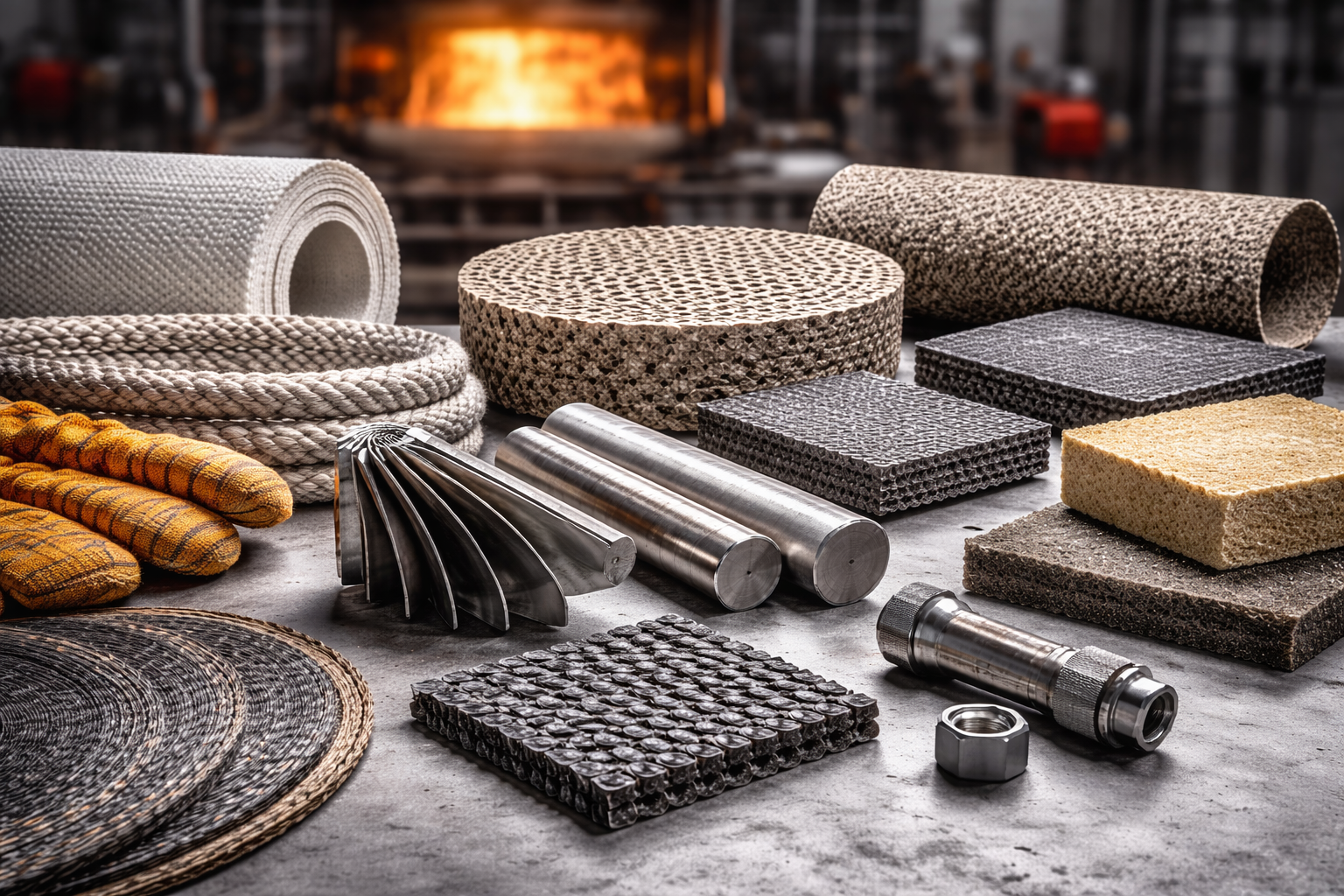
Heat resistant materials are essential in industries that operate under extreme temperatures. These materials are widely used in extreme environments, and this high temperature material applications resource explains how they perform under intense heat and stress.
From aerospace systems to automotive engines and industrial machinery, these materials ensure performance, safety, and durability.
As modern engineering pushes the limits of temperature and efficiency, selecting the right material becomes increasingly important. This guide explains their types, properties, applications, and how to choose the best option for your needs.
What Are High Temperature Materials?
Heat-resistant solutions refer to materials designed to withstand extreme heat without losing structural integrity. These materials maintain their properties even when exposed to demanding thermal conditions.
They typically resist:
- Thermal deformation
- Oxidation and corrosion
- Structural weakening
- Material breakdown
Because of these qualities, they are widely used in high-performance environments.
Key Properties of Heat-Resistant Solutions
To perform effectively, these materials must exhibit specific characteristics.
Thermal Stability
They maintain their shape and strength at elevated temperatures. As a result, they remain reliable under stress.
Low Thermal Expansion
Minimal expansion prevents distortion. Therefore, components maintain precise dimensions.
Oxidation Resistance
These materials resist chemical reactions caused by heat and oxygen exposure. Consequently, they last longer in harsh environments.
Mechanical Strength
They retain strength even under heavy loads and high temperatures.
Types of High Temperature Materials
Different categories offer unique advantages depending on the application.
Metals and Alloys
Metals remain a top choice for high-temperature applications.
Stainless Steel
- Performs well at moderate heat levels
- Resists corrosion effectively
- Common in industrial equipment
Nickel-Based Alloys
- Withstand extreme temperatures
- Maintain strength under stress
- Ideal for turbines and aerospace components
Titanium Alloys
- Lightweight and strong
- Provide reliable thermal resistance
- Used in advanced engineering systems
Ceramics
Ceramics offer exceptional thermal resistance and insulation.
Alumina
- High melting point
- Excellent stability
- Used in furnaces and electronics
Silicon Carbide
- Extremely durable
- Handles very high temperatures
- Used in performance-critical applications
Zirconia
- Resists thermal shock
- Performs well in coatings and insulation systems
Polymers and Advanced Plastics
Some engineered plastics can handle high temperatures effectively.
PEEK
- High thermal resistance
- Excellent chemical stability
- Used in aerospace and medical applications
PTFE
- Stable under heat
- Low friction properties
- Used in industrial systems
Composite Materials
Composites combine materials to enhance thermal performance.
Carbon Fiber Composites
- Lightweight and strong
- Perform well under heat
- Used in automotive and aerospace industries
Ceramic Matrix Composites
- Designed for extreme environments
- Used in advanced engineering systems
Applications Across Industries
These materials play a vital role in multiple industries.
Aerospace
Used in engines, turbines, and heat shields where extreme temperatures are common.
Automotive
Applied in exhaust systems, engine components, and braking systems.
Electronics
Used in insulation and circuit protection to prevent overheating.
Industrial Manufacturing
Used in furnaces, kilns, and high-temperature processing systems.
Benefits of Using Heat Resistant Materials
Improved Safety
They reduce the risk of failure caused by overheating.
Increased Durability
Components last longer under harsh conditions.
Better Performance
They maintain efficiency even in extreme environments.
Energy Efficiency
They reduce heat loss and improve system performance.
Challenges in High Temperature Applications
Despite their advantages, these materials present challenges.
Higher Cost
Advanced materials often require higher investment.
Machining Difficulty
Some materials, especially ceramics, are difficult to process.
Brittleness
Certain materials may lack flexibility under stress.
How to Choose the Right Material
Selecting the best material depends on several factors.
Temperature Range
Identify the maximum operating temperature.
Mechanical Requirements
Evaluate strength and load-bearing needs.
Environmental Conditions
Consider exposure to chemicals, moisture, and oxidation.
Budget Considerations
Balance performance requirements with cost.
Comparison with Standard Materials
| Feature | High Temperature Materials | Standard Materials |
|---|---|---|
| Heat Resistance | High | Moderate |
| Durability | High | متوسط |
| Cost | Higher | Lower |
| Applications | Extreme environments | General use |
These materials clearly outperform standard options in demanding conditions.
Future Trends in Material Technology
Innovation continues to improve thermal-resistant solutions.
Advanced Ceramics
New formulations provide better strength and durability.
High-Performance Alloys
Improved alloys handle higher temperatures more efficiently.
Nanotechnology
Enhances thermal properties at a microscopic level.
Sustainable Materials
Eco-friendly options are becoming more common.
Conclusion
Understanding heat resistant materials helps engineers and manufacturers select the best solutions for high-temperature environments. These materials provide strength, durability, and reliability where standard materials fail.
By evaluating application requirements, environmental conditions, and cost, you can choose the most effective material for your project.