

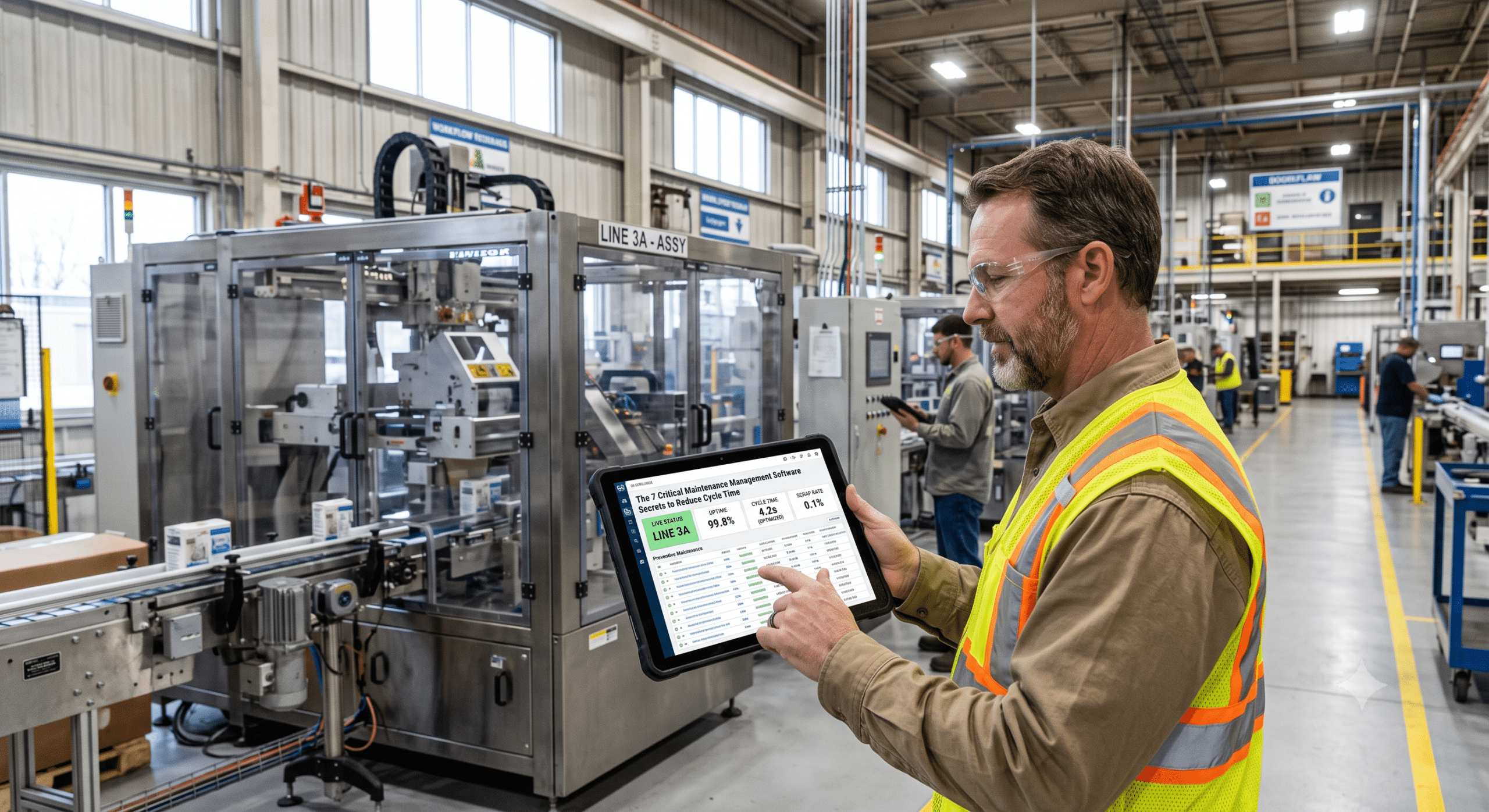
Every morning, I walk out onto the factory floor and just listen. To an experienced maintenance manager, a busy factory floor sounds like a well-rehearsed band. Indeed, when everything runs right, a steady, smooth hum fills the room. That sound clearly tells you the business is making money. However, when a part wears out or a machine drifts out of line, that rhythm breaks. As a result, those bad sounds mean three things to a manager. First, we are making fewer products. Second, our processes are slowing down. Finally, we are throwing away too much wasted material.
For years, I watched factories operate in a reactive mode. This means they waited for something to break completely before fixing it. Consequently, that is the most expensive way to run a business. Waiting for a machine to shatter destroys your production schedule. Therefore, to truly win, you must fix things before they break. The absolute best tool for this job is modern maintenance management software. Ultimately, it gives you a clear digital view of your whole floor. It removes the guesswork and keeps your machines running exactly as they should.
The Three Metrics That Make or Break a Factory
To understand why digital tools matter, we must look at the three main goals of any manufacturing floor.
1. Maximize Total Plant Throughput
Throughput is simply the total number of good products your factory finishes in a day. When a main machine breaks down, your throughput stops completely. Furthermore, it gets even worse because when one machine stops, it creates a traffic jam. The workers downstream suddenly have nothing to do. In addition, the whole schedule falls apart. Fortunately, a digital maintenance system stops these sudden breakdowns. It reminds you to service machines during normal breaks. Consequently, this keeps your product line moving smoothly.
3. Reduce Operational Cycle Time
Cycle time is the time it takes to make a single product from start to finish. When machines are not cared for, they rarely break down completely right away. Instead, they slow down. For example, a loose belt or a dull blade might add just two seconds to every item you make. You might not notice it at first. However, over a full shift, those seconds add up to hours of lost time. Therefore, tracking your machinery with software helps you catch these tiny slowdowns early. This allows you to keep your cycle times as short as possible.
3. Minimize Plant Floor Scrap Rate
Scrap is the raw material that gets ruined and thrown in the trash. This usually happens because a machine made a mistake. If a machine part slips out of place by even a millimeter, it will keep running. Unfortunately, it will make defective products as a result. By the time human inspectors notice the error, thousands of dollars of material are ruined. On the other hand, good maintenance planning tracks these calibrations closely. This keeps your scrap rate near zero and saves you money.
The 7 Secrets to Speeding Up Your Cycle Time
Achieving a fast, reliable factory requires a simple, repeatable plan. Here are seven ways that a digital maintenance system unlocks hidden speed on your production floor.
Secret 1: Stop Guessing and Start Predicting
Fixing machines only after they break is stressful and expensive. When technicians run around trying to put out mechanical fires, they cannot do quality work. Instead, using maintenance management software lets you connect digital sensors directly to your machines. These sensors monitor things like heat and vibration. If a motor gets too hot, the software alerts your team immediately. Therefore, this happens before the motor burns out. Your team can then fix it quickly during a scheduled break.
Secret 2: Put Manuals and Work Orders on Mobile Phones
When a big machine stops running, every minute feels like an hour. In an old-fashioned factory, a technician faces a lot of wasted steps. For instance, they walk to an office, find a paper work order, and hunt for a manual. Conversely, deploying mobile maintenance management software cuts out all that wasted walking. The second a machine has an issue, a notification pops up on the technician’s phone. Because it includes the exact repair history, diagrams, and safety steps they need, this helps them fix the issue in record time.
Secret 3: Never Run Out of the Spare Parts You Need
It is frustrating to know how to fix a machine but lack the part. Your whole line stays broken while you pay extra money to rush-ship a single replacement. Thus, advanced maintenance management software keeps a live count of every part in your inventory. When you use a bolt or a belt, the software counts it. Then, it automatically builds a reorder list when stock gets low. As a result, this ensures you always have what you need to keep cycle times low.
Secret 4: Automate Calibration Checks to Keep Quality High
High-speed machines must be perfectly aligned to do their jobs correctly. Over days of heavy use, screws loosen and parts shift naturally. If you ignore this natural wear, your machines will start making mistakes. Consequently, this quickly increases your scrap rate. Fortunately, automated maintenance management software tracks exactly how many hours a machine has been running. Then, it automatically schedules a calibration checkup at the perfect time. This ensures the machine never slows down or ruins materials.
Secret 5: Look at Asset Histories to Fix the Real Problem
If your team fixes the exact same broken part every week, you are missing the real issue. Specifically, you need historical data to find out why that part keeps breaking. A central maintenance management software system saves a permanent record of every repair. It tracks every part used and every minute spent on a machine. By looking at these records, your engineering team can spot recurring flaws. Consequently, they can easily change their repair methods or decide to buy a better machine.
Secret 6: Balance the Workload to Avoid Technician Burnout
A tired, rushed maintenance crew makes mistakes. When a small team is overwhelmed with random tasks, they might skip safety steps. Furthermore, they can miss minor mechanical issues, which leads to bigger breakdowns later. However, an intuitive maintenance management software dashboard gives managers a clear view of everyone’s tasks. This allows you to hand out jobs fairly based on availability and skills. In the end, this practice leads to safer, faster, and higher-quality repairs.
Secret 7: Use Digital Checklists to Pass Every Safety Audit
Running a modern factory means following strict safety and environmental rules. Losing track of paperwork can lead to huge fines or forced shutdowns. Therefore, compliance-focused maintenance management software protects your business. It puts mandatory safety checklists right inside the technician’s daily work orders. A technician cannot close out a job until they verify every safety step. As a result, this creates a clean, digital paper trail that makes passing official factory audits incredibly easy.
Comparing the Old Way to the Digital Way
The financial benefits of switching from paper records to a digital system are clear and measurable.
| Area of the Plant | The Old Paper Way | The Modern Digital Way | The Final Result |
| Machine Care | Waiting for a breakdown | Catching errors early with sensors | More products made every day |
| Technician Speed | Paper forms and slow communication | Direct phone alerts and digital manuals | Shorter cycle times and faster repairs |
| Parts Management | Messy shelves and missing parts | Automatic digital stock tracking | No more emergency shipping fees |
| Quality Control | Guessing when to adjust machines | Automated alerts based on runtime | Way less trash and wasted material |
| Audit Readiness | Missing folders and lost paperwork | Secure, organized digital records | Total protection from safety fines |
How to Start Your Digital Upgrade
Changing the way you manage your maintenance does not have to be overwhelming. Instead, you can start by bringing your supervisors and technicians together. Talk about their biggest daily headaches, like missing parts or slow communication.
Once you know your main problems, look for maintenance management software that is simple to use on a smartphone. Your technicians will be using it while standing on the factory floor. Do not try to change the whole factory overnight. Rather, pick one single assembly line and run the software there for a month. Fix any minor issues that pop up. Finally, show your team how much faster the work gets done before expanding it to the rest of the building.
Frequently Asked Questions
What is the main difference between CMMS and EAM software?
A CMMS is mostly designed for the daily tasks of the maintenance crew. For example, it excels at tracking work orders and organizing spare parts. An EAM system does all of that, but it also tracks the long-term financial health of a machine. Specifically, it monitors how much value it loses over time and tells you when to replace it.
How does maintenance software help cut down our scrap rate?
It helps by keeping track of exactly how long a machine has been running. Before the machine gets too old or loose to make perfect products, the software triggers an alert. Then, this tells a technician to calibrate it. Consequently, this step ensures you do not waste raw materials.
Will my older technicians find it hard to use a digital system?
Not if you choose the right system. Modern maintenance management software is built to look and feel just like everyday smartphone apps. Therefore, involve your technicians in choosing the software. Show them how it saves them from doing paperwork, and they will usually welcome the change.
Can this software connect with the sensors we already have on our machines?
Yes. Most modern software options plug directly into factory sensors and programmable controllers. Consequently, this turns live machine data into instant work orders automatically.
References for Further Reading
If you want to learn more about how to improve your factory’s reliability and asset health, these industry websites offer excellent, in-depth guides:
-
To see how to set up predictive maintenance sensors and use live data to protect your gear, check out the Tractian Predictive Maintenance Software Guide.
-
To learn how to pick the right software and get your shop floor team comfortable using mobile work orders, read the MaintainX CMMS Software Implementation Framework.
-
To explore the basic rules of industrial asset care and how to organize a messy parts room, visit the ManWinWin Industrial Maintenance Best Practices Guide.