

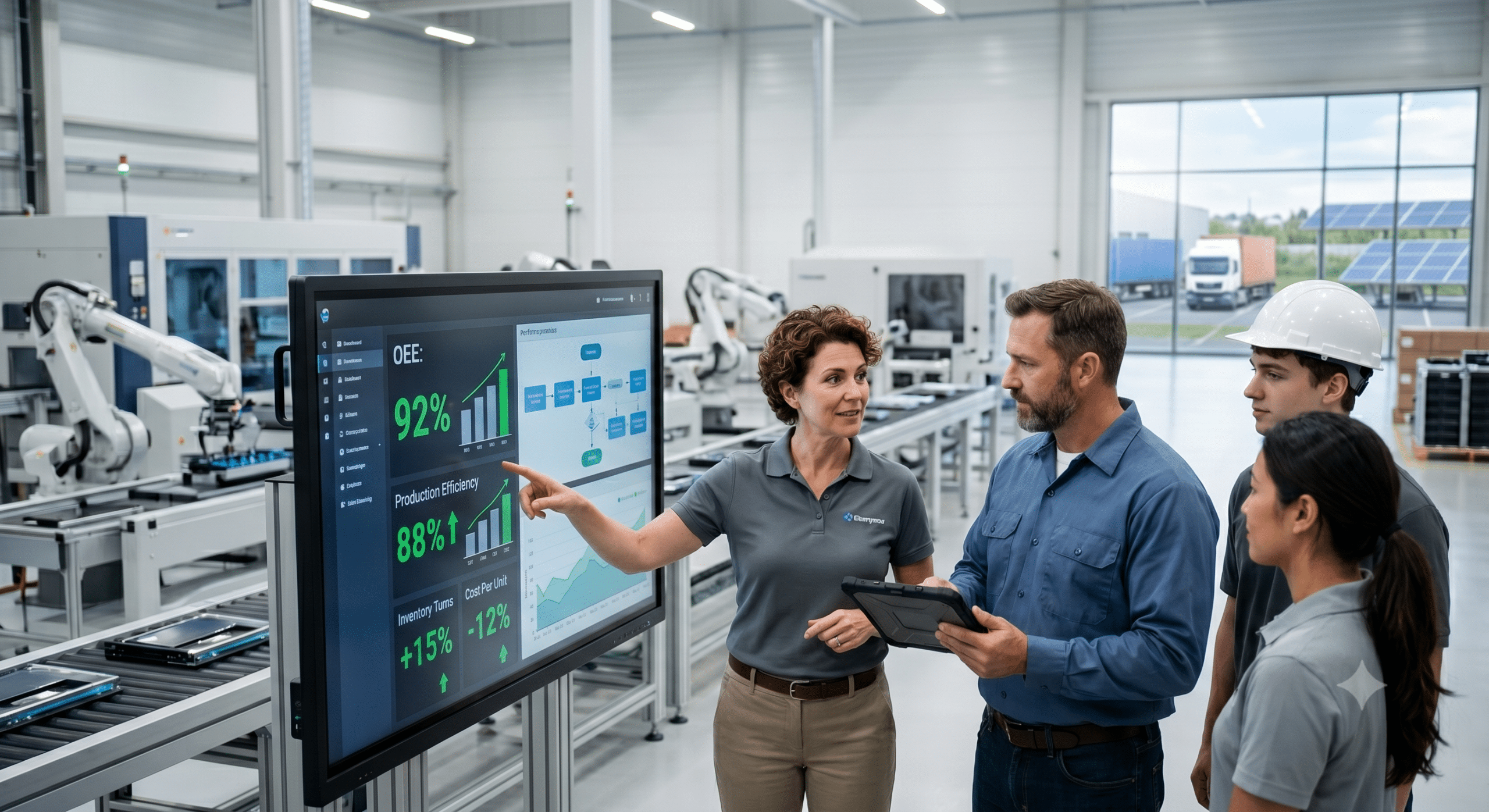
Manufacturing has changed dramatically over the last decade. What once depended heavily on manual oversight, paper-based tracking systems, and reactive decision-making is now becoming increasingly connected, data-driven, and strategically managed. Yet despite advances in automation, robotics, artificial intelligence, and industrial software, one truth remains unchanged: successful manufacturing companies are built on strong operational management.
The difference between a manufacturing company that consistently meets customer expectations and one that constantly struggles with delays, quality issues, and rising costs often comes down to one critical factor—manufacturing operations management.
Many executives focus heavily on sales growth, product development, or marketing expansion. While these areas certainly matter, operational excellence remains the engine that powers sustainable profitability. Without effective manufacturing operations management, even the most innovative products can fail because of production bottlenecks, inefficient workflows, excessive waste, inventory shortages, or poor quality control.
As global competition becomes more intense and customer expectations continue to rise, manufacturers can no longer afford disconnected systems and fragmented decision-making. Modern manufacturing operations management creates the internal intelligence layer that connects planning, production, quality, maintenance, inventory, workforce management, and continuous improvement into one coordinated operational strategy.
What Is Manufacturing Operations Management?
Manufacturing operations management refers to the strategic coordination, monitoring, control, and optimization of all activities involved in producing goods within a manufacturing environment. It serves as the operational bridge between business planning systems and the physical production processes occurring on the factory floor. Its purpose is to ensure that people, machines, materials, and processes work together efficiently while maintaining quality, reducing costs, and meeting production goals. (Symestic)
In practical terms, manufacturing operations management is not simply software or a single department. It is a complete operational framework that helps manufacturers gain visibility into what is happening across production lines, inventory systems, maintenance activities, workforce performance, and quality processes in real time. It ensures that operational decisions are based on accurate information rather than assumptions or delayed reports. (jodoo.com)
Manufacturing organizations that embrace strong operational management often discover that their biggest opportunities for improvement are hidden in everyday processes. Small inefficiencies repeated thousands of times across production shifts can quietly drain profitability without attracting attention from leadership teams.
Why Manufacturing Operations Management Matters More Than Ever
Today’s manufacturing environment is far more complex than it was even five years ago.
Manufacturers face rising labor costs, unpredictable supply chains, increasing customer demands, stricter compliance requirements, and constant pressure to improve margins. At the same time, customers expect shorter lead times, better product quality, and greater customization.
These challenges have elevated manufacturing operations management from an operational necessity to a strategic business priority.
Executives no longer view factory operations solely as production centers. Instead, operations have become major contributors to profitability, customer satisfaction, business resilience, and long-term competitive advantage.
Organizations with mature operational management practices can identify production risks earlier, adapt more quickly to disruptions, reduce downtime, improve asset utilization, and make faster decisions based on real-time data. This level of visibility allows leadership teams to respond proactively rather than reactively. (IBM)
In many manufacturing environments, the hidden costs of poor operations management are substantial. Unplanned downtime, excessive scrap, rework, inefficient scheduling, material shortages, and communication gaps between departments often consume significant portions of profit margins without appearing on traditional financial reports.
Manufacturing operations management helps uncover and eliminate these hidden losses.
The Core Components of Manufacturing Operations Management
Successful manufacturing operations management relies on several interconnected functions working together as a unified system.
Production management serves as the foundation. Production managers must balance demand forecasts, production schedules, labor availability, equipment capacity, and material availability while maintaining efficiency and quality standards.
Quality management is equally important. Product defects, customer returns, and compliance violations can damage both profitability and reputation. Effective operations management embeds quality controls throughout the production process rather than treating quality as a final inspection activity.
Maintenance management ensures equipment reliability. Every minute of unexpected downtime affects production schedules, delivery commitments, and operational costs. Predictive and preventive maintenance programs help reduce breakdowns and extend asset life. (IBM)
Inventory management plays a critical role in maintaining operational flow. Excess inventory ties up working capital, while insufficient inventory creates production delays. The goal is maintaining optimal inventory levels that support production without creating unnecessary carrying costs. (Reddit)
Workforce management focuses on ensuring employees have the skills, resources, training, and communication needed to perform effectively. Even highly automated facilities depend heavily on employee knowledge, problem-solving abilities, and operational discipline.
When these components function together, manufacturers create a stable operational environment capable of supporting both efficiency and growth.
Building the Internal Intelligence Layer for Manufacturing Teams
One of the most important developments in modern manufacturing operations management is the creation of an internal intelligence layer.
This intelligence layer refers to the systems, processes, and decision-making frameworks that transform operational data into actionable insights.
Traditionally, manufacturing data existed in separate systems. Production teams tracked output. Maintenance departments monitored equipment performance. Quality teams maintained inspection records. Inventory managers managed stock levels independently.
As a result, leadership often lacked a complete view of operational performance.
Modern manufacturing operations management integrates these data sources into a unified operational framework. Information flows across departments, creating greater visibility and enabling faster decision-making. (IBM)
For example, when a machine begins showing signs of reduced performance, the intelligence layer can connect maintenance data, production schedules, quality trends, and inventory levels. Instead of reacting after a breakdown occurs, managers can schedule maintenance during low-production periods and minimize disruption.
This type of operational intelligence helps manufacturers shift from reactive management to predictive management.
The Role of Manufacturing Execution Systems
Many manufacturers implement Manufacturing Execution Systems (MES) as part of their manufacturing operations management strategy.
An MES acts as a real-time monitoring and control platform that tracks production activities throughout the manufacturing process. It connects enterprise planning systems with shop-floor operations, allowing organizations to capture data directly from machines, sensors, and operators. (IBM)
The value of an MES extends beyond simple monitoring.
Production supervisors gain visibility into equipment utilization, work-in-progress status, production throughput, and quality performance. Executives gain access to operational metrics that support strategic planning and resource allocation.
Perhaps most importantly, MES platforms help eliminate information delays. Instead of waiting until the end of a shift or production cycle, managers can identify issues as they occur and take corrective action immediately.
This real-time visibility often leads to significant improvements in efficiency, quality, and responsiveness.
Eliminating Operational Silos
One of the most common obstacles facing manufacturers is organizational silos.
Production departments focus on output. Procurement focuses on purchasing costs. Maintenance teams prioritize equipment reliability. Quality departments concentrate on compliance and defect reduction.
While each function performs an important role, isolated decision-making frequently creates unintended consequences.
For example, procurement may purchase lower-cost materials that create production challenges. Production managers may prioritize output at the expense of maintenance schedules. Quality teams may identify recurring issues without sufficient collaboration from operations teams.
Manufacturing operations management helps break down these barriers by creating shared visibility and aligned performance objectives. (Reddit)
When departments operate from the same data and share common goals, organizations improve communication, reduce conflict, and accelerate problem resolution.
The result is a more agile and collaborative manufacturing environment.
How Data Drives Better Operational Decisions
Modern manufacturing generates enormous amounts of data.
Machines produce performance metrics. Sensors capture operating conditions. Production systems track throughput rates. Quality systems record defect trends. Inventory systems monitor material movement.
However, collecting data alone does not improve performance.
The true value comes from converting data into meaningful insights that support operational decisions.
Effective manufacturing operations management establishes key performance indicators that align with business objectives. Common metrics include overall equipment effectiveness, cycle times, downtime rates, scrap percentages, first-pass yield, inventory turnover, and on-time delivery performance.
By monitoring these metrics consistently, leaders can identify trends, uncover bottlenecks, and prioritize improvement efforts. (IBM)
The most successful manufacturers use data not merely to report historical performance but to guide future decisions.
Lean Manufacturing and Continuous Improvement
Lean manufacturing remains one of the most influential principles within manufacturing operations management.
At its core, lean manufacturing focuses on eliminating activities that do not add value to the customer while improving operational flow and efficiency. (IBM)
Continuous improvement initiatives often begin by mapping existing processes and identifying waste. This waste may appear in the form of excess inventory, waiting time, unnecessary movement, overproduction, rework, or inefficient workflows.
Rather than pursuing massive operational transformations, many manufacturers achieve impressive results through small, consistent improvements over time.
Employees play a critical role in this process.
Operators often possess the deepest understanding of daily operational challenges. Organizations that encourage employee involvement frequently uncover practical improvement opportunities that leadership teams might otherwise overlook.
Continuous improvement becomes most effective when it evolves from a project into a cultural mindset embraced throughout the organization.
Managing Workforce Challenges in Modern Manufacturing
Technology continues to transform manufacturing, but people remain essential.
Many manufacturers face workforce shortages, skills gaps, and increasing competition for technical talent. These challenges make workforce management a central component of manufacturing operations management. (IBM)
Strong operational leaders recognize that productivity improvements require more than technology investments.
Employees need clear communication, standardized processes, effective training, and access to the information necessary to perform their jobs successfully.
When workers understand priorities, expectations, and operational goals, organizations experience fewer errors, stronger engagement, and better overall performance.
Manufacturers that invest in workforce development often achieve higher productivity while improving employee retention and organizational stability.
Technology’s Growing Impact on Manufacturing Operations Management
Technology is reshaping how manufacturing operations are managed.
Artificial intelligence, machine learning, industrial Internet of Things devices, cloud platforms, automation systems, and digital twins are creating new opportunities for operational optimization. (IBM)
Predictive maintenance systems can identify equipment issues before failures occur.
Machine learning models can forecast demand fluctuations and production requirements.
Connected sensors provide real-time operational visibility across facilities.
Digital dashboards allow executives to monitor performance from anywhere in the world.
The goal of technology should not be complexity.
The most successful implementations simplify decision-making, improve visibility, and enable faster responses to operational challenges.
Technology becomes valuable when it supports people rather than overwhelms them.
Common Mistakes That Undermine Manufacturing Operations
Despite significant investments in technology and process improvement, many manufacturers continue to struggle with operational performance.
One common mistake is focusing exclusively on production output while ignoring overall process efficiency.
Another frequent issue is implementing technology without establishing standardized processes first. Technology cannot fix fundamentally broken workflows.
Many organizations also underestimate the importance of change management. Employees need training, support, and involvement throughout operational transformation initiatives.
Perhaps the most damaging mistake is failing to create alignment between business objectives and operational priorities.
When departments pursue conflicting goals, performance suffers regardless of how sophisticated the technology may be.
Strong manufacturing operations management ensures that everyone works toward the same strategic outcomes.
The Future of Manufacturing Operations Management
The future of manufacturing operations management will be shaped by greater connectivity, automation, and intelligence.
Factories are becoming increasingly capable of monitoring themselves, predicting disruptions, and recommending corrective actions. Artificial intelligence will continue expanding its role in production planning, maintenance management, quality control, and supply chain optimization. (IBM)
However, the fundamental principles of operational excellence will remain unchanged.
Successful manufacturers will continue focusing on process discipline, workforce development, continuous improvement, customer satisfaction, and strategic decision-making.
Technology will enhance these capabilities, but it will not replace them.
The manufacturers that thrive in the coming years will be those that combine operational expertise with intelligent systems to create resilient, adaptable, and highly efficient operations.
Final Thoughts
Manufacturing operations management is no longer just a factory-floor responsibility. It has become a critical business strategy that influences profitability, customer experience, operational resilience, and long-term growth.
Organizations that build a strong manufacturing operations management framework gain more than operational efficiency. They create an internal intelligence layer that connects people, processes, equipment, and data into a unified system capable of supporting better decisions every day.
In an increasingly competitive manufacturing landscape, success belongs to companies that can see clearly, respond quickly, and continuously improve. Manufacturing operations management provides the structure, visibility, and discipline needed to make that happen.
The factories of the future will not simply produce products more efficiently. They will operate smarter, learn faster, and adapt more effectively than ever before. The journey begins with strong manufacturing operations management.
Frequently Asked Questions (FAQ)
What is manufacturing operations management?
Manufacturing operations management is the process of coordinating production, quality, maintenance, inventory, workforce activities, and operational data to improve efficiency, quality, and profitability across manufacturing facilities. (Symestic)
Why is manufacturing operations management important?
It helps manufacturers reduce waste, improve production efficiency, minimize downtime, maintain quality standards, and make better decisions using real-time operational information.
What is the difference between MES and manufacturing operations management?
Manufacturing operations management is the overall operational framework, while a Manufacturing Execution System (MES) is a technology platform that supports production monitoring, control, and data collection within that framework. (IBM)
How does manufacturing operations management improve profitability?
It improves profitability by reducing downtime, lowering scrap and rework costs, optimizing inventory levels, increasing productivity, and improving resource utilization throughout the manufacturing process.
What technologies support manufacturing operations management?
Common technologies include MES platforms, ERP systems, industrial IoT sensors, predictive maintenance tools, cloud-based analytics platforms, artificial intelligence applications, and digital manufacturing solutions. (SAP)
References and Further Reading
For deeper insights into manufacturing operations management, operational excellence, and digital manufacturing transformation, explore the following resources:
- IBM – What Is a Manufacturing Execution System (MES)?
- IBM – Operations Management Explained
- SAP Manufacturing Solutions and Digital Manufacturing
- Symestic – Manufacturing Operations Management (ISA-95 Definition)
- Augmentir – Manufacturing Operations Management Guide
- Jodoo – Manufacturing Operations Management Complete
- EASE – Manufacturing Operations and Efficiency Guide