

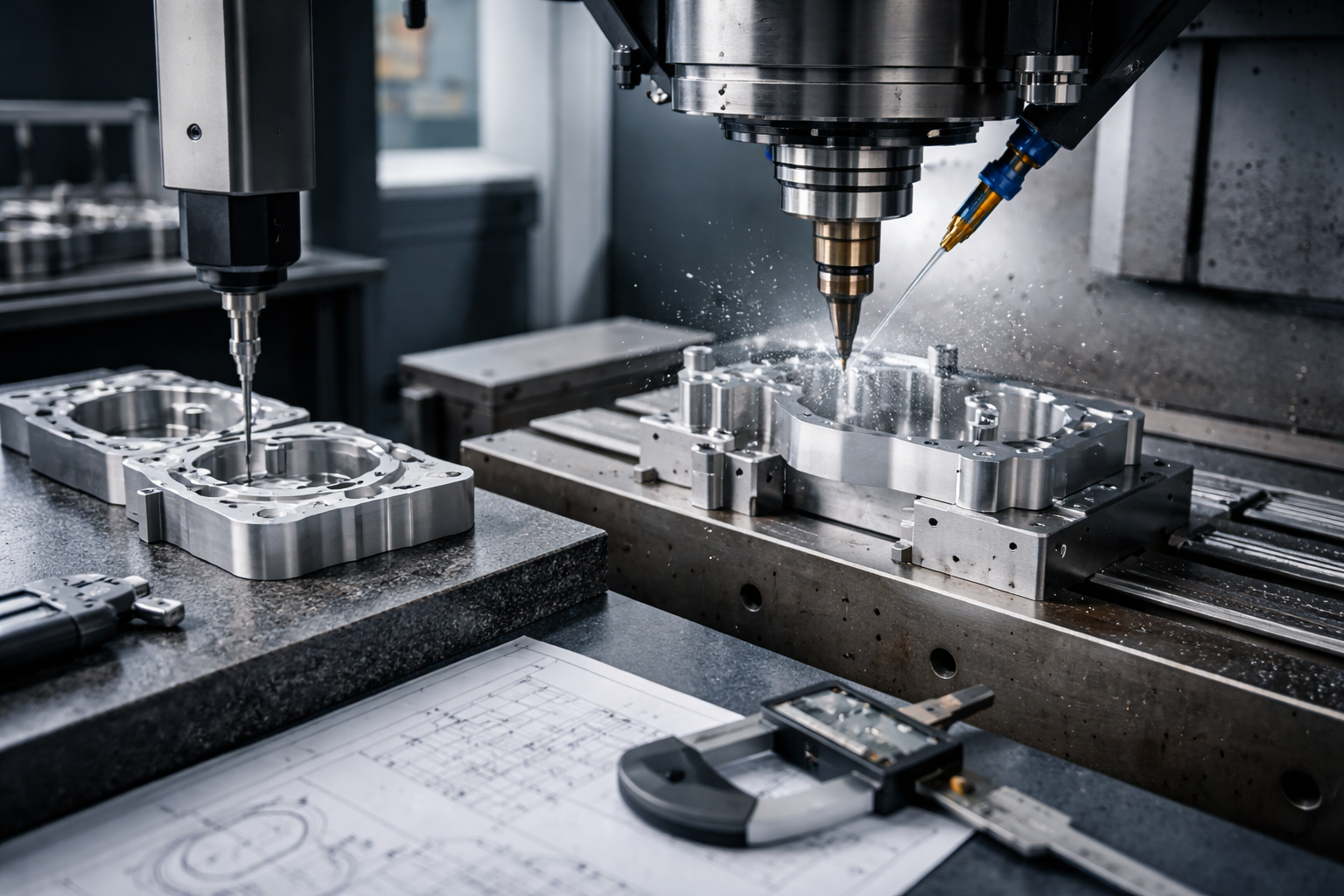
Precision machining services are at the core of modern manufacturing, enabling industries to produce highly accurate and complex components with tight tolerances. Modern manufacturing relies heavily on CNC technology, and this CNC machining 101 guide explains how design, software, and automation work together to achieve high precision.
From aerospace and medical devices to automotive and electronics, precision machining ensures that every part meets strict performance and quality standards.
In this guide, we’ll explore how precision machining works, the technologies involved, its advantages, applications, and how to choose the right service provider. Whether you’re an engineer, business owner, or procurement specialist, this article will help you make informed decisions.
What Are Precision Machining Services?
Precision machining services involve the use of advanced CNC (Computer Numerical Control) equipment to manufacture parts with extremely tight tolerances and high accuracy. These services focus on producing components that require exact specifications and repeatability.
Unlike traditional machining, precision machining uses automated processes, digital designs, and high-performance tools to achieve consistent results across production runs.
How Precision Machining Works
The precision machining process follows a structured workflow to ensure accuracy and efficiency.
1. CAD Design and Engineering
The process begins with creating a digital model using CAD software. Engineers define dimensions, tolerances, and material requirements.
2. CAM Programming
The CAD file is converted into machine instructions using CAM software. This step generates toolpaths and cutting parameters.
3. Machine Setup
Operators prepare the machine by securing the workpiece, installing tools, and calibrating coordinates.
4. Machining Execution
CNC machines perform operations such as milling, turning, and drilling to shape the material into the desired form.
5. Inspection and Quality Control
Finished parts are inspected using precision measurement tools to ensure they meet specifications.
Types of Precision Machining Services
Precision machining services cover a wide range of processes depending on the complexity of the part.
CNC Milling
Uses rotating cutting tools to remove material and create complex shapes. Ideal for multi-axis machining.
CNC Turning
Involves rotating the workpiece while a cutting tool shapes it. Common for cylindrical components.
EDM (Electrical Discharge Machining)
Uses electrical sparks to remove material, ideal for hard metals and intricate designs.
Grinding
Provides ultra-smooth finishes and tight tolerances using abrasive wheels.
Laser Cutting and Micro-Machining
Used for extremely fine details and delicate components in electronics and medical devices.
Materials Used in Precision Machining
Precision machining services support a wide range of materials:
Metals
- Aluminum
- Stainless steel
- Titanium
- Brass
Plastics
- ABS
- Nylon
- PEEK
- Polycarbonate
Composites
- Carbon fiber
- Fiberglass
Material selection depends on strength, durability, and application requirements.
Benefits of Precision Machining Services
High Accuracy
Precision machining can achieve tolerances as tight as ±0.001 mm, ensuring parts meet exact specifications.
Consistency and Repeatability
Automated systems produce identical parts across large production runs.
Complex Geometry Capability
Multi-axis machines can create intricate shapes that are difficult or impossible with manual machining.
Improved Efficiency
Automation reduces production time and minimizes human error.
Superior Surface Finish
Advanced tooling delivers smooth finishes, reducing the need for additional processing.
Industries That Use Precision Machining
Precision machining services are essential across multiple industries:
Aerospace
Manufactures critical components such as turbine blades and structural parts requiring extreme accuracy.
Medical
Produces surgical instruments, implants, and diagnostic equipment with strict tolerances.
Automotive
Used for engine components, transmission parts, and custom performance pieces.
Electronics
Creates small, detailed components like connectors and housings.
Industrial Equipment
Supports the production of machinery parts and tooling systems.
Precision Machining vs Traditional Machining
| Feature | Precision Machining | Traditional Machining |
|---|---|---|
| Accuracy | Very high | Moderate |
| Automation | Fully automated | Manual or semi-automated |
| Repeatability | Excellent | Limited |
| Complexity | High | Low to medium |
| Cost Efficiency | High (long-term) | Lower initial cost |
Precision machining offers superior performance for complex and high-quality parts.
Key Factors to Consider When Choosing a Precision Machining Service
Experience and Expertise
Choose providers with proven experience in your industry.
Equipment and Technology
Advanced CNC machines and multi-axis capabilities ensure better results.
Quality Control Processes
Look for certifications and inspection methods such as CMM.
Material Capabilities
Ensure the provider can work with your required materials.
Turnaround Time
Fast and reliable delivery is critical for production schedules.
Quality Standards in Precision Machining
Precision machining services often follow strict quality standards:
- ISO 9001 (quality management)
- AS9100 (aerospace)
- ISO 13485 (medical devices)
These certifications ensure consistent quality and compliance.
Challenges in Precision Machining
Despite its advantages, precision machining comes with challenges:
- High initial investment in equipment
- Skilled labor requirements
- Tool wear and maintenance
- Material limitations
However, these challenges are manageable with proper planning and expertise.
Future Trends in Precision Machining Services
The industry continues to evolve with new technologies:
- AI-driven machining optimization
- Smart factories and IoT integration
- Automation and robotics
- Advanced materials and tooling
These innovations are improving efficiency, accuracy, and scalability.
Conclusion
Precision machining services are essential for producing high-quality, accurate, and reliable components across various industries. By leveraging advanced CNC technologies, manufacturers can achieve tight tolerances, complex geometries, and consistent results.
Understanding how these services work and selecting the right provider can significantly impact product quality, cost, and production efficiency.